

Do Hotels Have Vape Detectors? The Truth About Smoking Detection Technology
In recent years, the question “Do hotels have vape detectors?” has become more common among travelers and hotel managers alike. The short answer is yes—most modern hotels are now equipped with vape and smoke detection systems that can easily detect aerosol particles, nicotine vapors, and other substances released from e-cigarettes and vaping devices.
This change in hotel safety technology is driven by a combination of stricter no-smoking laws, rising maintenance costs, and the demand for cleaner indoor environments. While traditional hotel smoke detectors were designed mainly to detect smoke from fire, new-age systems go far beyond that—they can detect smoking, sense vapor particles, and even analyze air quality patterns.
Why Hotels Are Adopting Vape Detection Systems
The hospitality industry is evolving rapidly. As vaping became more popular, hotels faced new challenges in maintaining their smoke-free policies. Many guests assumed that vaping indoors was less detectable than traditional cigarettes, leading to an increase in hidden vaping incidents.
To counter this, major hotel brands have installed advanced e cigarette smoke detector systems capable of identifying vapor chemicals within seconds. These devices are built to recognize the unique particles and compounds found in e-cigarette emissions, including nicotine and propylene glycol.
Hotels are particularly proactive about this because:
- Vape residue can cling to curtains, carpets, and walls, leading to expensive cleaning procedures.
- Vaping inside rooms can trigger complaints from neighboring guests and impact ratings.
- The presence of vape or cigarette odors affects property inspections and hospitality certifications.
What Do Vape Detectors Look Like in Hotels
One of the most asked questions from guests is “What do vape detectors look like?” In most cases, they resemble traditional hotel smoke alarms—small, circular devices mounted on the ceiling or wall. Some models blend into light fixtures, thermostats, or air vents for aesthetic reasons.
Unlike traditional smoke alarms, however, these detectors include laser particle sensors and chemical analyzers that can differentiate between vapor, smoke, and other airborne particles. For example, if someone tries to vape near a window or inside a bathroom, the system detects the change in air quality and sends a silent alert to hotel staff.
Can You Vape in a Hotel Room
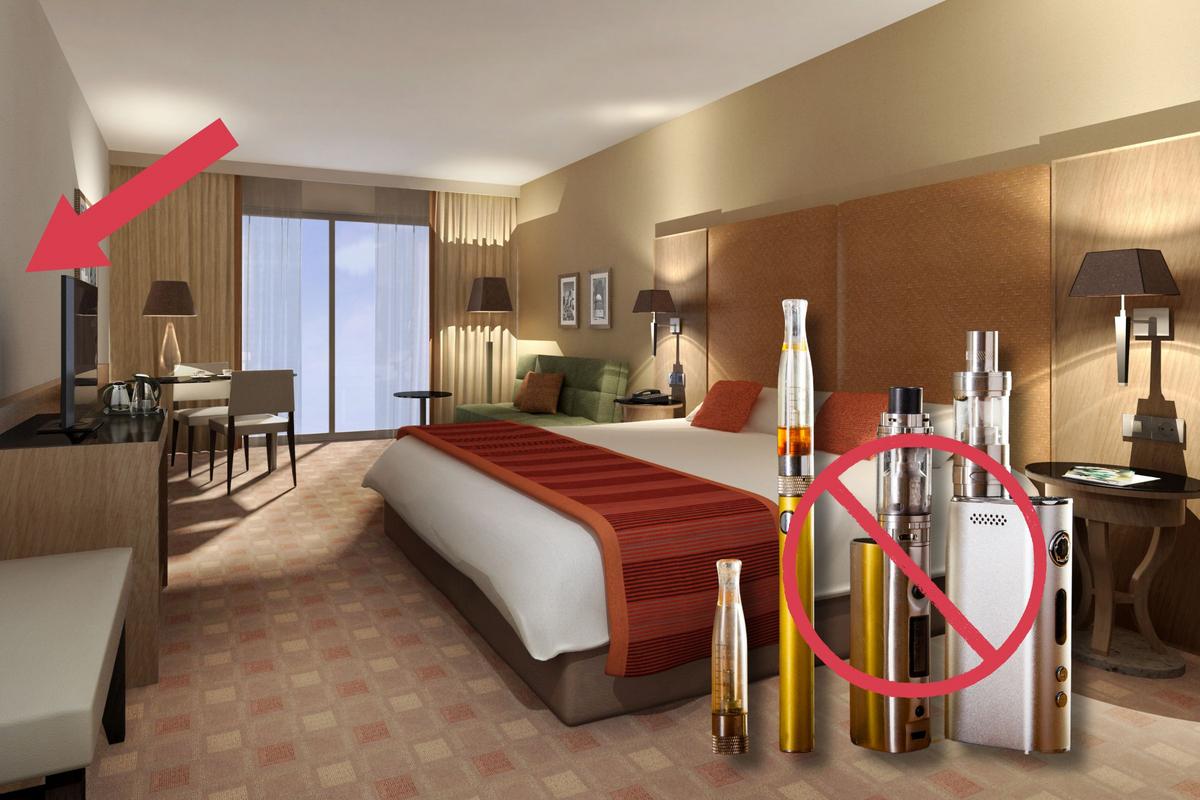
While many travelers ask “Can you vape in a hotel room?”, the answer is almost always no. Nearly all hotels now list vaping under the same policy as smoking. Whether you are staying in a luxury chain or searching for hotels smoking near me, chances are that indoor vaping is strictly prohibited.
Violating these rules can lead to cleaning fees ranging from $200 to $500, and in some cases, removal from the property. Even if a guest attempts to vape discreetly, modern systems are designed to detect vaping through air sensors without activating a public alarm.
How Hotel Vape Detectors Work
A typical hotel smoke detector uses optical sensors to detect smoke particles from fire. However, vape detectors are more advanced and rely on multi-sensor fusion technology.
Here’s how the process works:
- Laser particle sensing: Detects particles as small as 0.3 microns produced by vape aerosols.
- Chemical analysis: Identifies volatile compounds from nicotine or THC vapors.
- AI-based recognition: Compares detected signatures against a database of known vaping chemicals to minimize false alerts.
- Real-time alerts: Sends instant notifications to hotel management systems or security teams when vaping is detected.
This seamless detection process allows hotels to maintain air quality while enforcing their smoke-free policies without disturbing other guests.
Do Vape Detectors Really Work
Many guests still wonder, “Do vape detectors work?” The answer is yes—they are incredibly effective. Modern e cigarette smoke detectors are built with precision sensors that can distinguish between normal air changes and vapor emissions.
While traditional smoke alarms in hotels might not always trigger from vapor, new devices like HALO Smart Sensors or Zeptive systems use advanced algorithms to detect vapor concentration even when it’s minimal.
These detectors are specifically programmed to identify:
- Nicotine vapor from e-cigarettes
- THC or cannabis vapor
- Cigarette smoke and residual gases
With multiple sensors working together, hotels can easily identify when vaping occurs and respond quickly.
Can Hotels Detect Vaping
Yes, hotels can detect vaping, and they do so more accurately than ever before. Whether you blow vapor out the window, use the bathroom fan, or cover the detector, these systems are designed to catch subtle signs of vaping activity.
Many properties now connect their vape detectors with smart hotel security systems that record air quality changes and automatically alert staff. In some cases, hotels integrate this data with access control and HVAC systems to improve ventilation or issue fines for violations.
The Difference Between Smoke Alarms and Vape Detectors
It’s important to understand that smoke alarms in hotels and vape detectors serve different purposes. While both are part of the property’s safety system, smoke alarms are calibrated to detect fire hazards, whereas vape detectors focus on detecting vaporized aerosols.
Standard hotel smoke detectors may not always react to e-cigarette vapor, but vape sensors analyze air density and chemical composition, offering far higher accuracy in identifying vaping incidents.
Why Choose Nexlar
At Nexlar, we specialize in modernizing hotel and commercial security systems with cutting-edge technologies that enhance safety and compliance. Our expertise in smoke detection, vape detection, and air quality monitoring systems helps businesses stay ahead of evolving regulations and guest expectations.
We understand that smoking in hotels poses operational, legal, and financial challenges. That’s why we design custom systems that integrate seamlessly with your property’s existing security infrastructure—ensuring real-time monitoring, minimal maintenance, and optimal coverage for every room and public space.
When you choose Nexlar, you choose reliability, innovation, and industry-leading expertise.
FAQs
Q1. What do vape detectors look like in hotels?
A. Most vape detectors look like standard hotel smoke alarms, usually mounted on ceilings or walls. Some models are integrated into existing air sensors or thermostats to stay discreet while remaining fully functional.
Q2. Can you vape in a hotel room?
A. No, vaping in a hotel room is typically prohibited. Modern vape detection systems can identify even small amounts of vapor, leading to fines or removal from the property.
Q3. Do hotels have vape detectors in every room?
Not all hotels have detectors in every room, but most install them in high-risk areas such as bathrooms, hallways, and non-smoking rooms. Larger chains and boutique hotels alike are adopting this technology rapidly.
Q4. Do vape detectors work on all vaping devices?
A. Yes, advanced detectors can recognize vapor from all kinds of e-cigarettes, including nicotine and THC devices. Their sensors are highly sensitive to changes in air composition.
Q5. Can hotels detect vaping even if you open a window?
A. Yes, even with a window open, vape detectors can sense residual chemicals left in the air. These systems monitor both particle density and chemical emissions to ensure accuracy.
Q6. Are vape detectors the same as hotel smoke detectors?
A. No. While smoke alarms in hotels detect fire-related smoke, vape detectors are designed to sense vaporized aerosols and specific compounds like nicotine and propylene glycol.
The Future of Smoking Detection in Hotels
As more properties upgrade their monitoring systems, hotel smoke detectors and vape detectors are becoming smarter, more connected, and increasingly accurate. Many systems now include AI-driven analytics and can detect smoking activity instantly.
In the near future, hotels may even integrate these devices with smart room management systems that automatically ventilate or lock certain settings when vaping is detected. This evolution represents a significant step toward ensuring safer, cleaner, and more compliant guest experiences.
Conclusion
The hospitality industry is embracing smarter technology to create safer environments and reduce the damages caused by indoor smoking and vaping. For guests, the answer to “Can hotels detect vaping?” is a clear yes—detection is faster, smarter, and more reliable than ever before.
For hotel owners and managers, implementing vape detection systems ensures compliance with non-smoking laws, reduces maintenance costs, and enhances brand reputation. As experts in hotel smoke alarm and detection technologies, Nexlar offers comprehensive installation and maintenance services to fit every budget and building layout.
Contact us today at Nexlar for expert assistance in securing your property with advanced detection and monitoring systems.
Follow Us