

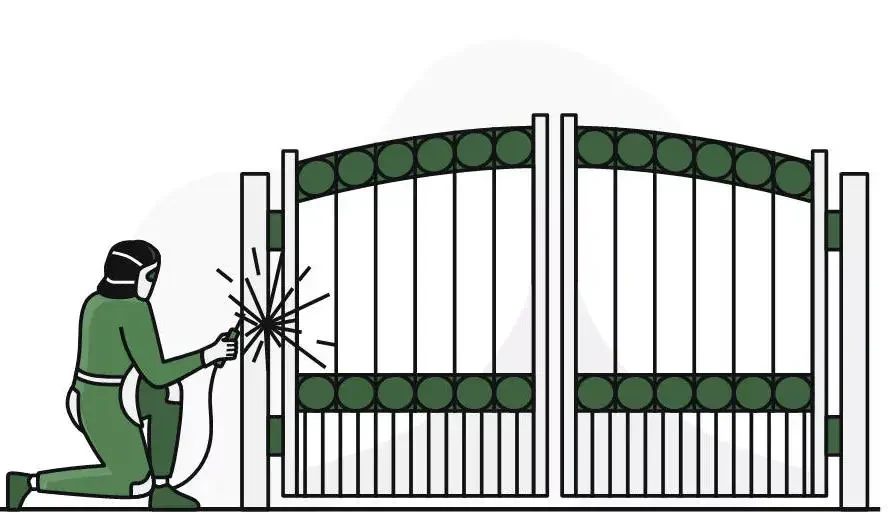
LEAD MAGNET: Download the 2026 Gate Safety Checklist
Every automated gate on your commercial or industrial property is more than a convenience — it is a mechanical system operating under real physical force, and without a structured inspection routine, it becomes a liability. At Nexlar, we have spent years working with businesses across Texas to install, maintain, and assess automatic gate systems. Through that experience, we built the 2026 Gate Safety Checklist to give property managers, facility supervisors, and security teams one clear, actionable reference document they can use year-round.
Whether you manage a warehouse entrance, a gated office complex, or a multi-facility industrial campus, this gate safety checklist pdf is designed to fit your workflow. Download it, print it, and put it where your maintenance team can use it daily.
Why Gate Safety Cannot Wait Until Something Goes Wrong
Automated gates operate in high-traffic environments. They cycle dozens or even hundreds of times each day, carrying significant mechanical force through every movement. Entrapment, sensor failures, wiring degradation, and structural fatigue are not hypothetical risks — they are documented causes of injury and liability at commercial and industrial properties across the country.
In Texas, many businesses operate under city building codes and insurance requirements that reference safety standards for automated gate systems. A property that cannot demonstrate a documented inspection routine puts itself at risk of denied insurance claims, code violations, and serious legal exposure following an incident. The right gate safety inspection checklist is not just a best practice — it is a protection strategy.
Daily Safety Checks
The foundation of any gate safety program starts with what your team checks every single day. These are quick, visual, and operational verifications that take no more than a few minutes but can flag problems before they become emergencies.
Each day, your team should verify that the gate opens and closes fully without hesitation, grinding, or unusual noise. The photo eye sensors on both sides of the gate should be clean and properly aligned — debris, spider webs, or moisture on the lens is enough to compromise detection. The gate arm, hinges, rollers, and track should be visually clear of debris, ice, or obstructions that could interfere with travel.
Warning signs and safety placards must be visible and undamaged. These signs are not optional. Under UL 325, all warning signs and placards must be installed where they remain visible in the area of the gate at all times, regardless of gate position. If a sign has been damaged, faded, or removed, it needs to be replaced immediately.
Your daily check should also confirm that the manual release mechanism is accessible and functioning. In an emergency, a gate that cannot be manually overridden is a serious hazard for both personnel and emergency responders.
Monthly Maintenance
Daily checks keep your gate safe between service visits. Monthly maintenance is where you go deeper — testing mechanical components, verifying sensor performance, and looking for early signs of wear that visual inspections alone might miss.
Each month, your maintenance log should include a full cycle test of the gate operator. Confirm that the gate reverses direction when the safety edge or photo eye is triggered mid-cycle. This reversal test is one of the most important items on any industrial safety gates checklist because it verifies that the entrapment protection system is actively working, not just installed.
Inspect the gate hardware — hinges, rollers, slide rails, chains, and mounting hardware — for corrosion, looseness, or deformation. Lubricate moving parts according to the manufacturer's schedule. Check all electrical connections and wiring for signs of chafing, insulation damage, or moisture intrusion. Wiring issues are a leading cause of intermittent gate failures that are often misdiagnosed as sensor problems.
Test the loop detectors and any secondary vehicle detection systems installed in the approach lane. Verify that the gate does not begin closing while a vehicle is still in the detection zone.
UL 325 Compliance
UL 325 is the nationally recognized safety standard governing automatic gate operators across the United States. It covers swing gates, sliding gates, and vertical lift gates used in residential, commercial, and industrial settings. For businesses operating in Texas, understanding and maintaining UL 325 compliance is not optional — it is built into local building codes, insurance requirements, and legal liability frameworks.
Under UL 325, gate operators are divided into four classes. Class I covers residential gates for one to four family units. Class II applies to commercial and general access locations such as hotels, retail stores, and multi-family housing. Class III is designated for industrial and limited-access environments, including factory entrances and loading dock areas. Class IV covers restricted access facilities monitored by security personnel.
For most commercial and industrial properties, Class II and Class III requirements apply. Each class requires a minimum of two independent entrapment protection devices for each direction of gate travel. The 7th Edition of UL 325, effective August 2018, also requires that gate operators actively monitor all connected entrapment sensors at least once per cycle, confirming that the protection devices are functioning — not simply present.
The 2026 Gate Safety Checklist from Nexlar walks your team through the UL 325 requirements that apply to your specific gate classification, so there is no guesswork involved in your compliance documentation.
ASTM F2200 and Gate Construction Standards
UL 325 does not operate alone. It works alongside ASTM F2200, the standard that governs gate construction and physical design requirements. If your gate's physical structure does not meet ASTM F2200 requirements, it cannot be considered compliant regardless of the operator equipment installed.
One of the most important structural requirements involves opening size. All horizontal slide gates must be screened or guarded from the bottom of the gate to a minimum of six feet above the ground so that a 2.25-inch diameter sphere cannot pass through the openings. This requirement exists specifically to prevent entrapment of children and small animals. Vertical pickets and bars must be spaced so that a 4-inch sphere cannot pass through. Your gate safety checklist should include a physical inspection of these spacing requirements on a quarterly basis, especially after any repair or modification work.
Gate weight, balance, and travel speed must also be matched to your operator's rated capacity. An oversized gate pushing against an undersized operator creates dangerous levels of closing force — a condition that sensor systems alone cannot fully compensate for.
Why Choose Nexlar for Your Gate Safety Needs
At Nexlar, we are not a general contractor who occasionally handles gate work. Gate systems, access control, and commercial security are what we do every day across Houston, Dallas, San Antonio, Austin, Fort Worth, and San Marcos. Our licensed technicians understand the full scope of UL 325 and ASTM F2200 requirements, and we bring that knowledge directly to your site during installation, inspection, and maintenance visits. We hold an A+ BBB rating, and every member of our team undergoes thorough background checks before working on your property. When you work with Nexlar, you get a partner who documents your compliance history, identifies risks before they become incidents, and provides the institutional knowledge to keep your gate system performing correctly year after year. Our goal is simple — to make sure every gate we touch protects the people and property it serves.
How to Use the Gate Safety Checklist PDF
The gate safety checklist pdf from Nexlar is built for real-world use. It is formatted for print and organized by frequency — daily, monthly, quarterly, and annual inspection categories — so your team always knows exactly what to verify and when.
Each line item includes a description of what to check and what a passing result looks like, removing ambiguity from the process. The checklist also includes a signature and date field so that completed inspections become part of your documented compliance record. In the event of an incident, audit, or insurance review, that paper trail matters.
For facilities managing multiple gates across one property or multiple locations, the checklist includes a gate identifier field so each record is traceable to a specific entry point. This is especially important for large campuses, distribution centers, and industrial facilities where maintaining a complete industrial safety gates checklist across all access points is both a safety and a compliance requirement.
Frequently Asked Questions
Q. What is a gate safety checklist and why do I need one?
A gate safety checklist is a structured inspection document used to verify that an automated gate system is operating safely and in compliance with applicable standards. You need one to protect people from entrapment injuries, to maintain UL 325 compliance, and to support your insurance and legal liability protections.
Q. What does UL 325 compliance mean for my business?
UL 325 compliance means your automatic gate operator meets the nationally recognized safety standard for door, gate, and window operators in the United States. For commercial and industrial properties, it requires specific entrapment protection devices, active sensor monitoring, proper warning signage, and construction that meets ASTM F2200 requirements.
Q. How often should an automatic gate be inspected?
Daily visual and operational checks are recommended. Monthly inspections should include sensor testing and hardware review. Quarterly inspections should address structural and construction compliance. Annual inspections by a licensed gate professional are strongly advised to maintain full documentation and compliance status.
Q. Can I download a gate safety checklist pdf for free?
Yes. Nexlar offers the 2026 Gate Safety Checklist as a free downloadable resource for commercial and industrial property managers in Texas. The checklist covers daily, monthly, quarterly, and annual inspection items aligned with UL 325 and ASTM F2200 requirements.
Q. What is the difference between Class II and Class III gate operators?
Class II applies to commercial locations accessible by the general public, such as parking lots, retail properties, and multi-family housing. Class III applies to industrial or limited-access locations not intended for public use, such as factory entrances and warehouse loading areas. Each class has different entrapment protection requirements under UL 325.
Q. Do industrial safety gates have different checklist requirements than commercial gates?
Yes. Industrial safety gates typically operate in higher-cycle environments with heavier vehicular traffic, which increases mechanical wear and the frequency of required checks. The Nexlar industrial safety gates checklist accounts for these conditions with additional hardware inspection items and more frequent sensor verification requirements.
Follow Us