

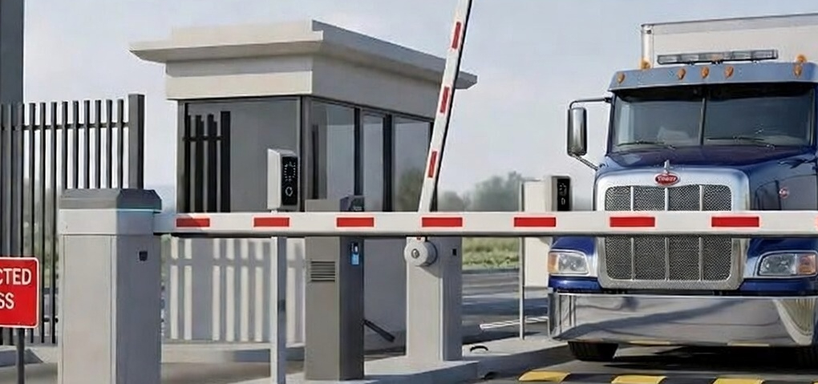
San Antonio’s active construction market operates hundreds of concurrent projects at any given time, from residential subdivision development along the outer growth corridors to major commercial and mixed-use projects in the urban core. Every one of these projects receives regular freight deliveries of materials, equipment, and specialty trade supplies that must enter through a secured gate and reach the correct staging area within the site.
The logistics coordination challenge this creates is significant and underappreciated. A delivery driver arrives at a jobsite gate with no clear way to communicate with site personnel. The driver honks, waits, or attempts to find a phone number posted somewhere near the gate. Inside the site, the delivery may or may not be expected, and the responsible subcontractor’s foreman may be anywhere on a large active site. The result is wasted time at the gate for the driver, wasted time for site personnel who must stop work to manage an unannounced delivery, and in some cases a missed delivery that requires rescheduling.
A properly installed jobsite gate intercom and paging system eliminates these coordination failures by providing a direct communication link between delivery drivers at the site gate and the site supervisor, and by automating the notification that alerts the right personnel when freight arrives.
Get a Free Jobsite Intercom Assessment for Your San Antonio Construction Project
Nexlar installs temporary gate intercoms, weatherproof callboxes, and site paging systems for San Antonio construction projects. Contact Nexlar at nexlar.com/contact or call (281) 407-0768
Jobsite Gate Buzzers for Streamlining Truck Entry During Excavation and Framing
During the excavation and steel framing phases of a San Antonio construction project, truck traffic volume is at its highest. Concrete mixer trucks, aggregate delivery trucks, steel delivery flatbeds, and crane support vehicles create a high-frequency gate access requirement that manual gate management cannot accommodate efficiently.
A jobsite gate buzzer system at the primary site entry provides delivery drivers with an immediate communication channel to the site office or to the site superintendent’s mobile device without requiring anyone to be physically at the gate. The driver approaches the gate, presses the call button on the gate buzzer panel, and the call connects to the site superintendent’s phone or to the site office PA system within seconds.
The superintendent can speak with the driver to verify the delivery, direct them to the correct staging area, and remotely release the gate for authorized deliveries. For expected deliveries on the daily delivery schedule, the gate release can be configured to provide a gate code or key-switched release that the expected driver activates directly, reducing the superintendent’s involvement to verification of unexpected or unscheduled deliveries.
Active traffic management benefits. During peak delivery periods on large San Antonio construction projects, the gate buzzer system creates a managed flow through the site entry that prevents the congestion and safety hazards associated with multiple delivery trucks queuing at an unmanned gate. Drivers know where to stop, how to communicate, and when to proceed, rather than attempting to determine the correct protocol on a site where the gate operation is informal.
Nexlar’s construction site security systems include temporary gate intercom as a standard component of construction security programs for San Antonio projects, alongside access control and camera systems.
Weatherproof Cellular Wireless Callboxes at Material Laydown Entrances
Large San Antonio construction projects frequently have multiple active entry points serving different areas of the site: a main entry for personnel and supervisors, a separate material laydown entry for bulk material deliveries, and in some cases a separate entry for subcontractor trades with dedicated staging areas.
Managing all of these entries with wired intercom infrastructure is often impractical during active construction, because wired infrastructure requires conduit runs across active construction zones that are difficult to install safely and that may be damaged or need to be relocated as the project progresses.
Cellular wireless callboxes solve this by providing a self-contained, battery or solar-powered intercom unit that communicates through the cellular network rather than through hardwired connections. The callbox connects calls to the superintendent’s mobile phone over the cellular network, receives calls from delivery drivers at the material laydown entrance, and operates completely independently of any wired site infrastructure. [1]
For San Antonio construction sites in the outer development corridors where new construction is occurring in areas with limited existing infrastructure, cellular callboxes are often the only practical communication technology at secondary entrances during early construction phases.
Solar-powered cellular callboxes. For permanent or long-term temporary installations at San Antonio construction sites, solar-powered cellular callboxes eliminate the battery maintenance requirement by continuously charging from a roof-mounted solar panel. The combination of solar power and cellular connectivity means the callbox operates completely independently of any site power or network infrastructure.
Weatherproof ratings for San Antonio construction environments. All cellular callboxes deployed at San Antonio construction sites should be rated IP65 or higher for protection against dust and water ingress. Polycarbonate or powder-coated metal enclosures rated for UV exposure maintain appearance and structural integrity through the extended San Antonio sun exposure typical of outdoor construction site mounting.
Automated Paging to Alert Site Supervisors of Incoming Freight
Automated paging integration connects the gate intercom or callbox system to the site’s communication infrastructure so that when a delivery vehicle activates the call button at the site gate, an automated page is broadcast to the site office paging system and to designated personnel’s mobile devices simultaneously.
This automated notification means that the site superintendent does not need to be listening for gate calls throughout the day to ensure freight deliveries are met promptly. The automated page reaches them wherever they are on the site, and they can respond by calling the gate callbox directly from their phone or by connecting to the intercom from any device.
Integration with site paging systems. For San Antonio construction sites with an established site office and paging infrastructure for general site communication, the gate intercom connects to the site PA system so that gate calls also activate an audible alert in the site office and through any outdoor paging horns installed for general site communication.
Freight scheduling integration. Advanced jobsite logistics management platforms including Procore and BuilderTrend support delivery scheduling features where expected deliveries are registered in the platform by the GC or subcontractor scheduling the delivery. When the delivery vehicle activates the gate callbox, the site supervisor can verify the delivery against the platform schedule from their phone before releasing the gate, streamlining the verification process and reducing the time each delivery spends at the gate.
Cost and Pricing for San Antonio Jobsite Intercom Installations
| Installation Scope | Estimated Cost Range |
|---|---|
| Single Entry Gate Buzzer (wired, installed) | $800 to $2,500 |
| Cellular Wireless Callbox (per entry, installed) | $1,200 to $3,500 |
| Solar-Powered Cellular Callbox (per entry) | $2,000 to $5,000 |
| Multi-Entry Site Package (3 to 4 callboxes) | $4,500 to $12,000 |
| Automated Paging Integration (site PA connection) | $1,000 to $3,000 |
| Monthly Cellular Service (per callbox) | $30 to $80 per month |