

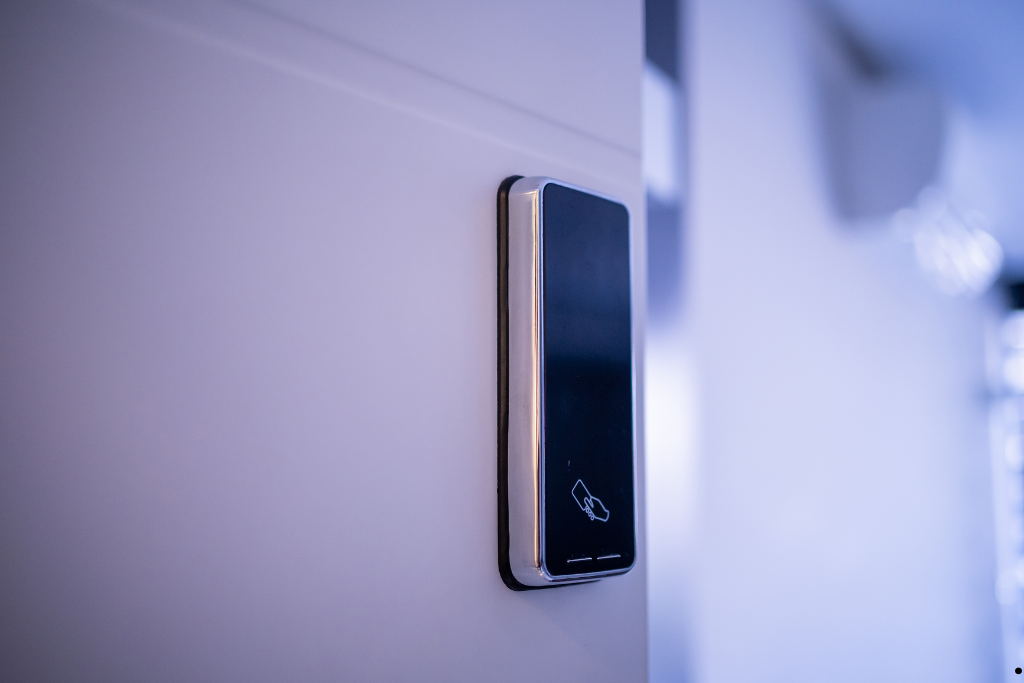
Walk into virtually any Austin retail store — from South Congress boutiques to Domain anchor stores to restaurant supply operations near the 290 industrial corridor — and you’ll find the same pattern: more attention, more hardware, more planning on the front door than the back door.
The front door has a camera. The front door has a lock that the morning opener has a protocol for. The front door gets thought about.
The back door — the receiving entrance, the employee entry, the delivery dock door — is where the front door’s carefully considered security budget didn’t reach. It’s the door with the propped-open problem. The door that delivery drivers knock on and employees let in without verification. The door that a terminated employee used for their last six months and probably still has a mental note about how to access.
For Austin retail, this imbalance has real financial consequences. The National Retail Federation’s annual security surveys consistently identify back-of-house entry points as among the highest-frequency locations for employee-involved theft — specifically because these doors are the path out for merchandise that doesn’t go through the register, and the path in for people who aren’t supposed to be in the building. [1]
A commercial back-door buzzer system addresses this at its root: the receiving/delivery entrance becomes a controlled, verified, and logged access point rather than an informally managed vulnerability.
🔒 Free Back-Door Security Assessment for Your Austin Retail Location
Nexlar Security evaluates back-of-house entry points, delivery access, and access control integration for Austin retail businesses of every size. 👉 Book Your Free Retail Security Assessment
What a Commercial Back-Door Buzzer System Actually Is
The term “buzzer system” is used informally in retail to describe a range of door entry control configurations. In practice, a commercial back-door buzzer system for Austin retail typically combines several components:
Door intercom (audio or audio/video). A call station at the exterior of the back door — a speaker, microphone, and optionally a camera — that allows someone at the back door to announce their presence, speak with a staff member inside, and have the door released remotely.
Door release station at a staff location. An interior control unit at the register, the manager’s desk, or a wall-mounted station that allows an authorized staff member to speak with the person at the back door and remotely release the door lock when appropriate — without leaving their position.
Electrically controlled door hardware. An electric strike, magnetic lock, or electronic deadbolt at the back door that allows remote lock release from the interior control station.
Optional camera. A camera at the back door entry point that allows the interior staff member to visually verify who is requesting entry before releasing the lock — the most impactful addition to a basic audio buzzer system.
Optional scheduled automation. A timer or access control schedule that automatically locks the back door outside of delivery and business hours, reducing the manual locking discipline required from staff.
In their simplest form, these systems are straightforward and cost-effective. A camera-equipped video intercom panel at the back door, wired to an interior monitor or connected to the manager’s smartphone, with a remote lock release button — this is a practical, affordable solution for a small Austin restaurant or boutique retail store.
For larger Austin retail operations — multi-department stores, grocery chains, restaurant groups with multiple locations — more sophisticated configurations integrate back-door access with the store’s broader access control platform, enabling credential-based employee entry, delivery scheduling systems, and unified access event logging.
Mitigating Internal Theft Through Back-of-House Entry Control
The primary use case for back-door buzzer systems in Austin retail is not preventing external break-ins — it is controlling and documenting the movement of merchandise and personnel through the back-of-house.
Retail loss prevention research consistently identifies the back-of-house entry and exit as the most common path for employee-involved merchandise theft. The mechanism is straightforward: an employee moves merchandise to a back area, a door is propped or unlocked at an arranged time, and the merchandise exits through the back entrance without passing through any register or checkout point. [1]
A buzzer system with video and logged access control addresses this in several ways:
Every back door opening is deliberate and documented. When the back door requires a button press at the register or manager’s desk to open, every opening is a deliberate action by an authorized staff member — eliminating the possibility of a door opening without management awareness. The access event is logged with the time, the staff member who authorized the release, and optionally a camera capture of who entered or exited.
Propped door detection eliminates the arranged-opening scenario. A door position sensor integrated with the back-door buzzer system generates an alert when the back door is held open beyond a defined threshold. A door propped open for merchandise staging is detected within seconds, generating a notification to the manager or loss prevention team.
Camera verification before release creates accountability. A staff member who sees on a camera monitor that the person at the back door is not an expected delivery driver — but instead a friend of an employee, or a person without a visible carrier uniform — makes a different decision than a staff member operating purely on audio (“it’s just a delivery”). The camera makes that verification possible.
Access logs create an investigative trail. When a back-of-house theft is discovered, the access log showing who authorized back door entry during the relevant time window is the primary investigative data. Physical keys don’t provide this. A buzzer system with logging does.
Audio/Video Intercom Units with Door Release at Cash Registers and Desks
Positioning the interior door release control at the cash register, the service desk, or the manager’s station is the configuration choice that gives the most effective coverage for a typical Austin retail environment.
At the cash register. For small Austin retail stores and boutiques where the register area is the staff’s primary station throughout the day, a door release button and monitor (or phone call to the back door intercom panel) at the register allows a single staff member to manage both customer transactions and back door delivery access without leaving the register. The staff member hears the intercom call, asks the delivery driver for the carrier and order information, and releases the door if appropriate.
At the manager’s station. For larger Austin retail stores with a dedicated management office or receiving area, the intercom monitor and door release is positioned at the manager’s desk — keeping delivery authorization at a management level rather than delegating it to any associate at the register. This is appropriate for high-value merchandise operations where unauthorized delivery acceptance is a specific risk.
Mobile app release. Modern IP video intercom systems allow the interior door release function to be accessible through a mobile app on an authorized staff member’s phone — allowing a manager who is on the floor, in a stockroom, or temporarily away from their desk to still answer a delivery call and remotely release the door. This eliminates the “no one at the desk to buzz them in” delivery failure that slows receiving operations.
Video monitor at the register. A dedicated video monitor at the register showing the back door camera feed provides continuous passive monitoring of the back door area — not just notification when someone presses the call button, but continuous visibility of the back receiving area throughout the shift.
Scheduled Door Automation: Lock and Unlock on a Business Schedule
One of the highest-value, lowest-cost features available for Austin retail back doors is scheduled door automation — configuring the back door to automatically lock at closing time and unlock for receiving hours without requiring a staff member to remember to do it.
The manual locking failure. In a busy Austin restaurant or retail store at closing time, the manager has multiple simultaneous responsibilities — staff checkout, register reconciliation, food storage, cleaning supervision. The back door lock is one of 15 things that needs to happen before closing. On a busy night, it may not happen.
A back door that was not locked at closing is discovered the next morning when the opening manager arrives — or not discovered until a loss is found. Scheduled automation eliminates this failure mode entirely.
How scheduled automation works. The back door’s electrically controlled lock (electric strike, maglock, or electronic deadbolt) is connected to a schedule controller — which can be as simple as a programmable outlet timer for basic applications, or as sophisticated as a cloud-managed access control schedule for more complex operations. [2]
The schedule is configured once: unlock at 7 AM for receiving, re-lock at 10 AM when morning receiving closes, unlock at 2 PM for afternoon deliveries, re-lock at 4 PM, re-lock at close with no scheduled unlock until the following morning.
When business hours change — holiday hours, event closures — the schedule is updated from the management portal or mobile app in minutes.
After-hours override. Scheduled automation does not prevent authorized access after hours — a staff member with the appropriate credential (PIN code, access card, or app) can still open the back door after the scheduled lock. The automation prevents unauthorized or accidental access, not authorized access.
Delivery Verification: What the Camera Sees Before the Door Opens
The camera at the back door is the component that most directly reduces the risk of unauthorized entry disguised as a legitimate delivery — and it provides the video documentation that supports loss prevention investigations.
For Austin retail and restaurant operations receiving regular deliveries from multiple carriers, a back door camera should provide:
Sufficient resolution for identification. The camera should produce image quality that allows an interior staff member to clearly see the person at the back door — their face, their uniform or carrier logo, and what they’re carrying — at the specific distance from the door where people typically stand when pressing the call button. A blurry or darkened image at the actual call distance is not functional.
Adequate lighting for night and early morning deliveries. Many Austin restaurant deliveries occur before 7 AM or after 9 PM, in conditions where ambient lighting at a back alley door entry is limited. A camera with IR night vision or a dedicated IR illuminator at the back door entry ensures visual verification capability regardless of ambient light levels.
Wide enough field of view to see beyond the immediate entry. A camera that shows only the face of the person at the call panel doesn’t show whether there is a vehicle, additional people, or unusual activity at the back of house. A wider field of view — showing the approach area, the loading dock if applicable, and the surrounding area — provides better contextual information for the staff member making the entry authorization decision.
Timestamped recording. Camera footage of back door activity should be recorded with timestamps, retained for at least 30 days, and stored in a format accessible for loss prevention review. The camera and the access control log together — who authorized the door release, at what time, and what the camera recorded at that moment — constitute the investigative record.
Integrating Back-Door Access with Front-of-Store Security
For Austin retailers with existing security camera systems, alarm systems, or access control platforms at the front of store, the most effective approach is integrating back-door buzzer hardware into the same unified system rather than operating front and back as disconnected platforms.
Integration means:
All camera footage — front of store, sales floor, stockroom, back door — is managed on the same NVR and reviewed through the same interface. A loss prevention investigation searches one system, not two.
All access events — front door badge entry, back door buzzer release, register area access — appear in the same access control log, allowing correlation of events across the store.
Alarm zones cover the back door along with the rest of the building — a back door opened after hours generates the same intrusion alarm response as the front door.
For Austin retailers with stores on multiple South Congress, East Sixth, or Domain locations, a cloud-managed system means the loss prevention team reviews access logs and camera footage across all locations from a single platform, without logging into separate systems for each store.
Nexlar designs integrated retail security systems for Austin multi-location retailers — combining access control, camera systems, alarm monitoring, and back-door buzzer systems into a unified platform that covers the entire store. Learn more about our commercial security systems for Austin retail.
Common Back-Door Security Mistakes in Austin Retail
Propped doors during receiving. Staff prop the back door open during a receiving shift for convenience. A propped door during receiving is an uncontrolled access point for the duration it is open — any person in the back alley can enter. Door position sensor alerts with a defined threshold (door open more than X minutes generates a manager alert) address this directly.
No camera at the back door. An audio-only buzzer system allows staff to verify a delivery by voice (“who is it?”) but not by visual verification. Someone who knows that a particular carrier is expected can present verbally and be buzzed in. A camera changes that dynamic.
Door release accessible to all staff without differentiation. If the door release button is accessible to every associate at every register, any associate can release the back door for any reason at any time without management awareness. Limiting door release to the manager’s station or requiring an authorization code to activate the release creates accountability.
No logging. A buzzer system without any logging provides operational capability but no investigative trail. When a back-of-house theft is discovered, the answer to “who was at the back door during the relevant time window” is unavailable. An IP-based system with access event logging provides this automatically.
Ignoring the door after-hours. A back door that doesn’t lock automatically at close, that doesn’t have a sensor alerting on after-hours opening, and that isn’t covered by the building’s intrusion alarm system is an after-hours vulnerability that front-door alarm systems don’t address.
Hardware Comparison Table
| Configuration | Audio Verification | Video Verification | Access Log | Scheduled Automation | Remote Mobile Release |
|---|---|---|---|---|---|
| Basic Audio Buzzer Only | Yes | No | No | No | No |
| Audio Buzzer + Camera Monitor | Yes | Yes | No | No | No |
| IP Video Intercom + Door Release | Yes | Yes | Yes | Yes | Yes |
| IP Intercom + Access Control Integration | Yes | Yes | Yes (integrated) | Yes | Yes |
| Full Integration (Intercom + Camera + Alarm + AC) | Yes | Yes | Yes (unified) | Yes | Yes |
Cost and Pricing for Austin Retail Installations
| Configuration | Estimated Cost Range |
|---|---|
| Basic Audio Buzzer + Door Release (single door) | $500 – $1,500 |
| IP Video Intercom + Camera + Door Release | $1,500 – $3,500 |
| IP Video Intercom + Mobile App Release | $2,000 – $5,000 |
| Scheduled Door Automation (add-on) | $300 – $800 |
| Full Integration with Existing Camera/Alarm System | $2,500 – $6,000 |
| Multi-Location Austin Retail (per location, cloud-managed) | $2,000 – $5,000 |