

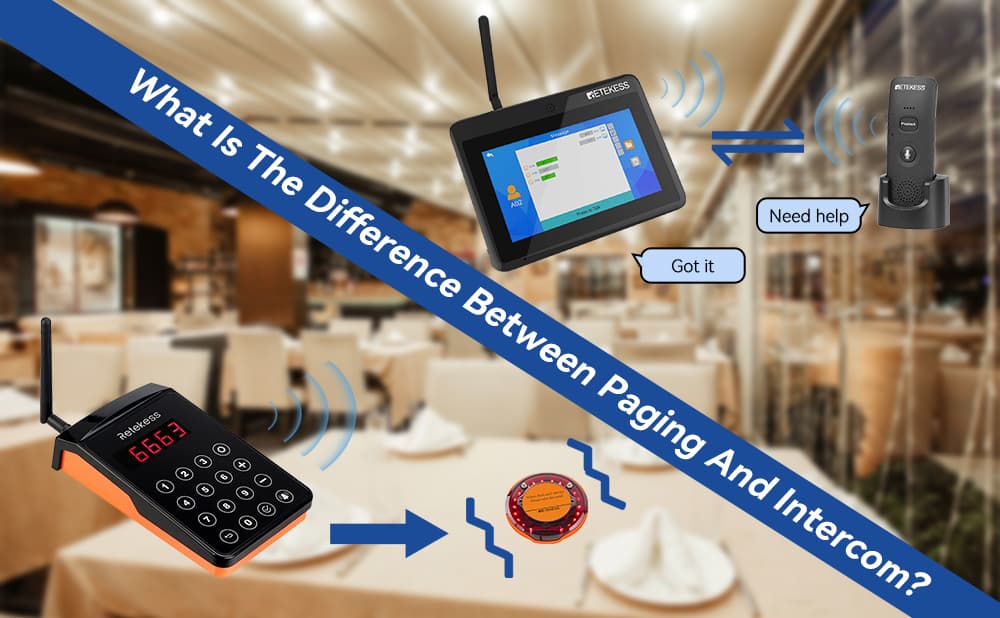
Paging System vs Intercom System: Which Does Your Business Need?
Table of Contents
- What Is the Difference Between a Paging System and an Intercom?
- How Each System Works
- Types of Paging Systems and Intercom Systems
- Key Benefits: Paging vs Intercom
- Limitations of Each System
- Which Industries Use Paging and Which Use Intercom?
- How to Decide: Paging, Intercom, or Both?
- Full Feature Comparison Table
- Cost and Pricing Comparison
- Frequently Asked Questions
- Conclusion
- References
Introduction
When businesses start planning their communication infrastructure, two terms come up constantly: paging system and intercom system. They're often used interchangeably — but they're not the same thing, and choosing the wrong one for your facility can leave critical communication gaps.
The confusion is understandable. Both systems use speakers. Both transmit voice. Both are found in commercial buildings. But they serve fundamentally different communication purposes — and understanding that difference is what separates a well-designed communication system from one that simply doesn't do its job.
In this guide, Nexlar Security gives you a clear, no-jargon breakdown of paging systems versus intercom systems: how each works, what each is best for, and — most importantly — how to figure out which one your Texas business actually needs in 2026.
📞 Not Sure Which System Your Facility Needs?
Nexlar Security offers FREE on-site consultations for Texas businesses. Our licensed experts assess your facility and recommend the right communication solution for your specific needs. 👉 Book Your Free Site Survey Today
What Is the Difference Between a Paging System and an Intercom?
The core difference between a paging system and an intercom system is the direction and scope of communication.
A paging system is designed for one-to-many broadcasting. One central operator sends a message to multiple speakers throughout a facility — or to a specific zone — simultaneously. It's a broadcast tool. The audience listens; they typically cannot respond through the same system.
An intercom system is designed for point-to-point or two-way communication. It connects two specific locations — a front door and a reception desk, for example — and allows both parties to speak and hear each other interactively. It's a conversation tool.
Think of it this way: a paging system is like a public address broadcast. An intercom is like a phone call between two specific points in your building.
Both are valuable. Many commercial facilities need both — paging for facility-wide announcements and intercoms for interactive entry point management. Understanding which function each serves helps you design a communication system that covers all your needs without paying for redundancy.
How Each System Works
How a Paging System Works
When an operator initiates a page — through a microphone, software dashboard, or phone extension — the audio signal is processed by a central controller or amplifier and routed to one or more zones or endpoints throughout the facility. Every speaker in the targeted zone plays the message simultaneously.
The communication flows in one direction: from the operator to the listeners. In most paging systems, recipients cannot respond through the same system. The system is designed for speed and coverage, not conversation.
Modern IP paging systems can be configured to trigger automatically based on scheduled events or system-generated alerts — such as a fire alarm activation, an access control event, or a scheduled shift change — without any manual operator intervention.
How an Intercom System Works
An intercom system connects two or more specific endpoints — typically a door station, gate panel, or visitor call point on one end, and a reception desk, security station, or mobile device on the other. When someone presses the call button at the door station, it rings the designated answer point. The person at the answer point picks up, and a two-way audio conversation takes place.
Modern IP intercoms can include video as well, allowing the person answering the call to see and verify the visitor before granting access. Many intercom systems also integrate directly with access control systems and automatic gate systems, allowing an authorized person to remotely unlock a door or open a gate during the intercom conversation.
Nexlar installs commercial intercom systems that integrate seamlessly with access control and gate management platforms for a complete entry management solution.
Types of Paging Systems and Intercom Systems
Types of Paging Systems
Analog Overhead Paging — Central amplifier hardwired to ceiling speakers. Reliable and cost-effective for small, simple facilities. Limited zone control and no integration with modern platforms.
IP Paging Systems — Audio transmitted over a LAN. Scalable, remotely managed, and capable of deep integration with security systems. The preferred choice for mid-to-large commercial facilities.
Wireless Paging — Audio transmitted via RF or Wi-Fi. Ideal for outdoor environments or facilities where cabling is impractical.
One-Way Paging — Broadcast from operator to audience only. The most common type for general commercial use.
Two-Way Paging — Allows interactive communication between operator and specific endpoints. Bridges the functionality gap between standard paging and intercom systems.
Types of Intercom Systems
Wired Audio Intercom — Traditional two-wire or multi-wire systems connecting door stations to indoor answer units. Reliable and cost-effective for simple entry point management.
IP Video Intercom — Combines two-way audio with HD video over your existing network. Allows visual verification of visitors before granting access. Integrates with access control and camera systems.
Wireless Intercom — Connects door stations to wireless handsets or mobile devices without fixed wiring. Good for facilities where running cable to all entry points is impractical.
Multi-Tenant Intercom — Designed for apartment buildings, office complexes, and multi-tenant commercial properties. Allows visitors to call specific tenants or floors from a central panel.
Video Door Entry System — An advanced form of IP video intercom with integrated access control, allowing remote access management through smartphone apps or browser-based platforms. Nexlar installs door entry systems and telephone entry systems for Texas businesses.
Key Benefits: Paging vs Intercom
Benefits of a Paging System
Mass Communication Speed — A paging system reaches every person in your facility or a specific zone in seconds. No other communication method matches this for speed and scale.
Emergency Alert Capability — For fire evacuations, security threats, or medical emergencies, a paging system ensures that your entire facility receives critical information simultaneously.
Operational Efficiency — Routine operational communication — shift changes, staff coordination, customer service calls — is handled instantly without disrupting the entire facility when zone control is properly configured.
Automated Scheduling — IP paging systems can automate recurring announcements, eliminating the need for manual broadcasts and ensuring consistency across your operations.
Scalability — IP paging systems grow with your business. Adding a new floor, building, or location doesn't require starting over — just extending the existing network.
Benefits of an Intercom System
Secure Entry Management — Intercoms allow you to verify who is requesting access before unlocking a door or gate — a critical security function that paging systems are not designed for.
Two-Way Visitor Interaction — Intercoms enable natural, two-way conversations with visitors, delivery personnel, contractors, and other parties requesting access. This supports professional, efficient entry management.
Visual Verification with Video Intercoms — IP video intercoms allow staff to see and confirm visitor identity before granting access — significantly reducing the risk of unauthorized entry.
Integration with Access Control and Gates — When intercom systems integrate with Nexlar's access control platforms and automatic gate systems, managing access remotely becomes fast, secure, and auditable.
Reduced Physical Staffing at Entry Points — Modern video intercom systems allow a single security officer or receptionist to manage multiple entry points remotely — reducing staffing costs without compromising entry security.
Limitations of Each System
Paging System Limitations
- One-Way by Default — Standard paging systems broadcast to audiences without allowing a response. They cannot verify that a message was received, acknowledged, or acted upon.
- Not Designed for Entry Management — A paging system cannot verify visitor identity, enable a two-way conversation with a person requesting access, or control door locks or gates.
- Potential Noise Disruption — Facility-wide broadcasts can interrupt work in areas that don't need the message. Proper zone configuration mitigates this but doesn't eliminate it entirely.
Intercom System Limitations
- Not Designed for Mass Broadcasting — Intercoms connect specific point-to-point communication stations. They are not capable of reaching your entire facility or multiple zones simultaneously.
- Limited to Entry Points and Fixed Stations — Intercom systems are typically fixed at specific locations. They don't address the operational need for facility-wide communication.
- Higher Complexity for Multi-Point Installations — Managing intercoms across many entry points requires proper system design, network infrastructure, and access control integration to work reliably.
Which Industries Use Paging and Which Use Intercom?
Warehouses and Distribution Centers — Primarily use paging for operational communication across large floor spaces. May also use intercoms at secured entry gates combined with Nexlar's automatic gate systems.
Healthcare Facilities — Use paging extensively for code alerts and staff coordination. Also use intercoms at controlled-access clinical areas and staff entry points. Nexlar's healthcare security solutions incorporate both.
Schools and Universities — Use paging for bell schedules, announcements, and emergency lockdowns. Use intercoms at main entry doors and controlled-access areas. Nexlar's educational security systems commonly combine both.
Office Buildings — Often use both: paging for building-wide announcements and intercoms at lobby entry points and executive suite access areas.
Retail — Primarily use paging for in-store communication. Backroom and receiving door intercoms are common in larger retail environments.
HOA Communities and Apartment Complexes — Rely heavily on intercom systems for tenant entry management at building entrances and parking gates. May also use paging for building-wide announcements. Nexlar serves apartment complexes and HOA communities across Texas.
Government and Secure Facilities — Use both systems extensively: paging for staff communication and emergency protocols, intercoms for controlled access points at every secured entrance. Nexlar's government security division designs integrated solutions for these environments.
How to Decide: Paging, Intercom, or Both?
Here's a direct framework for making the right decision:
Choose a Paging System If: You primarily need to broadcast messages to staff or the public across a large area, announce operational information to multiple zones simultaneously, send emergency alerts facility-wide, or automate recurring announcements on a schedule.
Choose an Intercom System If: You primarily need to manage access at entry points, verify visitor identity before granting entry, enable interactive two-way communication with personnel at specific locations, or integrate communication with door locks, gate systems, or access control.
Choose Both If: Your facility needs mass communication capability for operations and emergencies (paging) AND controlled, interactive entry management with visitor verification (intercom). This is the most common scenario for mid-to-large Texas businesses — and it's exactly the type of integrated solution Nexlar designs and installs.
Most commercial facilities benefit from both systems working together. When they're properly integrated with each other and with your access control and security camera platforms, you have a complete communication and security ecosystem.
Full Feature Comparison Table
| Feature | Paging System | Intercom System |
|---|---|---|
| Communication Direction | One-to-many (broadcast) | Point-to-point (two-way) |
| Mass Facility Broadcasts | Yes | No |
| Entry Point Management | No | Yes |
| Visitor Verification | No | Yes (with video) |
| Two-Way Conversation | Limited | Yes |
| Zone-Based Targeting | Yes | No |
| Emergency Alerts | Yes | No |
| Access Control Integration | Partial | Yes |
| Gate Control Integration | No | Yes |
| Remote Management | Yes (IP systems) | Yes (IP systems) |
| Automated Scheduling | Yes | No |
| Best For | Operations and emergency comms | Entry management and visitor access |
Cost and Pricing Comparison
| System Type | Estimated Installed Cost |
|---|---|
| Basic Analog Paging | $1,500 – $5,000 |
| Mid-Range IP Paging | $8,000 – $25,000 |
| Basic Audio Intercom (per entry point) | $800 – $3,000 |
| IP Video Intercom System | $2,500 – $15,000 |
| Multi-Tenant Intercom System | $5,000 – $25,000+ |
| Combined Paging + Intercom (medium facility) | $12,000 – $40,000 |
Costs vary significantly based on facility size, number of entry points, integration requirements, and whether existing infrastructure can be leveraged. Nexlar provides detailed, itemized quotes after a free on-site assessment.
💡 Get Both Systems Designed Together — and Save
Nexlar designs integrated paging and intercom solutions that share infrastructure and a unified management platform — reducing total cost and complexity compared to separate installations. 👉 Schedule Your Free On-Site Survey Today
Frequently Asked Questions
What is the difference between a paging system and an intercom system?
A paging system broadcasts one-way audio messages from a central operator to multiple speakers or zones throughout a facility simultaneously. An intercom system enables two-way, point-to-point communication between specific locations — typically at entry points for visitor management and access control. Most commercial facilities benefit from having both systems integrated.
Can a paging system replace an intercom?
Not effectively. While some two-way paging systems offer limited interactive capability, they are not designed for the entry point management functions that intercoms serve — such as visitor verification, access control integration, and gate release. Similarly, intercoms cannot replace the mass broadcasting capability of a paging system.
Can an intercom system be used for facility-wide announcements?
Standard intercom systems are not designed for mass broadcasting. They connect specific communication endpoints for two-way interaction. If you need to broadcast announcements across your entire facility or multiple zones, you need a paging system — not an intercom.
Do paging systems and intercoms work together?
Yes, and they work best when they do. IP paging systems and IP intercom systems can share the same network infrastructure, be managed through unified platforms, and integrate with access control and security cameras for a seamless communication and security ecosystem. Nexlar specializes in designing and installing integrated paging and intercom solutions.
Which system is better for emergency communication?
Paging systems are better for emergency communication that needs to reach your entire facility or multiple zones simultaneously. Intercom systems are better for controlled entry management and two-way verification during an incident. In most emergency scenarios, both systems serve complementary roles within a coordinated response plan.
How much does it cost to install both a paging and intercom system?
Combined paging and intercom installations for a mid-size Texas facility typically range from $12,000 to $40,000 depending on facility size, number of entry points, and integration requirements. Bundling both installations with Nexlar often reduces total cost through shared infrastructure and a single project deployment.
What brands of intercom systems does Nexlar install?
Nexlar installs intercom systems from leading manufacturers including Aiphone, ButterflyMX, 2N, DoorKing, and others. Brand selection depends on your facility type, integration requirements, and budget. Nexlar recommends the best option for your specific situation during the free consultation.
Conclusion: Most Businesses Need Both — Done Right
The paging system vs intercom debate doesn't have to be an either/or decision. In most commercial facilities, both systems serve important but different communication roles — and when they're properly integrated with each other and with your access control and security platforms, the result is a facility that communicates smarter, operates more efficiently, and responds to security events faster.
The key is working with a licensed installer who understands both technologies and knows how to design them to work together — not a vendor who only sells one or the other.
Nexlar Security installs paging systems, intercom systems, access control, security cameras, and automatic gate systems for Texas businesses — all under one roof, all designed to work together from day one. Our licensed team (License# B14634) serves Houston, Dallas, San Antonio, Austin, Fort Worth, and San Marcos with integrated commercial security and communication solutions.
Book your FREE on-site consultation today and let Nexlar design the right combination of paging and intercom capability for your Texas business.
References
- Texas Department of Licensing and Regulation (TDLR) – Low Voltage Contractor Licensing
- BICSI – Telecommunications Distribution Methods Manual
- NFPA 72 – National Fire Alarm and Signaling Code
- Nexlar Security – Commercial Intercom Systems: nexlar.com/commercial-intercom-systems
- Nexlar Security – Access Control Systems: nexlar.com/access-control-systems
- Nexlar Security – Automatic Gates: nexlar.com/automatic-gates
- Nexlar Security – Door Entry Systems: nexlar.com/commercial-door-entry-system
Follow Us