

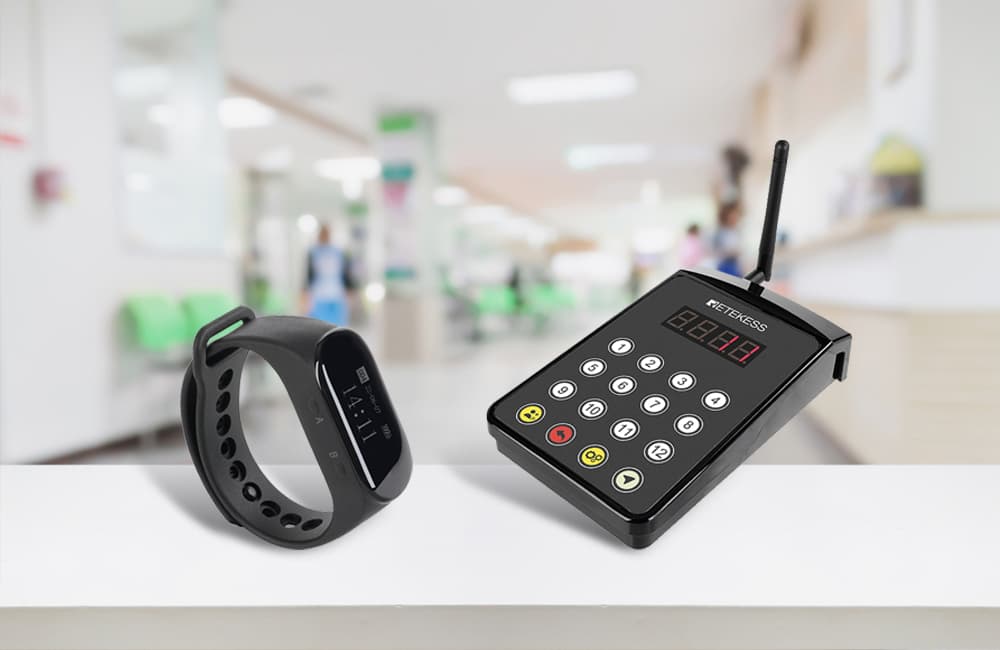
Paging System for Hospitals: Code Blue, Stat & Quiet-Hospital Models
Table of Contents
- Why Hospitals Need a Specialized Paging System
- How a Hospital Paging System Works
- Types of Paging Systems Used in Hospitals
- Key Benefits for Patient Safety and Staff Communication
- Drawbacks and Challenges
- Code Blue, Stat, and Clinical Alert Protocols Explained
- How to Choose the Right Hospital Paging System
- Hospital Paging System Feature Comparison
- Cost and Pricing for Healthcare Facilities
- Frequently Asked Questions
- Conclusion
- References
Introduction
In a hospital, communication delays cost lives. When a patient goes into cardiac arrest, when a trauma team needs to respond, when a security threat emerges in the emergency department — the difference between a coordinated response and a chaotic one is often measured in the speed and clarity of the first alert.
A hospital paging system is not just a communication tool. It is a critical component of patient safety infrastructure. And yet, hospital communication systems face a unique set of competing demands that no other commercial environment presents: the urgent need for instant, reliable emergency alerts on one side, and the equally important need to protect patient recovery through a quiet, calm healing environment on the other.
This guide from Nexlar Security walks Texas healthcare facility managers, clinical operations directors, and hospital technology teams through the full picture — from Code Blue and Stat alert protocols to modern quiet-hospital models — so your facility can communicate faster, more intelligently, and with less noise than your current system allows.
📞 Get a Free Assessment for Your Healthcare Facility
Nexlar Security offers FREE on-site consultations for Texas hospitals, clinics, and medical campuses. Our licensed team designs healthcare paging systems that meet clinical and compliance requirements. 👉 Book Your Free Site Survey Today
Why Hospitals Need a Specialized Paging System
Hospital communication requirements are more demanding and more complex than in any other commercial environment. A paging system that works perfectly in a warehouse or an office building is not adequate for a hospital — because hospitals require a combination of capabilities that no other facility type demands simultaneously.
Hospitals need immediate, facility-wide emergency broadcast capability for code events and security threats. They need zone-specific clinical communication that reaches the right staff in the right department without disturbing patients in recovery areas. They need quiet-hospital compliance that reduces unnecessary overhead audio to protect the healing environment and address alarm fatigue among clinical staff. And they need integration with nurse call systems, fire alarms, security cameras, and access control platforms — all within a HIPAA-aware communication architecture.
Legacy analog paging systems — the kind many Texas hospitals are still running — were designed for one-to-many broadcasting. They weren't designed for the nuanced, zone-intelligent, clinically sensitive communication that modern hospital operations require.
Nexlar's healthcare security solutions address all of these requirements within a single, integrated platform — combining paging, access control, and security camera systems for Texas healthcare facilities.
How a Hospital Paging System Works
A modern hospital IP paging system operates through a centralized controller that manages multiple independent audio zones corresponding to different clinical and non-clinical areas of the facility. Each zone can receive messages independently, as part of a group, or as part of a facility-wide broadcast — depending on the nature of the communication and the clinical requirements of each area.
Clinical staff initiate pages through dedicated microphones at nurse stations, software interfaces on clinical workstations, IP phone extensions, or authorized mobile devices. In modern deployments, pages can also be initiated from nurse call system integrations — allowing a patient call or clinical alert from the nurse call platform to automatically trigger a paging broadcast to the appropriate clinical zone.
Emergency events — Code Blue, Code Red (fire), Code Silver (weapon or hostage situation), Code Grey (combative person), or other standardized hospital codes — can be triggered from dedicated panic buttons, specialized code phones, nurse call integrations, or software interfaces. When triggered, the system immediately broadcasts the pre-programmed code announcement to the designated zones, activating the appropriate response protocol without requiring a PBX operator to manually initiate the broadcast.
The system logs every paging event — who initiated it, when, which zones were addressed, and what message was delivered — creating an audit trail that supports post-incident review, Joint Commission compliance, and quality improvement processes.
Types of Paging Systems Used in Hospitals
IP Multi-Zone Paging with Clinical Zone Management
The recommended system type for most modern Texas hospitals. IP paging divides the facility into granular clinical zones — ICU, emergency department, surgical suites, patient floors, family waiting areas, cafeteria, loading docks — each independently addressable. Audio levels, alert tones, and access permissions are configured per zone to match the clinical environment of each area.
Quiet-Hospital IP Paging Systems
A specialized configuration of IP paging designed specifically to reduce unnecessary overhead audio throughout the facility. Rather than broadcasting all communication over overhead speakers, quiet-hospital systems route most routine clinical communication to staff devices — mobile phones, pagers, nurse call units, or workstation alerts — reserving overhead paging only for emergency codes and truly facility-critical announcements. This model directly addresses Joint Commission Sentinel Event Alert guidance on alarm fatigue in clinical environments.
Nurse Call Integrated Paging
Integrated platforms that connect the nurse call system directly to the IP paging infrastructure. When a patient activates a nurse call, the system can automatically broadcast to the relevant clinical zone, page the assigned nurse directly, or route the alert through a prioritized notification sequence — escalating automatically if the primary nurse doesn't acknowledge within a defined timeframe.
Analog Overhead Systems (Legacy)
Still operational in many older Texas hospitals. Provide basic facility-wide broadcasting but lack the zone granularity, quiet-hospital capability, nurse call integration, and emergency automation that modern clinical operations require. Hospitals still running analog systems should evaluate transition timelines as part of their capital planning process.
Hybrid Analog/IP Transition Systems
A cost-managed migration path connecting existing analog speaker infrastructure to an IP controller — preserving hardware investment while gaining IP management, zone control, and emergency integration capabilities during a phased replacement program.
Key Benefits for Patient Safety and Staff Communication
Immediate Code Alert Activation Pre-programmed code announcements — Code Blue, Code Red, Code Silver, and all facility-standard codes — activate with a single trigger from anywhere in the facility. The message broadcasts to the appropriate zones immediately, without operator involvement. Every second saved between a code event and the response team's mobilization has direct clinical impact.
Zone-Specific Communication Reduces Unnecessary Disruption Clinical-grade zone management means that a Code Blue alert in the cardiac care unit doesn't unnecessarily alarm patients in pediatrics or the outpatient waiting area. Zones are configured to match the actual clinical geography and communication logic of your facility.
Quiet-Hospital Compliance Reduces Alarm Fatigue The Joint Commission and clinical research consistently identify alarm fatigue — the desensitization of clinical staff to excessive audio alerts — as a significant patient safety risk. Quiet-hospital paging models that route routine communication to staff devices and minimize overhead audio directly address this risk while maintaining full emergency broadcasting capability when it matters most.
Nurse Call Integration Accelerates Response When nurse call events automatically trigger paging alerts to the relevant clinical zone, response times improve and communication failures between patient needs and nursing staff are reduced. Integration creates a closed-loop communication chain from patient alert to caregiver response.
Integration with Hospital Security Infrastructure IP hospital paging integrates with Nexlar's access control systems — controlling who enters secured clinical areas — and security camera systems — providing visual situational awareness during security code events. When a Code Silver or security threat is declared, the paging system and access control platform respond in a coordinated, automated sequence.
Comprehensive Event Logging for Compliance Every paging event is logged with full details — timestamp, initiating station, zones addressed, message content, and duration. This audit trail supports Joint Commission accreditation documentation, post-incident review, and quality improvement initiatives.
Drawbacks and Challenges
High System Complexity Hospital paging systems are among the most complex commercial deployments — requiring clinical input on zone design, compliance review for emergency protocols, integration with nurse call and fire alarm platforms, and careful acoustic planning across a diverse range of clinical environments. The design process requires experienced healthcare communication specialists, not generalist AV or low-voltage installers.
Network Infrastructure Requirements IP hospital paging requires a robust, highly reliable network infrastructure with QoS configuration, VLAN segmentation, redundant PoE switching, and battery backup. Healthcare networks have additional security requirements — including compliance with HIPAA technical safeguard standards for communication systems — that must be incorporated into the network design.
Acoustic Diversity of Clinical Environments A hospital contains an unusually diverse range of acoustic environments — from high-ambient-noise environments like emergency departments, kitchens, and loading docks to extremely quiet environments like ICUs, patient rooms, and surgical suites. A single speaker type and audio level cannot serve all of these areas. Zone-by-zone acoustic design is essential.
Staff Training and Protocol Documentation Every clinical and administrative staff member who may need to activate an emergency code or initiate a page must be trained on the system. Emergency communication protocols must be documented, tested, and reviewed regularly as part of the facility's emergency operations plan.
Capital Budget Requirements A properly designed hospital IP paging system represents a significant capital investment. However, the risk of inadequate clinical communication — measured in patient safety outcomes, liability exposure, and Joint Commission compliance — makes it one of the highest-value technology investments a hospital can make.
Code Blue, Stat, and Clinical Alert Protocols Explained
Code Blue — Cardiac or Respiratory Arrest
Code Blue is declared when a patient experiences cardiac or respiratory arrest requiring immediate resuscitation response. A hospital paging system must activate a Code Blue broadcast to the appropriate clinical zones — including the specific floor or unit where the event is occurring — within seconds of the trigger activation. The broadcast includes the code type and the exact location so the response team can mobilize immediately.
Modern IP hospital paging systems support location-specific Code Blue activation from buttons installed at each patient bedside, at nurse stations, and at other key clinical locations throughout the facility.
Stat — Immediate Clinical Priority
A Stat page designates an immediate priority requiring urgent staff response — distinct from the life-threatening emergency of a Code Blue. Stat pages are used to summon specific staff members, clinical teams, or equipment to a specific location with a high degree of urgency. In IP paging systems, Stat alerts can be configured to target specific zones or individual staff devices depending on the clinical workflow requirements.
Code Red — Fire Emergency
Code Red activates fire evacuation or shelter-in-place protocols for the affected area. Hospital IP paging systems integrate directly with the fire alarm panel so that a fire alarm activation automatically broadcasts the appropriate Code Red announcement to the designated zones — identifying the location of the alarm and the required staff action — without any manual operator step.
Code Silver — Weapon or Active Threat
Code Silver activates security lockdown and response protocols when a person with a weapon or an active threat situation is identified in the facility. The paging system broadcasts the Code Silver announcement with the reported location to clinical and security staff zones, while simultaneously integrating with access control systems to lock down designated entry points.
Quiet-Hospital Communication Model
The quiet-hospital model addresses the clinical evidence that excessive overhead audio in patient care environments increases alarm fatigue, disrupts patient sleep and recovery, and contributes to staff stress and communication errors. Under this model, routine clinical communication — staff calls, routine pages, non-urgent notifications — is routed to staff mobile devices, nurse call handsets, or workstation notifications rather than overhead speakers. Overhead paging is reserved exclusively for emergency codes and facility-critical broadcasts. The result is a calmer patient environment and more attentive clinical staff — without sacrificing emergency communication speed or reliability.
How to Choose the Right Hospital Paging System
Define Your Clinical Zone Architecture First Work with clinical operations leadership to map every zone of your facility — patient floors, ICU, emergency department, surgical suites, radiology, waiting areas, cafeteria, and support areas — and define the communication requirements for each. Zone design is the foundation of every other system decision.
Assess Nurse Call Integration Requirements Determine whether your existing nurse call system supports integration with an IP paging platform, and what the clinical workflow requirements are for nurse call-to-paging escalation. This affects both system selection and integration design.
Define Your Emergency Code Protocols Document every emergency code your facility uses, the zones each code should address, and the required response protocol. These protocols must be programmed into the paging system before it goes live — and tested regularly as part of your emergency operations program.
Evaluate Quiet-Hospital Requirements Assess whether your facility has established quiet-hospital policies or Joint Commission improvement goals related to overhead paging. If so, a quiet-hospital IP paging model that routes routine communication to devices is likely the right architectural direction.
Verify HIPAA Technical Safeguard Compliance Any communication system in a healthcare facility must be evaluated for alignment with HIPAA Technical Safeguard requirements — particularly for any paging content that references patient identity or condition. Work with your compliance officer and a knowledgeable installer to ensure your system architecture meets these requirements.
Choose a Licensed Installer with Healthcare Experience Hospital paging installation requires not just a Texas Low Voltage Contractor License, but genuine experience in healthcare communication systems. Nexlar Security holds License# B14634 and has designed integrated security and communication systems for healthcare facilities across Texas.
Hospital Paging System Feature Comparison
| Feature | Legacy Analog | IP Hospital Paging | Quiet-Hospital IP |
|---|---|---|---|
| Facility-Wide Code Broadcasts | Yes | Yes | Yes |
| Zone-Specific Clinical Alerts | No | Yes | Yes |
| Quiet-Hospital Device Routing | No | Partial | Yes |
| Nurse Call Integration | No | Yes | Yes |
| Fire Alarm Auto-Trigger | No | Yes | Yes |
| Access Control Integration | No | Yes | Yes |
| Event Logging for Compliance | No | Yes | Yes |
| Remote Management | No | Yes | Yes |
| Alarm Fatigue Mitigation | No | Partial | Yes |
| Upfront Cost | Low | Medium – High | High |
| Best For | Legacy replacement | Full IP deployment | New construction / full upgrade |
Cost and Pricing for Healthcare Facilities
| Facility Type | Estimated System Cost |
|---|---|
| Small Clinic or Medical Office | $5,000 – $15,000 |
| Community Hospital (single building) | $25,000 – $75,000 |
| Regional Medical Center (multi-building) | $60,000 – $150,000+ |
| Large Academic Medical Center | Custom — contact Nexlar |
Key cost factors include number of zones, total speaker count, nurse call integration complexity, fire alarm and access control integration, network infrastructure requirements, and whether a quiet-hospital routing model is included. Nexlar provides detailed, itemized project quotes after every free on-site assessment.
💡 Design a Hospital Paging System That Meets Clinical and Compliance Standards
Nexlar's licensed healthcare security specialists design paging systems that integrate with nurse call, fire alarms, and access control — built to meet Joint Commission requirements and Texas healthcare facility standards. 👉 Schedule Your Free On-Site Survey Today
Frequently Asked Questions
Q: What is a hospital paging system?
A: A hospital paging system is a specialized IP audio communication platform that broadcasts emergency code alerts, clinical staff pages, and facility-wide announcements through a network of ceiling-mounted speakers divided into independently addressable zones. It supports emergency protocols such as Code Blue and Code Red, integrates with nurse call and fire alarm systems, and — in quiet-hospital models — routes routine communication to staff devices to reduce unnecessary overhead audio in patient care areas.
Q: What is a Code Blue paging alert in a hospital?
A: Code Blue is a standardized hospital emergency code indicating a patient is experiencing cardiac or respiratory arrest and requires immediate resuscitation response. In a hospital paging system, Code Blue is triggered from a button at the patient's location — a bedside unit, nurse station, or wall-mounted call point — and immediately broadcasts a pre-programmed announcement identifying the code type and exact location to the designated clinical zones so the response team can mobilize without delay.
Q: What is a Stat page in a hospital?
A: A Stat page in a hospital is an urgent communication that requires immediate staff response — used to summon specific clinicians, clinical teams, or equipment to a location with high priority. Unlike Code Blue, a Stat page does not necessarily indicate a life-threatening emergency but requires faster response than a routine page. In IP hospital paging systems, Stat alerts are typically configured to target specific clinical zones or individual staff devices based on the nature of the urgency and clinical workflow design.
Q: What is a quiet-hospital paging model?
A: A quiet-hospital paging model is a communication architecture that minimizes unnecessary overhead audio in patient care environments by routing routine clinical communication — staff calls, non-urgent notifications, routine pages — to staff mobile devices, nurse call handsets, or workstation notifications instead of overhead speakers. Overhead paging is reserved only for emergency codes and facility-critical broadcasts. This model addresses alarm fatigue in clinical staff, supports patient recovery, and aligns with Joint Commission guidance on reducing environmental noise in healthcare settings.
Q: Can a hospital paging system integrate with a nurse call system?
A: Yes. Modern IP hospital paging systems can integrate with nurse call platforms so that patient call activations, clinical alerts, or escalation events from the nurse call system automatically trigger a paging broadcast to the appropriate clinical zone. This integration creates a closed-loop communication pathway from patient alert to caregiver notification — reducing response times and minimizing missed calls. Integration specifications depend on the specific nurse call platform in use and must be verified during system design.
Q: Does a hospital paging system need to comply with HIPAA?
A: Yes, with important nuance. HIPAA Technical Safeguards apply to any electronic system that transmits or receives Protected Health Information (PHI). While overhead paging itself typically does not transmit PHI — it broadcasts location and code type, not patient identity or clinical details — any integration with nurse call, electronic health records, or clinical workflow systems that could expose PHI through paging triggers must be evaluated against HIPAA technical safeguard requirements. Work with your compliance officer and a knowledgeable systems integrator to ensure your implementation meets these standards.
Q: How is a hospital paging system different from a standard commercial paging system?
A: A hospital paging system differs from standard commercial paging in several significant ways: it must support standardized clinical emergency codes with automated triggering, manage a larger number of acoustically and clinically distinct zones, integrate with nurse call and fire alarm systems, support quiet-hospital communication models to mitigate alarm fatigue, provide comprehensive event logging for Joint Commission compliance, and operate with extremely high reliability and redundancy. These requirements make hospital paging one of the most complex and specialized commercial communication deployments.
Conclusion: Hospital Communication Systems Must Be Built to Clinical Standards
A hospital paging system is not a standard commercial installation — it is a clinical safety infrastructure component that directly affects patient outcomes, staff response times, and facility compliance. The difference between a system designed specifically for healthcare and a generic commercial system adapted for a hospital is measured in the speed of code responses, the accuracy of zone-targeted alerts, the quality of the patient environment, and the reliability of compliance documentation.
Texas hospitals and healthcare facilities deserve paging systems engineered to clinical standards — designed by people who understand both the technical requirements and the operational realities of healthcare communication.
Nexlar Security designs and installs integrated healthcare communication systems — combining IP paging, access control, and security cameras — for hospitals, clinics, and medical campuses across Houston, Dallas, San Antonio, Austin, Fort Worth, and San Marcos. Our licensed team (License# B14634) works closely with clinical operations and facilities management to design systems that meet your specific patient safety and compliance requirements.
Book your FREE on-site consultation today and take the first step toward a hospital communication system built to the standards your patients and staff deserve.
References
- The Joint Commission — Sentinel Event Alert Issue 50: Medical Device Alarm Safety in Hospitals
- The Joint Commission — Environment of Care and Life Safety Standards
- NFPA 72 — National Fire Alarm and Signaling Code, Chapter 24: Healthcare Emergency Communication
- OSHA 1910.165 — Employee Alarm Systems Standard
- HIPAA Security Rule — 45 CFR §164.312: Technical Safeguards
- Texas Department of State Health Services (DSHS) — Healthcare Facility Licensing Requirements
- Texas Department of Licensing and Regulation (TDLR) — Low Voltage Contractor Licensing
- Nexlar Security — Healthcare Security Solutions: nexlar.com/healthcare-security-solution
- Nexlar Security — Access Control Systems: nexlar.com/access-control-systems
Follow Us