

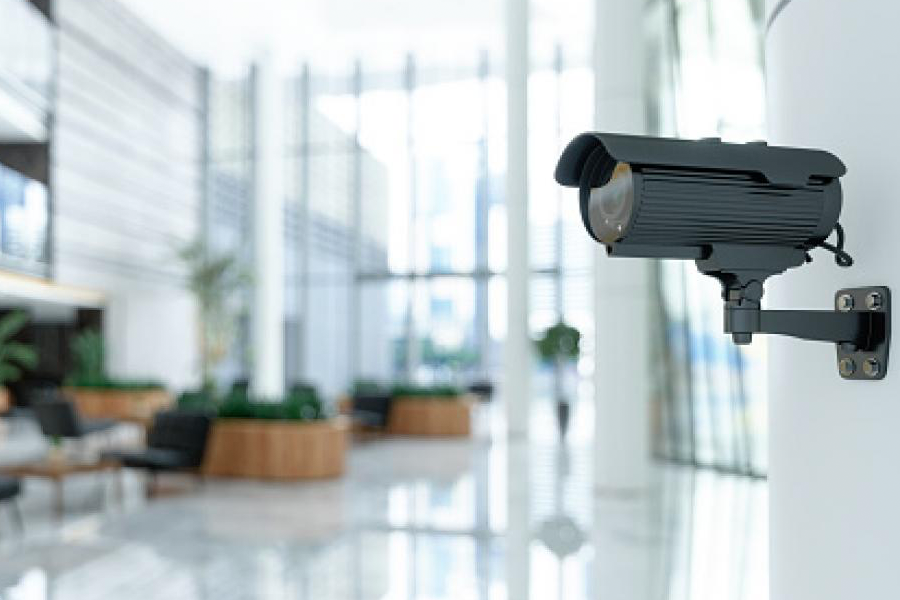
Austin’s commercial office market includes a significant and growing segment of multi-tenant environments: coworking spaces along Sixth Street and the Domain corridor, shared office buildings in the East Austin tech hub, and traditional multi-tenant professional buildings where multiple businesses occupy the same floor or building.
These environments create a security camera design challenge that single-tenant commercial properties do not face. In a single-tenant building, the camera system serves one organization with one security policy. In a multi-tenant building, the camera system must serve the building operator’s security requirements, the individual tenants’ security expectations, and a complex set of privacy considerations that arise when the camera coverage of one tenant’s activities is potentially visible to another.
The building operator needs common area coverage to protect shared infrastructure, document incidents in shared spaces, and maintain a security posture that satisfies their property insurance requirements and lease obligations to tenants. Individual tenants need confidence that their private suite activities, their client interactions, and their proprietary information visible in their space are not being monitored by a camera system accessible to the building operator or other tenants. Anchor tenants in large coworking environments may have legitimate needs for camera access to specific common areas adjacent to their suites while not having any access to footage of other tenants.
This guide covers how Nexlar designs camera systems for Austin multi-tenant office buildings and coworking spaces that address all three of these requirements simultaneously through proper placement, AI-powered alert configuration, and role-based footage access permissions.
Get a Free Multi-Tenant Camera Assessment for Your Austin Building
Nexlar Security designs camera systems for Austin coworking spaces and multi-tenant office buildings. Free on-site assessment. Contact Nexlar at nexlar.com/contact or call (281) 407-0768
Common Area Camera Placement in Austin Coworking and Office Buildings
Common area coverage is the foundation of every multi-tenant camera deployment. The common areas of an Austin coworking space or office building include the main building entry, elevator lobbies, stairwells, corridors between suites, shared kitchenettes, lounges, and any shared conference or meeting facilities.
These areas are within the building operator’s clear responsibility for security coverage, do not raise privacy concerns about individual tenant business activities, and are the locations where most building security incidents occur: unauthorized entry, after-hours access, package theft, and interpersonal incidents between individuals from different tenant organizations.
Main building entry and elevator lobby. The highest priority camera positions in any multi-tenant Austin office building. Camera coverage here documents every person entering the building, supports visitor management by verifying that visitors proceeded to their declared destination, and provides the footage foundation for any incident investigation involving someone who was in the building.
Shared kitchenettes and break rooms. Among the most frequently cited incident locations in multi-tenant office environments. Personal property theft from refrigerators, supply disputes between tenants, and interpersonal conflicts that occur in shared food preparation areas are regular occurrences in Austin coworking buildings. Camera coverage at the kitchenette entry or covering the kitchenette interior (positioned to capture the space without targeting individual conversations) documents these incidents and provides the footage for building management investigation.
Conference corridors and shared meeting facilities. Corridors leading to shared conference rooms and the conference room entries document meeting room access and corridor traffic patterns. Coverage should focus on the corridor and entry rather than the interior of conference rooms, where the expectation of meeting privacy applies.
Nexlar’s commercial business security systems for Austin multi-tenant buildings include common area camera layout planning as the foundational step of every building camera project.
AI Line-Crossing Alerts for Tenant Suite Boundaries
The boundary between a shared common area and an individual tenant’s private suite is the most legally and operationally sensitive camera coverage boundary in a multi-tenant Austin office building. A corridor camera that covers the hallway outside multiple tenant suites is appropriate. A camera angled to see through an open suite door and into a tenant’s private workspace crosses the line into footage that the tenant did not consent to have captured.
AI line-crossing detection provides a technical solution to this boundary management challenge. A virtual line is configured in the camera’s AI analytics at the boundary between the common area the camera is intended to cover and the adjacent tenant space. When any person crosses this virtual line in the direction from the common area into the tenant space, the system generates an alert rather than continuing passive recording.
For building security purposes, this alert serves a tailgating detection function: if someone follows an authorized tenant through a suite entry door without presenting their own credential, the line-crossing alert combined with the access control event (one credential presented, two people entered) generates a security notification. This is the technical mechanism for detecting unauthorized entry into tenant suites through tailgating, without requiring the camera to be positioned or angled to monitor inside the tenant space.
The AI line-crossing function also applies to restricted building areas: server rooms, utility spaces, building management offices, and other building operator facilities that are not tenant spaces but are also not general common areas. Line-crossing alerts at the boundary of these spaces detect unauthorized approach without requiring dedicated cameras inside each space.
Combining AI line-crossing with the access control systems Nexlar installs for Austin multi-tenant buildings creates a layered entry detection system where the access control record and the camera record are correlated automatically for any line-crossing event.
Granting Limited Feed Permissions to Anchor Tenants
Large anchor tenants in Austin coworking facilities and multi-tenant office buildings sometimes have legitimate security interests that extend slightly beyond their own private suites into the adjacent common areas.
A law firm occupying the entire fourth floor of a downtown Austin building has a legitimate interest in monitoring the corridor and elevator lobby access to the fourth floor, because these are the primary entry paths into their tenanted space and unauthorized access through these paths directly affects their security. A large technology company as the anchor tenant of a coworking building may want camera access to the parking structure access points that their employees primarily use, without access to footage covering other tenants’ areas.
Cloud-based video management systems (VMS) support granular camera feed permission assignment that makes this kind of limited tenant access both possible and controllable. The building operator’s VMS administrator creates a user account for the anchor tenant’s designated security contact, assigns that account view-only access to the specific cameras serving the relevant common areas adjacent to the tenant’s space, and sets the access to cover only those cameras and no others.
The anchor tenant’s security contact can view live feeds and review recorded footage from their assigned cameras through the cloud VMS interface, with no ability to see footage from cameras outside their permission set and no ability to change system settings. Every viewing session by the anchor tenant’s account is logged in the VMS audit trail, providing the building operator with a complete record of which footage each tenant account accessed and when.
This limited permission structure satisfies the anchor tenant’s legitimate security interest while protecting the privacy of other tenants whose areas are covered by other cameras in the same building system.
Privacy Boundaries in Multi-Tenant Austin Office Environments
Texas does not currently have a comprehensive commercial privacy statute equivalent to the privacy laws in California or Illinois, but the general principles of reasonable expectation of privacy apply to multi-tenant office environments in ways that building operators should formally address in their camera deployment policies.
Tenants in a multi-tenant Austin office building have a reasonable expectation that their private suite operations, client conversations, and proprietary information visible within their space are not being monitored. Camera coverage that inadvertently captures tenant suite interiors through open doors, that is positioned to capture a tenant’s computer screens from a corridor camera, or that covers spaces where clients or patients engage in confidential interactions raises the same reasonable expectation of privacy issues that apply to employee monitoring in general.
Building operators with a formal written camera policy, shared with tenants at lease execution and available for review on request, are in a substantially better legal and operational position than operators who deploy cameras without formal documentation of placement rationale and access controls. Nexlar provides camera placement documentation for every Austin multi-tenant camera project that supports this policy documentation requirement.
Visit Nexlar’s Austin security systems to understand how Nexlar supports Austin building operators in creating complete, documented security programs.
Cost and Pricing for Austin Multi-Tenant Camera Installations
| Installation Scope | Estimated Cost Range |
|---|---|
| Small Coworking Space (8 to 15 cameras, cloud NVR) | $7,000 to $20,000 |
| Mid-Size Multi-Tenant Floor (15 to 30 cameras) | $15,000 to $40,000 |
| Full Multi-Tenant Building (30 to 60 cameras) | $30,000 to $75,000 |
| AI Line-Crossing Configuration (per camera) | $200 to $600 additional |
| Anchor Tenant Permission Setup (per tenant account) | $300 to $800 per account |
| Cloud VMS Subscription (per month per building) | $200 to $600 per month |