

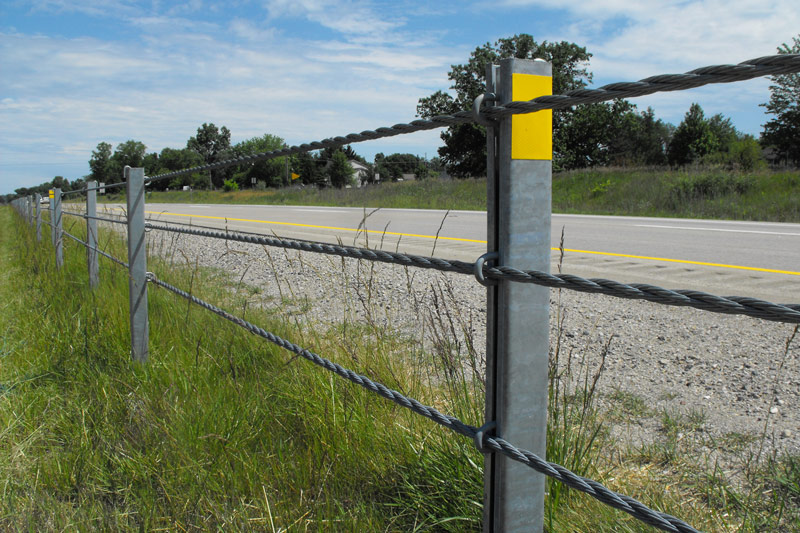
Gibraltar Cable Barriers: Cost-Effective Perimeter Security
Securing a commercial or industrial property is no longer just about posting a guard at the gate. Modern threats — from unauthorized vehicle intrusion to organized perimeter breaches — demand infrastructure-grade solutions that are both effective and financially practical. That is exactly where the Gibraltar cable barrier delivers. At Nexlar, we work with property owners, facility managers, and security professionals across Texas to implement barrier systems that protect assets without draining capital budgets. If you have been researching the gibraltar cable barrier cost and wondering whether it fits your project, this guide walks you through everything you need to know — from how these systems work to what drives installation pricing.
How Cable Barriers Work
A cable barrier system is a high-tension perimeter defense solution that uses multiple strands of steel wire rope stretched between anchor posts and line posts. When a vehicle strikes the system, the cables absorb and redirect the kinetic energy of the impact rather than resisting it head-on. This controlled deflection is what makes cable barriers so effective — they stop the vehicle without the catastrophic structural collapse that can occur with rigid concrete or steel barriers.
The Gibraltar cable barrier, manufactured to meet stringent FHWA acceptance standards, is available in multiple configurations including two-cable, three-cable, and four-cable designs. Each configuration is engineered for a specific threat level. The three-cable system is widely used for highway median applications, while the four-cable TL-4 design is built to contain vehicles ranging from compact cars all the way up to 18,000 lb cargo trucks. The post spacing, cable height, and tension ratings all work together as a precision cable barrier system, not a loosely assembled fence.
What makes the Gibraltar design stand out in the marketplace is the intentional simplicity of its components. Fewer parts mean faster installation, simpler maintenance, and a lower overall gibraltar cable barrier cost on a per-linear-foot basis. The system has passed both NCHRP 350 and EN 1317 testing standards — testing protocols used by transportation and defense agencies worldwide to certify barrier performance under real crash conditions.
Where Gibraltar Barriers Are Deployed Across Industries
The gibraltar barriers product line has found application across a remarkably diverse set of industries, and understanding those use cases helps property owners determine whether a cable system is the right match for their site.
Highway and roadway agencies have been the largest users of the highway cable barrier for decades. State departments of transportation across the United States have deployed these systems along median dividers to prevent cross-over crashes, which are among the deadliest collision types on divided highways. The performance record in this sector is well-documented. In Roseville, Minnesota, for example, a Gibraltar installation stopped a vehicle that had lost control — with no injuries reported — demonstrating the life-saving potential of a properly installed cable barrier system.
Beyond highways, gibraltar perimeter security solutions are deployed at oil refineries, data centers, military installations, government buildings, airports, power plants, and commercial campuses. Anywhere a boundary needs to be enforced against unauthorized vehicle access, a cable system offers a credible, code-compliant solution. The gibraltar company has also supplied products to international clients, with installations spanning multiple continents and meeting country-specific crash test certifications.
Cost vs Concrete Walls: What the Numbers Actually Show
This is the section most decision-makers care about most, so we are going to be direct. Concrete perimeter walls are expensive — not just in material cost, but in the entire chain of work required to install them. Pouring a reinforced concrete barrier requires deep foundations, significant excavation, rebar cages, form work, cure time, and heavy equipment on-site for extended periods. In dense urban or paved commercial environments, that excavation work alone can push project budgets into territory that is hard to justify.
Cable barriers require a fraction of that groundwork. Post holes are drilled, not trenched. Concrete is used only at post footings, not across the entire perimeter. The gibraltar cable barrier cost per linear foot is consistently lower than concrete alternatives at comparable vehicle containment ratings. When you factor in labor hours, equipment rental, and project timeline — which directly affects business disruption — the savings become substantial.
There is also the matter of visibility. Solid concrete walls block sightlines completely, which creates blind spots for security personnel monitoring the perimeter. Cable systems are inherently transparent, which means security cameras and on-site guards retain full visibility of the area beyond the barrier line. This is a meaningful operational advantage that concrete walls simply cannot provide.
Maintenance costs further widen the gap. Concrete barriers that sustain vehicle strikes often require costly repairs that may involve demolition and replacement of entire sections. A damaged cable barrier section can be repaired by replacing individual cable strands and posts — a process that takes a fraction of the time and material cost. Over a ten-year ownership horizon, cable systems routinely prove to be the more economical choice even at sites where upfront concrete costs appear comparable.
Installation Requirements for a Gibraltar Cable Barrier System
Understanding barrier installation requirements helps you plan a realistic timeline and budget before your project breaks ground. Cable barrier installation is methodical work — it is not complex, but it does need to be done correctly by experienced contractors who understand post spacing tolerances, cable tensioning specifications, and anchor post placement.
Site preparation begins with a survey of the installation corridor. Ground conditions, slope, and the presence of underground utilities all influence where posts can be driven and how deep the footings need to go. The gibraltar cable barrier is designed to accommodate installations on level terrain as well as slopes up to 4:1 — a significant advantage over rigid barriers that require level ground or expensive grading.
Post installation follows the survey. Anchor posts are placed at key intervals — typically at the ends of each run and at any significant directional change — while line posts fill the spacing between them. The Gibraltar system's design philosophy is built around minimizing the number of components, which directly reduces the number of post holes, the volume of concrete required, and the total installation hours. Contractors who have worked with competing systems frequently note the difference in pace and ease of assembly.
Cable tensioning is the final and most technically specific phase of barrier installation. Each cable strand must be tensioned to within the manufacturer's specifications to ensure the system performs as designed during an impact event. Under-tensioned cables may allow excessive deflection; over-tensioned cables risk premature fatigue. Experienced installers use calibrated tensioning tools and follow manufacturer protocols to achieve the correct load — and they document the final tension values for the project record.
Permit requirements vary by jurisdiction. Highway installations typically fall under state DOT oversight, while commercial perimeter projects may require local building or safety permits. Working with a licensed security integrator like Nexlar ensures that all permitting, code compliance, and inspection checkpoints are handled as part of the project — not left to the property owner to navigate independently.
Factors That Influence Gibraltar Cable Barrier Cost on Your Project
No two perimeter security projects are identical, which means the gibraltar cable barrier cost on your specific site depends on several variables that a qualified estimator needs to evaluate in person or through a detailed site plan review.
The total run length is the most straightforward cost driver — longer perimeters require more posts, more cable, and more installation labor. The configuration type also matters significantly. A two-cable system covering a low-risk boundary will cost meaningfully less than a certified TL-4 four-cable system deployed at a high-security facility. The threat level at your site should drive this choice, not budget alone.
Ground conditions beneath your site play a significant role in excavation difficulty. Rocky soil, high water tables, or heavily compacted ground can require specialized drilling equipment that adds cost and time. Conversely, sites with clean, accessible soil are often quoted at lower labor rates because installation moves quickly.
Access points and integration with existing barrier systems also affect total project cost. If your perimeter already includes gates, crash-rated bollards, or other access control infrastructure from Nexlar, integrating a gibraltar barriers run into that existing ecosystem is typically more efficient than a ground-up installation on an undeveloped site. We design these systems to work together, and in many cases the coordination between components produces cost savings through reduced redundancy.
Comparing Cable Barrier Systems Available on the Market Today
The cable barrier market includes several manufacturers, each with their own post spacing requirements, component counts, and certification credentials. What consistently separates the gibraltar cable barrier from competing systems is the combination of crash test pedigree, component simplicity, and contractor-friendly installation design.
Some cable systems on the market use a higher number of intermediate posts per span, which increases both material cost and installation labor without producing a meaningful improvement in vehicle containment performance. The Gibraltar system's engineering reduces line post count while maintaining certified performance — and contractors who have worked with both routinely prefer the Gibraltar design for exactly this reason.
For perimeter security applications specifically, the gibraltar perimeter security product line extends beyond cable into active vehicle barriers, bollards, wedge barriers, and high-security fence systems. This means that a property requiring layered barrier systems — a cable fence along a long perimeter combined with active crash-rated barriers at the entry points — can source all components from a single product family with consistent performance certifications. Nexlar specifies and installs these integrated systems across Texas on a regular basis.
Why Nexlar Is the Right Partner for Your Barrier Project
At Nexlar, we have spent over a decade helping commercial and government clients across Houston, Dallas, San Antonio, Austin, Fort Worth, and San Marcos design and implement perimeter security systems that perform under real-world conditions. Our team holds a Texas License B14634 and maintains an A+ rating with the Better Business Bureau — credentials that reflect our commitment to doing the work correctly, not just quickly. When you bring us into a gibraltar cable barrier project, you are not working with a general contractor who occasionally handles security work. You are working with specialists who understand vehicle containment ratings, site-specific threat assessments, access control integration, and the practical realities of barrier installation in Texas environments. We manage the project from site survey and permitting through installation and commissioning, and we back our work with ongoing maintenance and health-check services that protect your investment over the long term. Our consultants are ready to review your site, assess your specific security requirements, and provide a transparent cost estimate — at no charge. That free on-site consultation is where every great perimeter security project starts.
Frequently Asked Questions About Gibraltar Cable Barriers
Q. What is a Gibraltar cable barrier and how is it different from other barrier types?
A Gibraltar cable barrier is a high-tension, multi-strand steel wire rope system mounted between steel posts to form a crash-rated perimeter or median barrier. Unlike concrete walls or bollard systems, cable barriers absorb and redirect vehicle impact energy through controlled deflection rather than rigid resistance. This makes them effective at containing errant vehicles while reducing the catastrophic structural damage that rigid barriers can experience. The Gibraltar system is distinguished by its minimal component count, ease of installation, and certifications that meet NCHRP 350, MASH 2016, and EN 1317 standards.
Q. What does a Gibraltar cable barrier cost on a typical commercial project?
The gibraltar cable barrier cost varies depending on run length, system configuration, ground conditions, permit requirements, and site access. On a per-linear-foot basis, cable systems consistently cost less than equivalent-rated concrete barriers when you account for excavation, labor, and material costs together. For an accurate estimate on your specific project, a site assessment is the best starting point. Nexlar provides free on-site consultations across Texas and will deliver a transparent, itemized quote.
Q. How long does barrier installation take for a cable system?
Installation speed depends on project scale and site conditions, but cable barrier installation is significantly faster than concrete wall construction on a per-foot basis. The Gibraltar system's reduced component count means less drilling, less concrete placement, and less assembly time compared to many competing cable designs. Experienced contractors can often complete a commercial perimeter project in a fraction of the time required for an equivalent concrete barrier — reducing business disruption and total project cost.
Q. Can a cable barrier system be integrated with existing access control infrastructure?
Yes. Cable barriers are commonly integrated with active vehicle barriers at access control points, crash-rated gates, security cameras, and perimeter alarm systems. When Nexlar designs a perimeter security layout, we treat the cable barrier line as one element of a broader security architecture that may include automatic gates, wedge barriers, bollards, and surveillance technology. Integrated systems deliver better overall protection than any single product deployed in isolation.
Q. What maintenance does a Gibraltar cable barrier require after installation?
Gibraltar cable barriers require periodic inspection of cable tension, post integrity, and hardware condition. Over time, cables can lose tension due to environmental factors, post movement, or post-impact stress — and re-tensioning is a routine part of a proper maintenance schedule. Unlike concrete walls, damaged cable sections can be repaired by replacing individual strands or posts rather than reconstructing entire barrier sections. Nexlar offers maintenance and health-check service programs that keep your barrier system performing to specification year after year.
Q. Does the Gibraltar company have crash-test certifications for its cable products?
Yes. The Gibraltar company designs and tests its cable barrier systems to meet recognized international standards. The highway cable barrier product line holds FHWA acceptance under NCHRP 350 and MASH 2016 TL-3 and TL-4 ratings, and EN 1317 certifications for international markets. These certifications are not self-reported — they result from full-scale vehicle crash testing conducted under controlled conditions according to standardized protocols.
Q. Are cable barriers suitable for slopes and uneven terrain?
Yes. The Gibraltar cable barrier system is approved for installation on level terrain and on slopes up to a 4:1 gradient under MASH 2016 standards. This flexibility makes cable systems practical for sites with natural grade changes where rigid concrete or steel barriers would require costly grading work to achieve a level installation surface. Site-specific engineering review is always recommended to confirm the appropriate post spacing and anchor design for sloped installations.
Contact Nexlar to Get Started on Your Barrier Project
Ready to protect your property with a professionally installed Gibraltar cable barrier system? Contact Nexlar today at (281) 407-0768 or visit nexlar.com to schedule your free on-site consultation — our team is standing by to assess your site, discuss your security goals, and provide a transparent project estimate with no obligation.
Follow Us