

Lobby Security Design: Aesthetics vs. Safety
The modern office building lobby is no longer just a reception area. It is the first impression visitors receive, the first line of defense for employees and assets, and a space that reflects a company’s culture. Many businesses struggle to find the right balance between elegant design and effective protection. A beautiful office building lobby can create a welcoming atmosphere, but without the right security measures, it can leave the building exposed to risk.
Today, corporate lobby security design must blend visual appeal with advanced protection. Businesses want sleek interiors, natural lighting, open spaces, and comfortable seating, but they also need controlled access, visitor tracking, and surveillance. The key is to design a space where security feels natural instead of overwhelming.
Modern lobby security is moving away from visible barriers and bulky equipment. Instead, businesses are investing in hidden technology, touchless entry, smart cameras, and access control systems that work quietly in the background. This creates a better visitor experience while still maintaining strong security in office buildings.
Optical Turnstile Placement
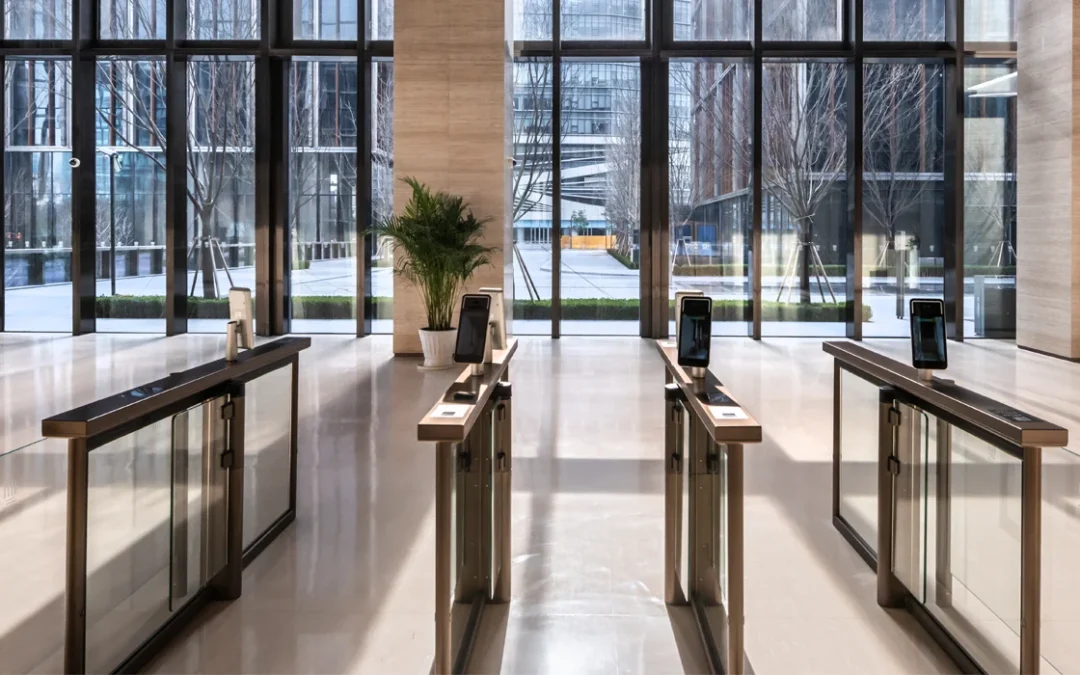
One of the most effective features in a modern lobby security system is the optical turnstile. Unlike traditional metal barriers, optical turnstiles are sleek, minimal, and designed to fit naturally into a high-end office building lobby. These systems use sensors and glass barriers to control access without creating an industrial appearance.
Proper optical turnstile placement is important. They should be installed in a way that directs traffic flow without making visitors feel restricted. In many cases, they are positioned near the lobby security desk where staff can monitor incoming guests and employees. This setup improves traffic control while also allowing security personnel to assist visitors when needed.
Optical turnstiles also improve efficiency. Employees can move through the lobby using badges, mobile credentials, or biometrics, reducing wait times during busy hours. At the same time, these systems can detect tailgating, unauthorized access, and unusual movement patterns. This makes them a smart investment for businesses that want a stronger corporate security system without sacrificing design.
Hidden Security Tech
Modern corporate lobby security design increasingly depends on technology that blends into the environment. Businesses no longer want visible cameras, large monitors, or bulky hardware taking away from the look of the space. Instead, hidden security tools are becoming part of the architecture itself.
Cameras can now be integrated into ceilings, walls, and decorative fixtures without being obvious. Access control readers can be built into doors or reception counters. Even the lobby security desk can include hidden panic buttons, visitor management screens, and remote communication tools without affecting the clean appearance of the space.
AI-powered cameras are also changing the way businesses manage office building security. Instead of simply recording footage, modern systems can identify suspicious behavior, track movement, detect unattended items, and send alerts in real time. These advanced systems help security teams respond faster and reduce the need for constant manual monitoring.
Another growing trend is touchless access control. Employees and approved visitors can enter the building using smartphones, facial recognition, or mobile credentials. This creates a faster, more hygienic, and more modern experience while strengthening lobby security. Touchless systems are especially useful in busy buildings where long lines at entry points can create frustration.
Visitor Experience
Security should never make visitors feel uncomfortable. A well-designed office building lobby should feel inviting, organized, and professional. Businesses that focus only on protection often end up creating cold spaces that feel more like checkpoints than workplaces.
The best lobby security service solutions are designed around the visitor journey. Clear signage, easy-to-find reception desks, comfortable seating, and smooth check-in processes all help create a positive first impression. Digital visitor management systems can allow guests to pre-register before arrival, receive QR codes for entry, and quickly access meeting areas without long delays.
Many businesses are also adding hospitality elements to their office building lobby design. Concierge-style reception areas, digital directories, coffee stations, and soft lighting can make the space feel more welcoming while still supporting security. The goal is to make the office feel professional and safe without appearing intimidating.
A strong corporate security system should protect people without making them constantly aware of it. When done correctly, visitors notice the smooth experience rather than the technology behind it.
Balancing Design and Protection
Every office building has unique security needs. A law firm, financial institution, healthcare office, and technology company may all require different levels of access control and surveillance. This is why office building security should never rely on a one-size-fits-all approach.
The best results come from designing security around the specific layout, traffic flow, and operational needs of the business. Some companies may need stronger visitor screening and biometric access, while others may focus more on package monitoring, employee-only zones, or after-hours access control.
A modern lobby should look impressive while also supporting long-term safety. Businesses that invest in the right combination of design and technology create a better environment for employees, visitors, and tenants.
Why Choose Us
At Nexlar, we understand that lobby security is about more than cameras and access cards. We help businesses design office building security systems that fit naturally into the space while protecting employees, visitors, and assets. From optical turnstiles and access control to AI-powered surveillance and visitor management, our team creates customized solutions that balance aesthetics with real security performance.
Frequently Asked Questions
Q. What is the most important part of corporate lobby security design
The most important part of corporate lobby security design is creating a balance between visitor experience and access control. Businesses need a secure lobby that protects employees and assets while still making guests feel comfortable and welcome.
Q. Why are optical turnstiles popular in office building lobbies
Optical turnstiles are popular because they provide strong lobby security without making the space look industrial or intimidating. They allow employees and visitors to move efficiently while preventing unauthorized access.
Q. How can hidden security technology improve office building security
Hidden security technology allows businesses to maintain a clean and professional look while still using advanced tools like surveillance cameras, visitor management systems, and access control readers. This improves both safety and aesthetics.
Q. What makes a good lobby security desk
A good lobby security desk should be easy to locate, visually appealing, and equipped with the tools needed to manage visitors, monitor access points, and respond quickly to incidents. It should support both customer service and security functions.
Q. How does touchless access improve security in office buildings
Touchless access improves security by reducing physical contact, speeding up entry, and making it easier to verify employee and visitor credentials. Mobile access, facial recognition, and smart badges are common examples of touchless entry systems.
Follow Us