

Construction Site Security: Mobile Solar Towers vs. Fixed Cameras
Construction sites are dynamic, high risk environments where theft, vandalism, and liability claims can quickly turn into major financial losses. As timelines tighten and material costs rise, protecting assets, equipment, and workers has become a strategic priority rather than an afterthought. At Nexlar, we work with contractors, developers, and project managers who need reliable, scalable, and intelligent security solutions that perform in real world conditions.
When evaluating construction site security cameras, two primary options dominate the conversation: mobile solar towers and fixed camera systems. Both have their place, but the right choice depends on site conditions, power availability, duration of the project, and risk exposure.
In this guide, we break down the strengths and limitations of each solution and help you determine the best approach for your project.
Understanding Modern Construction Site Security
Construction site security has evolved far beyond simple perimeter fencing and on site guards. Today’s threats require proactive monitoring, remote visibility, and rapid response capabilities. Theft of copper wiring, heavy equipment, fuel, and tools can halt operations and disrupt project schedules. In addition, unauthorized access can create serious liability concerns.
Modern construction site security cameras now include remote access, AI driven analytics, night vision, motion detection, and live monitoring integration. The key question is not whether to deploy security, but which type of system delivers the most value for your specific environment.
Mobile Solar Towers Pros & Cons
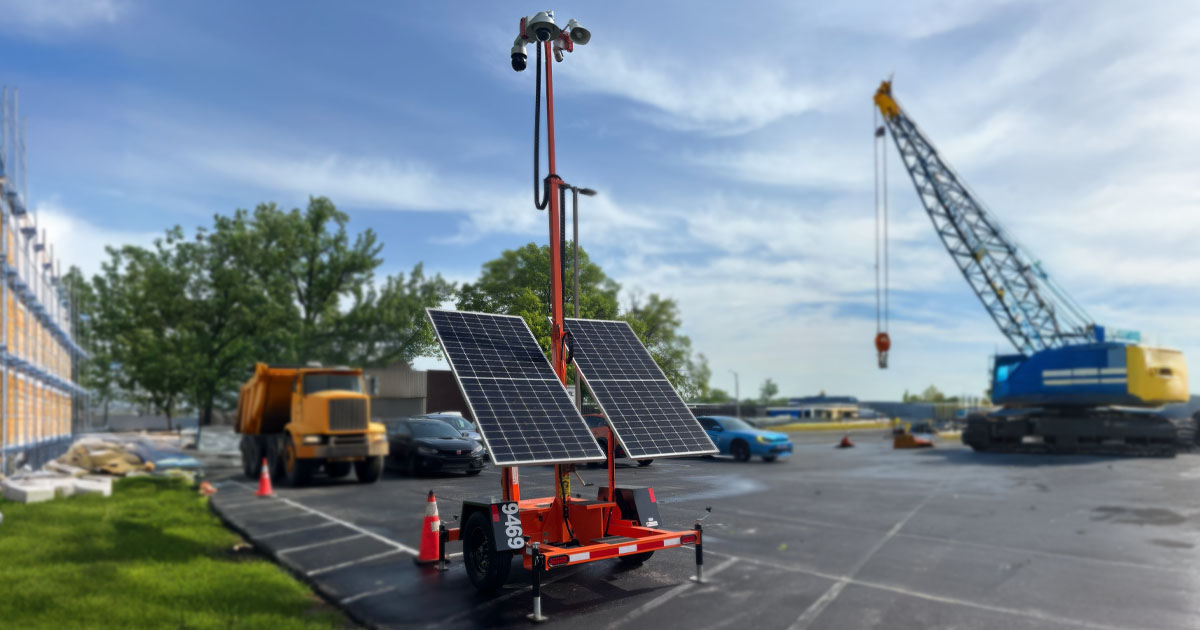
Mobile solar towers have become increasingly popular for construction site security because of their flexibility and self powered design. These units are typically trailer mounted systems equipped with solar panels, battery storage, wireless connectivity, and multiple high resolution cameras.
One of the strongest advantages of mobile solar towers is rapid deployment. They do not require trenching, wiring, or access to permanent power infrastructure. This makes them ideal for early stage construction when utilities are not yet available. Within a short timeframe, the system can be positioned, activated, and fully operational.
Another major benefit is mobility. As a construction site evolves, high risk areas shift. A mobile tower can be repositioned to monitor new material storage areas, heavy equipment zones, or entry points. This flexibility ensures that construction site security cameras remain aligned with current risk exposure.
Solar powered systems also reduce dependency on generators and grid power. This not only lowers operational costs but also supports sustainability initiatives.
However, mobile solar towers are not without limitations. While they provide wide coverage, they may not deliver the same level of permanent infrastructure integration as fixed systems. In some cases, cellular connectivity may be affected in remote or signal limited areas. Additionally, while they are highly visible deterrents, some projects require a more discreet security presence.
At Nexlar, we evaluate site layout, terrain, and risk profile to determine whether mobile solar towers alone can meet your security objectives or whether a hybrid model is more appropriate.
Fixed Camera Limitations
Fixed camera systems have long been used for perimeter protection and facility surveillance. When properly designed, fixed construction site security cameras provide consistent, high quality video coverage across defined areas.
The primary advantage of fixed systems lies in stability and integration. Once installed, they become part of a broader security infrastructure that may include access control, intrusion detection, and centralized monitoring platforms. For long term projects or permanent facilities, this type of setup can deliver strong performance and scalability.
However, fixed camera systems require infrastructure. They depend on power sources, cabling, and mounting structures. On active construction sites, these elements can be disrupted by ongoing work. Trenching and wiring can increase installation time and cost, particularly in early project phases.
Another limitation is inflexibility. Once a camera is installed, relocating it requires additional labor and configuration. Construction sites change frequently, and areas of vulnerability may shift as materials move and structures rise. Fixed systems are not always able to adapt quickly.
In remote locations without reliable power, deploying fixed construction site security cameras can become complex and expensive. This is where mobile solutions often provide a strategic advantage.
Best Choice for Remote Sites
Remote and large scale projects present unique challenges. Sites located far from urban infrastructure may lack power, network connectivity, and on site personnel during non working hours. In these environments, security must operate independently and reliably.
For remote sites, mobile solar towers often emerge as the most practical and cost effective solution. Their self powered design and wireless connectivity allow for rapid setup without waiting for utilities. They can be repositioned as the site expands, maintaining continuous coverage.
That said, the best choice is not always one or the other. In many cases, a layered strategy delivers the strongest protection. Mobile solar towers can provide perimeter and wide area coverage, while fixed construction site security cameras can be integrated into trailers, temporary offices, and high value equipment storage areas.
At Nexlar, we design security strategies based on site specific risk assessments. We consider duration, budget, compliance requirements, and long term goals. Our approach ensures that construction site security is not just reactive, but proactive and scalable.
Comparing Performance and ROI
When comparing mobile solar towers and fixed systems, return on investment should be a central consideration. Theft prevention alone can justify the cost of a comprehensive security solution. Beyond that, remote monitoring reduces the need for on site guards, lowers insurance premiums in many cases, and provides documentation for dispute resolution.
Mobile systems typically offer lower upfront infrastructure costs and faster deployment. Fixed systems may require higher installation investment but can deliver deeper integration for long term facilities.
The real value lies in strategic design. Poorly placed cameras, weak connectivity, or incomplete coverage undermine any investment. Properly engineered construction site security cameras should provide clear visibility, intelligent alerts, and seamless integration with monitoring services.
Why Choose Us
At Nexlar, we specialize in designing and deploying advanced security solutions tailored to construction environments. We do not offer one size fits all systems. Instead, we assess each site’s risks, power availability, layout, and operational goals to recommend the right combination of mobile solar towers and fixed construction site security cameras. Our team provides professional installation, system integration, and ongoing support to ensure your project remains protected from start to finish.
Protect your project with a security strategy designed for real world conditions. Contact us today to speak with a Nexlar security expert and secure your construction site with confidence.
Frequently Asked Questions
Q. What are the benefits of mobile solar towers for construction site security?
Mobile solar towers provide rapid deployment, flexible placement, and self powered operation. They are ideal for sites without permanent power and can be repositioned as the project evolves. These systems enhance construction site security by offering wide area coverage and visible deterrence.
Q. Are fixed construction site security cameras better for long term projects?
Fixed construction site security cameras are often well suited for long term projects or permanent facilities. They integrate seamlessly with access control and other security systems, providing stable and consistent coverage when infrastructure is available.
Q. Can mobile solar towers and fixed cameras be used together?
Yes, a hybrid approach is often the most effective strategy. Mobile towers can secure perimeters and large open areas, while fixed cameras protect offices, equipment storage, and entry points. This layered design strengthens overall construction site security.
Q. How do construction site security cameras reduce liability?
Construction site security cameras document activity, monitor compliance with safety protocols, and provide recorded evidence in case of disputes or incidents. This documentation can protect contractors and developers from false claims and reduce legal exposure.
Q. What factors should be considered when choosing a system?
Key considerations include site location, power availability, project duration, risk level, and budget. A professional security assessment helps determine whether mobile solar towers, fixed cameras, or a combination of both will deliver the best results.
Follow Us