

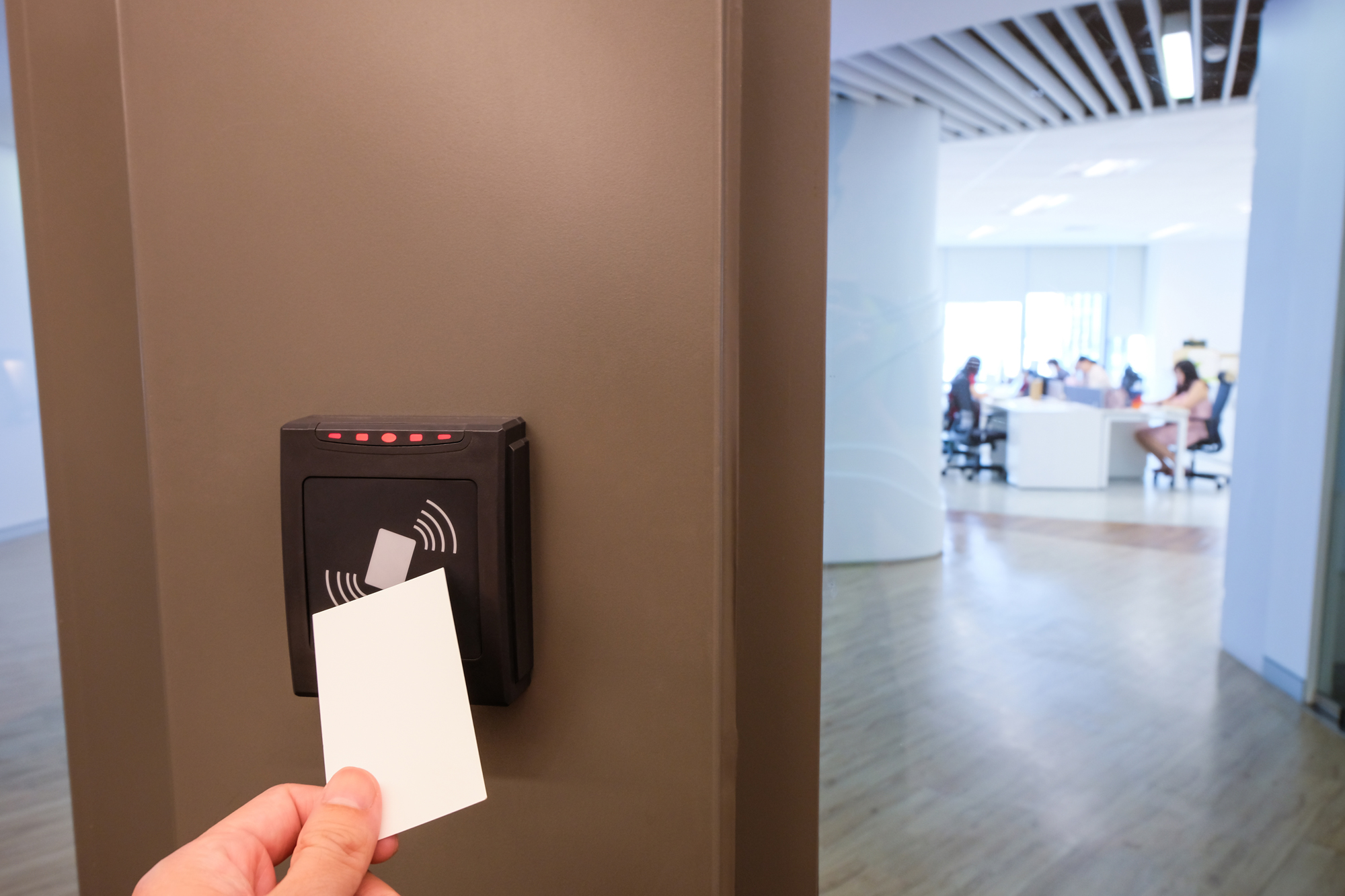
Walk into the back office of most Houston warehouses that have been operating for more than five years and you’ll find the same setup: a dedicated PC running access control software that nobody has touched in months, a stack of printouts showing which credentials are active, and a facilities manager who dreads the day that server fails.
Legacy on-premise access control systems — built around a local PC server, proprietary software tied to that hardware, and a physical IT infrastructure that requires on-site technician visits for every firmware update, software patch, and credential change — were the only option available when most Houston industrial facilities first installed their systems. They were the standard of the industry.
They are no longer the standard. And for Houston warehouse operators managing high employee turnover, large contractor populations, multiple gate entry points, and multi-site logistics operations spanning the Greater Houston area and beyond, the gap between what legacy systems can do and what the operation actually requires has become an operational and security liability.
Cloud-based access control systems — platforms like Brivo and PDK that run their management layer over the internet rather than on a local server — solve every one of those problems. And Houston’s logistics sector is adopting them faster than any other commercial market we serve.
🔒 Get a Free Cloud Access Control Assessment for Your Houston Facility
Nexlar Security is a certified Brivo and PDK installer serving warehouse and logistics facilities across Houston. Zero cost, no obligation. 👉 Book Your Free Onsite Assessment
What Cloud-Based Access Control Actually Means
Cloud-based access control — sometimes called cloud-managed or web-based access control — replaces the traditional local PC server with a secure, hosted software platform that runs on the vendor’s infrastructure and is accessed through any standard web browser or mobile app.
The physical hardware at your facility — the door controllers, the credential readers, the gate operators — remains on-premise. What changes is where the management intelligence lives. Instead of a local server in your back office that must be accessed by a technician sitting at that machine, the system’s database, software, and management interface are hosted in secure data centers and accessed from anywhere with an internet connection. [1]
The practical implications for a Houston warehouse operator are significant:
You manage credentials from your phone in the parking lot before a shift change. Your security director in Houston’s Energy Corridor can immediately revoke a contractor’s access at a facility in Baytown without driving there. Your IT team doesn’t get a 6 AM call because the access control server crashed. Firmware updates deploy automatically overnight. You add a new site without purchasing and configuring a new server.
These are not marginal improvements. For logistics operations dealing with the operational intensity of Houston’s port-driven freight market, they represent a fundamentally different — and more capable — approach to access management.
Brivo and PDK: Leading Cloud Platforms for Houston Logistics
Nexlar Security is a certified installer and integration partner for the two most widely deployed cloud access control platforms in the Houston commercial and logistics market: Brivo and PDK (Prodatakey).
Brivo Brivo is one of the most established cloud-based access control platforms in North America, with a specifically strong track record in multi-site commercial and industrial deployments. The Brivo platform manages credentials, access levels, schedules, and real-time event monitoring from a centralized web interface or the Brivo mobile app. [2]
For Houston warehouses, Brivo’s strengths include unlimited site management under a single login (critical for multi-facility logistics operators), direct integration with video management systems for camera-linked access events, occupancy management tools useful for compliance tracking, and an open API that connects Brivo to HR onboarding systems, visitor management platforms, and third-party logistics software.
PDK (Prodatakey) PDK takes a somewhat different architectural approach — the system’s intelligence is distributed between cloud management and on-device controllers that maintain local functionality even during brief internet outages. For Houston industrial facilities where cellular or internet reliability may vary, PDK’s hybrid cloud architecture provides additional resilience. [3]
PDK’s strengths in the warehouse and logistics context include robust mobile credential support, a clean mobile app for day-to-day management, strong integration with video systems, and a dealer-friendly platform that Nexlar configures for multi-site Houston logistics operators who need consistent access policy management across facilities.
Both platforms are actively developed with new features deploying automatically — no on-site update required.
Benefit #1 — No More Local PC Server: Managing Unlimited Sites from Any Browser
The single most impactful operational difference between legacy and cloud access control for Houston logistics operators is the elimination of the local PC server.
A traditional on-premise access control system requires a dedicated PC or server at each facility running the access control software. That hardware must be maintained, backed up, protected from power surges and failures, and physically accessed by a technician for any software updates or significant configuration changes. For a Houston logistics operator with facilities in Baytown, Pasadena, La Porte, and Channelview, that means four servers, four maintenance contracts, four failure points, and four service visits every time a software update needs to deploy. [4]
Cloud-based access control eliminates every one of those requirements. The management software runs on Brivo’s or PDK’s hosted infrastructure — not your hardware. You access it through a web browser on any device: your desktop at corporate headquarters, your laptop on the road, your phone when you get a security alert at 11 PM.
Adding a new site to the platform doesn’t require purchasing, shipping, and configuring a new server. It requires connecting the new site’s door controllers to the internet, registering them on the platform, and configuring access policies — work that can begin within hours of installation. [2]
For Houston logistics operators managing the Port of Houston freight cycle — where new facilities are brought online, contractor rosters change weekly, and operations run 24/7 across the Ship Channel industrial corridor — the ability to manage access across unlimited sites from a single browser session is not a convenience feature. It is an operational requirement.
Benefit #2 — Instant Remote Credential Revocation for Truck Drivers and Contractors
The Houston logistics market involves one of the most fluid, high-turnover credential populations of any commercial sector in Texas. Full-time warehouse associates, temporary agency workers on weekly assignments, dedicated truck drivers, spot carriers making one-time deliveries, equipment service contractors, and vendor representatives — each group has different access requirements, different authorization durations, and different revocation urgency when the engagement ends.
In a legacy system, revoking a credential requires someone with access to the local server — either physically present at the facility or connected via VPN to the facility’s network — to open the access control software, find the credential, and deactivate it. For a company with facilities across Houston, this means that if a truck driver’s badge is reported stolen or a terminated contractor hasn’t returned their card, revocation may take hours or days while the right person is tracked down and gets to the right system.
In a Brivo or PDK cloud system, revocation takes approximately 10 seconds from any device with internet access. [2]
The security implications for Houston warehouse operations are direct. A terminated employee’s credential is deactivated at the moment of termination, not the next time a facilities manager gets to a specific PC. A contractor who leaves under difficult circumstances doesn’t have a window of continued access while the revocation process works through a legacy system. A truck driver whose badge is reported missing is deactivated immediately from the dispatcher’s phone.
This real-time revocation capability also supports regulatory and compliance requirements for Houston facilities handling federally regulated goods — pharmaceutical logistics, food-grade distribution, government contract fulfillment — where documented access control and prompt response to credential security events are audit requirements.
Benefit #3 — Automatic Firmware Updates Without On-Site Service Calls
Cybersecurity for access control systems is an increasingly significant concern — and one of the most consistent failure modes in legacy on-premise systems is the accumulation of unpatched firmware and software vulnerabilities on local servers and controllers that simply haven’t been updated because doing so requires an on-site technician visit.
In a cloud-based access control system, firmware updates for the platform’s cloud software deploy automatically on the vendor’s infrastructure — you don’t need to schedule a service call, you don’t need to coordinate a maintenance window, and you don’t need to budget for update services. [2]
For the door controllers and readers installed at your Houston facility, firmware updates in modern cloud access control platforms are also deployed remotely — either automatically on a vendor-managed schedule or with a one-click approval from the management interface. A security vulnerability discovered and patched by Brivo or PDK deploys to your facility without a technician ever needing to be on-site.
For Houston warehouse operators managing tight operational schedules where a maintenance window that takes a system offline is a logistical event in itself, this automatic update capability means security patches happen in the background — not on a schedule that competes with facility operations.
Combined with the cloud platform’s automatic feature additions — new reporting tools, new integration capabilities, new mobile credential features that deploy to your existing hardware without replacement — cloud access control systems have a continuous improvement trajectory that legacy on-premise systems, tied to a specific software version on a local server, simply cannot match.
How Cloud Access Control Works in a Multi-Site Houston Logistics Operation
For Houston logistics operators managing multiple facilities across the Ship Channel corridor, the practical deployment of cloud-based access control looks like this:
Centralized credential database. A single credential — one badge or mobile credential on one smartphone — can be configured for access across multiple facilities with location-specific access profiles. A logistics manager authorized at all facilities has one credential. A warehouse associate authorized only at a specific Baytown location has one credential that works at that location and nowhere else. Both are managed from the same web interface.
Site-specific access policies with enterprise oversight. Each facility can have its own access schedules, zone configurations, and visitor management settings — while a corporate security director has visibility and management authority over all sites from a single login.
Real-time event monitoring across all sites. Access events — credential presentations, grants, denials, door-held-open alarms — from all facilities appear in a unified real-time event log. An after-hours alert at a La Porte facility notifies the same monitoring team that watches the Houston corporate site.
Reporting that aggregates across locations. Occupancy counts, access frequency reports, and security audit reports can be generated at the site level or aggregated across the entire operation — useful for compliance documentation, insurance reporting, and operational efficiency analysis.
What to Look for in a Cloud Access Control Installer in Houston
Not every access control installer in Houston has the experience and certifications to properly deploy and configure cloud-based systems for industrial and logistics applications. Here is what matters:
Certified Brivo or PDK partnership. Brivo and PDK both maintain certified installer networks with training, technical support, and access to advanced platform features that non-certified installers don’t have. Nexlar Security holds active certifications for both platforms.
Texas Low Voltage Contractor License. Required by TDLR for all commercial low-voltage system installation in Texas. Verify the license number at tdlr.texas.gov before signing any installation contract. Nexlar’s license number is B14634.
Warehouse and industrial installation experience. A commercial installer experienced in office access control is not automatically equipped for the specific challenges of a Houston logistics facility — high-cycle vehicle gates, outdoor readers in Houston heat, long cable runs across large floor plans, and integration with warehouse management systems.
Integration capability. Cloud access control delivers maximum value when it integrates with your existing systems — HR software for automated onboarding, video management for camera-linked access events, visitor management platforms. Ask specifically about what integrations your installer has deployed in the Houston market.
System Comparison: Legacy vs. Cloud-Based Access Control
| Feature | Legacy On-Premise System | Cloud-Based (Brivo / PDK) |
|---|---|---|
| Server Hardware Required | Yes — at each facility | No — cloud-hosted |
| Multi-Site Management | Separate logins / systems | Single login, unlimited sites |
| Remote Access | VPN or on-site only | Any browser, any device |
| Credential Revocation Time | Hours (requires on-site or VPN access) | Seconds (from any device) |
| Software Updates | Manual, requires technician | Automatic, over the air |
| Firmware Updates | Scheduled service visits | Remote deployment |
| Mobile App Management | Limited or unavailable | Full management from mobile |
| New Site Onboarding | New server purchase and configuration | Connect controllers, configure in platform |
| Ongoing IT Maintenance | Yes — server hardware, OS, backups | No — vendor-managed infrastructure |
| Integration with HR/WMS | Limited, proprietary | API-based, open integration |
Cost and Pricing for Houston Warehouse Installations
| Facility Scope | Estimated Installed Cost Range |
|---|---|
| Small Warehouse (2–4 entry points, single site) | $4,000 – $12,000 |
| Mid-Size Warehouse (5–12 entry points, single site) | $12,000 – $30,000 |
| Large Distribution Campus (13+ points, multiple gates) | $30,000 – $75,000 |
| Multi-Site Houston Logistics Operation | Custom — contact Nexlar |
| Vehicle Gate + RFID Integration (per lane) | $5,000 – $15,000 additional |