

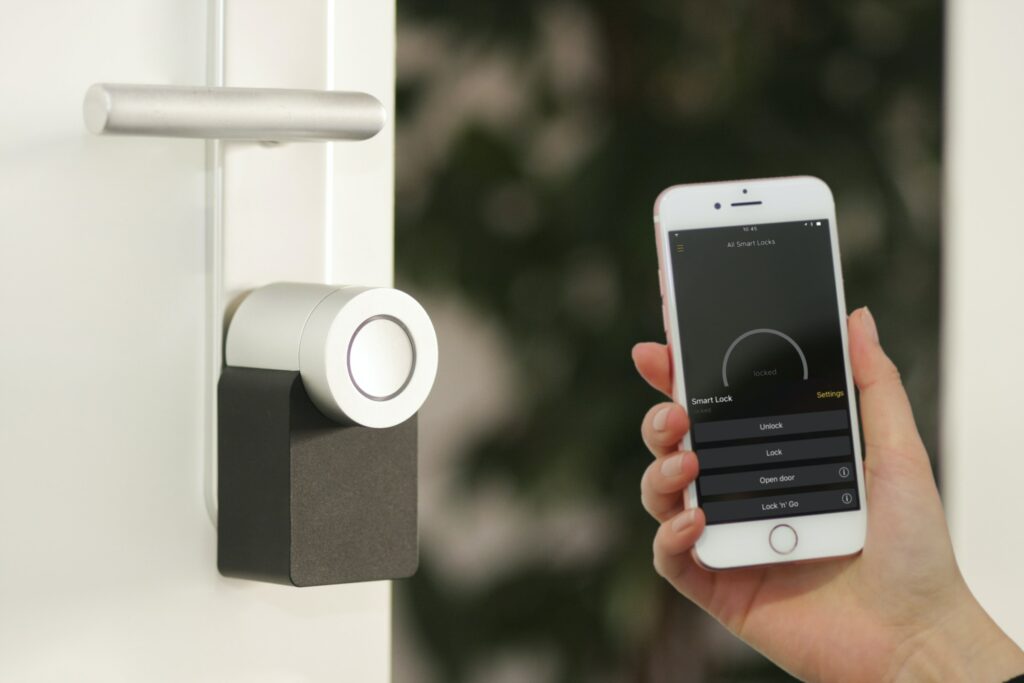
San Antonio’s hospitality market — anchored by the Riverwalk corridor, the Convention Center campus, and the Alamo area — hosts one of the highest hotel concentrations in Texas. From major branded properties to independently operated boutique hotels in the King William Historic District and the Pearl District, the city’s hospitality operators serve millions of guests annually.
The magnetic stripe room key card has been the standard for hotel guestroom access since the late 1980s. In 2026, it is also the most commonly failing, most easily defeated, and most operationally burdensome room access technology in the hospitality industry.
Magnetic stripe cards demagnetize when placed near a smartphone, a wallet RFID card, or a TV remote. They fail at a rate that generates a significant volume of front desk service visits — guests returning to the desk to have their card re-encoded is one of the most consistently frustrating guest experience events that hotel staff deal with daily. [1] And from a security standpoint, magnetic stripe cards provide no encryption and are trivially copied with widely available card duplication equipment.
RFID-based hotel locks — and the emerging mobile key platforms that allow guests to use their smartphones as room credentials — solve all of these problems simultaneously. The result is a better guest experience, reduced front desk service burden, and a meaningfully more secure room access environment.
🔒 Free Hotel Keyless Entry Assessment for Your San Antonio Property
Nexlar Security designs and installs commercial keyless entry and access control systems for San Antonio hotels and hospitality properties. Fully licensed, end-to-end service. 👉 Book Your Free Property Assessment
How RFID and Mobile Hotel Locks Work
RFID Hotel Locks Modern hotel room locks using RFID technology operate at 13.56MHz — the same frequency range as smart cards used in commercial access control, and in contrast to the 125kHz proximity frequency that is trivially clonable. The room key card communicates with the lock via a short-range encrypted exchange, and the lock validates the credential against the room assignment and check-in/check-out window encoded in the credential. [2]
RFID hotel credentials are encoded at the front desk at check-in, specifying which room the credential opens, from when to when, and in some systems which common areas (pool, gym, business center) the credential also accesses. The credential is time-limited — it stops working automatically at checkout time, eliminating the need for card collection or key invalidation.
Crucially, RFID hotel lock credentials cannot be demagnetized by proximity to smartphones, wallets, or other cards the way magnetic stripe cards can. The encrypted RF communication is also resistant to the simple card duplication attacks that magnetic stripe cloning devices enable.
Mobile Keys Mobile key technology — supported by platforms including ASSA ABLOY’s VingCard Mobile Key, Dormakaba’s Ambiance mobile system, and SALTO’s mobile key offerings — allows guests to use their smartphone as their room credential. After completing the check-in process (which can be done remotely through the hotel’s app before arrival), the guest receives their room credential on their phone and opens their door by holding the phone near the lock handle. [3]
Mobile keys eliminate the physical card production step entirely — no card to encode, no card to demagnetize, no card to replace. They also enable fully mobile check-in: guests can bypass the front desk, go directly to their room, and open the door with their phone. For San Antonio boutique properties competing for tech-forward guest demographics, mobile key capability has become a meaningful differentiator.
Riverwalk and Boutique Hotel Applications in San Antonio
San Antonio’s Riverwalk properties present a specific installation context for hotel keyless entry upgrades: historic or adapted historic buildings where conduit routing and lock hardware replacement must respect existing door configurations and, in some properties, preservation requirements.
The most significant installation consideration for Riverwalk-area hotels is the door preparation — the specific cutout configuration of the existing door and the frame thickness — which determines which lock models are compatible for a direct replacement. Most commercial hotel lock manufacturers (VingCard, Dormakaba, SALTO) offer multiple backplate and chassis configurations to accommodate the range of door preparations found in San Antonio’s hospitality building stock, from mid-century hotel construction to adapted historic structures. [4]
For the Pearl District and King William boutique hotel operators, SALTO’s XS4 and Nevo series offer a compact, design-forward lock form factor in premium finishes that work aesthetically in boutique properties where the hardware is visible as part of the room experience — not just a utilitarian access mechanism.
For larger Riverwalk convention hotel properties with hundreds of guestrooms, the VingCard 2100 and VingCard Essence series represent the industry’s most widely deployed commercial hotel lock platform — with proven large-property performance, extensive integration support for Property Management Systems (PMS), and full mobile key capability through the Vostio platform.
Elevator Floor Lockout: Protecting Guests on Residential Floors
Elevator floor lockout — sometimes called elevator access control or floor restriction — is the system that prevents hotel guests from using the elevator to access guestroom floors other than their own assigned floor, or from accessing non-public floors without a valid room credential.
For San Antonio hotels with multiple guestroom floors, elevator floor lockout addresses a straightforward security concern: without it, any person who enters the hotel — whether or not they are a registered guest — can take the elevator to any guestroom floor. With floor lockout, the elevator requires a valid room credential to authorize access to the selected floor. A guest credentialed for floor 7 can access floor 7. They cannot access floors 8 or 9. [5]
How elevator floor lockout integrates with hotel keyless entry:
In most hotel installations, elevator floor lockout uses a card reader integrated into the elevator cab — guests present their room key card or mobile credential to the reader before selecting a floor, and only the floors their credential authorizes are selectable. The reader communicates with the elevator controller, which enables or restricts floor selection based on the presented credential’s authorization.
Integration between the hotel lock system and the elevator floor lockout requires coordination between the lock system manufacturer’s platform and the elevator controls — a project that Nexlar manages through direct coordination with the property’s elevator service contractor.
For San Antonio Riverwalk hotels and boutique properties where guest safety on room levels is a premium concern — particularly for solo travelers and corporate guests — elevator floor lockout is one of the most impactful security features available, and one that consistently appears in premium hotel brand standards.
Intelligent Key Card Switches for In-Room Energy Management
Hotel room energy management is a significant operational cost driver for San Antonio’s hospitality market — in a climate that averages more than 220 days per year with temperatures above 80°F, the HVAC cost of running air conditioning in unoccupied hotel rooms is a measurable operational expense. [6]
Intelligent key card switches — in-room devices that require the guest’s room key card to be inserted to activate the room’s electrical circuits — address this directly. When the guest leaves the room and takes their card with them, the switch deactivates the room’s non-essential circuits after a defined delay (typically 30 to 60 seconds). The HVAC system typically remains in an energy-saving setpoint mode rather than shutting off entirely, preventing the uncomfortable re-entry experience of returning to a room that has fully warmed up. When the guest returns and reinserts their card, the room’s circuits restore immediately. [7]
What key card switches save for a San Antonio hotel:
The energy savings from key card switches depend on the property’s room count, occupancy rates, and HVAC system efficiency, but industry data suggests room energy consumption reductions of 20% to 40% in markets with high cooling demand — a category that includes San Antonio. [7] For a 150-room property with an average 75% occupancy rate, this represents meaningful operating cost reduction across the summer season.
RFID credential compatibility:
Intelligent key card switches designed for RFID hotel lock systems accept RFID credentials rather than magnetic stripe cards — critical for properties transitioning from magnetic stripe to RFID or mobile key, since the in-room switch must be compatible with the credential type being deployed. Most major hotel lock manufacturers offer compatible key card switches designed to work within their lock ecosystem. For mobile key deployments where the guest’s credential is on their phone and never inserted into a card reader, a dedicated physical RFID card for the key card switch (issued alongside the mobile key) or a motion-sensor-based room occupancy detection alternative to key card switches is typically configured.
Leading Hotel Lock Brands for San Antonio Properties
ASSA ABLOY VingCard The most widely deployed commercial hotel lock platform globally and across Texas. The VingCard 2100 and VingCard Essence series support RFID credentials, mobile key through the Vostio access management platform, Property Management System integration, and elevator floor lockout integration. Appropriate for large convention properties and branded hotels on the Riverwalk and Convention Center campus. [3]
Dormakaba Ambiance Dormakaba’s Ambiance series is a design-forward hotel lock platform with strong mobile key capability (Dormakaba Ambiance mobile system) and a slim form factor suited to boutique and lifestyle hotel properties. Widely deployed in independent and lifestyle-brand hotel properties in markets like San Antonio’s Pearl and King William districts.
SALTO Systems SALTO’s hotel product line (XS4 and Nevo series) offers cloud-connected, networked hotel locks that provide real-time room status visibility from the property management interface — any lock event (door opened, battery low, unauthorized access attempt) is reported in real time to the management platform. SALTO’s compact form factors and premium finishes make it a strong specification for San Antonio’s design-conscious boutique hotel market. [4]
Integrating Keyless Entry with Property Management Systems
Hotel keyless entry systems produce their full operational value when integrated with the property’s PMS (Property Management System) — the software platform that manages reservations, check-in, check-out, room assignments, and billing.
PMS integration allows room credentials to be automatically encoded or issued at the moment of PMS check-in — no separate step required from the front desk agent. When a guest checks in through the PMS, the lock system receives the check-in event, creates the credential for the assigned room, and either encodes a card at the front desk encoder or pushes a mobile key to the guest’s phone automatically.
At checkout — whether at the front desk or through automated late checkout — the PMS check-out event automatically deactivates the credential for that room, ensuring the previous guest’s key stops working without requiring any manual key invalidation step.
Common PMS platforms deployed in San Antonio’s hotel market — Opera (Oracle Hospitality), Cloudbeds, Mews, and Agilysys — all support integration with the major hotel lock manufacturers through documented PMS interface protocols.
Nexlar’s commercial access control and security systems for San Antonio hospitality properties include PMS integration coordination as part of the installation scope — ensuring that the lock system and property management software communicate correctly from day one.
System Comparison Table
| Feature | Magnetic Stripe System | RFID Hotel Locks | RFID + Mobile Key |
|---|---|---|---|
| Demagnetization Risk | High | None | None (no physical card) |
| Card Duplication Risk | High (trivial to copy) | Low (encrypted) | None (no physical card) |
| Mobile Key Capability | No | Some platforms | Yes |
| PMS Integration | Yes | Yes | Yes |
| Elevator Floor Lockout | Yes | Yes | Yes |
| Key Card Energy Switch | Yes | Yes | Physical card or occupancy sensor |
| Remote Check-In / Mobile Check-In | No | Partial | Yes |
| Key Replacement Frequency | High (demagnetization) | Very Low | None |
| Guest Satisfaction Impact | Negative (failures) | Positive | Very Positive |
| Best For | Legacy replacement only | Mid-scale and full-service | Boutique, lifestyle, premium |
Cost and Pricing for San Antonio Hotel Installations
| Installation Scope | Estimated Cost Range |
|---|---|
| Hotel Room Lock Replacement (per door, hardware only) | $250 – $600 per door |
| Full-Service Installation (hardware + wiring + PMS integration, per door) | $400 – $900 per door |
| 100-Room Hotel Full Lock Replacement | $40,000 – $90,000 |
| Elevator Floor Lockout System (per elevator) | $3,000 – $8,000 |
| Key Card Energy Switches (per room) | $150 – $350 per room |
| Mobile Key Platform Setup | $5,000 – $15,000 |
Note: Costs vary significantly by brand, door preparation compatibility, and scope of PMS integration. Nexlar provides itemized quotes after a free property assessment that includes door hardware inspection and PMS compatibility review.
💡 Hotel Keyless Entry for San Antonio’s Riverwalk and Boutique Properties
Nexlar installs RFID and mobile key hotel lock systems for San Antonio hospitality properties — PMS integration, elevator lockout, and energy switch included. 👉 Schedule Your Free Hotel Security Assessment