

Austin’s technology sector includes both rapidly growing startups and established enterprise technology operations with the security infrastructure requirements that Fortune 500 facilities bring with them. For these enterprise-scale tech clients, camera selection is not a single-location hardware decision. It is an infrastructure standardization decision that affects procurement policy, IT security compliance, maintenance planning, and the ability to scale across multiple locations without retraining security teams on different platforms.
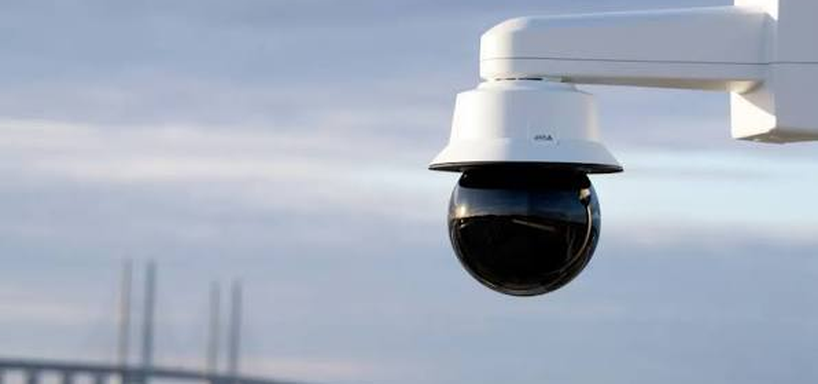
Axis Communications is the camera manufacturer that Austin’s enterprise technology clients most consistently select for infrastructure standardization. Axis holds the largest global market share in network video, and its position in the enterprise security market reflects the combination of capabilities that enterprise IT and physical security teams value: documented cybersecurity architecture that meets corporate security policy requirements, NDAA compliance for organizations with federal procurement standards, Zipstream technology that reduces bandwidth and storage costs by up to 50 percent, and a product longevity commitment that means the cameras installed today remain supported and integrated for ten to fifteen years.
For Austin technology companies managing security camera infrastructure across multiple Texas locations, the standardization argument is straightforward: one manufacturer, one management platform, one support relationship, one training requirement for the security operations team. When the camera platform is standardized, every new location is a familiar deployment rather than a new platform evaluation.
This guide covers the specific capabilities that make Axis the enterprise standard for Austin tech clients and how Nexlar, as a certified Axis installation partner, delivers these systems.
Get a Free Axis Camera Assessment for Your Austin Enterprise
Nexlar is a certified Axis Communications installation partner serving Austin technology companies and enterprise commercial clients. Contact Nexlar at nexlar.com/contact or call (281) 407-0768
Axis Cybersecurity Architecture for Austin Corporate Networks
The cybersecurity architecture of the camera system is the non-negotiable evaluation criterion for Austin technology companies whose corporate IT security teams review every networked device added to the corporate infrastructure. For organizations that have spent significant resources building a mature IT security posture, a camera system that introduces new network vulnerabilities is unacceptable regardless of its video performance.
Axis Communications has invested significantly in camera cybersecurity architecture and publishes this architecture through their AXIS OS hardening guide, which is available for corporate IT security review. Key cybersecurity features of the Axis platform include:
Signed firmware. Every Axis firmware update is cryptographically signed by Axis. The camera’s secure boot process verifies the firmware signature before accepting any update, preventing the installation of modified or malicious firmware through firmware update attack vectors. [1]
Trusted Platform Module (TPM) hardware security. Axis cameras include hardware TPM chips that provide cryptographic key storage and device identity attestation, enabling network authentication that verifies the camera’s identity on the corporate network rather than simply accepting any device claiming to be an Axis camera.
IEEE 802.1X authentication. Axis cameras support 802.1X port-based network authentication, allowing Austin enterprise network teams to require credential verification before a camera is allowed access to the network segment it connects to. This prevents unauthorized network access through unauthorized devices connected to switch ports intended for cameras.
HTTPS and TLS encrypted communication. All management communication between Axis cameras and the management platform (AXIS Camera Management, AXIS Device Manager, or third-party VMS) uses TLS-encrypted communication, protecting configuration data and management credentials from network interception.
Proactive vulnerability management and CVE disclosure. Axis operates a product security team that proactively identifies vulnerabilities, publishes CVE disclosures with remediation guidance, and provides timely firmware patches through the secure update mechanism. Austin IT security teams can subscribe to Axis security notifications and verify their deployed firmware is current on the Axis published vulnerability tracker. [1]
This security architecture positions Axis cameras as hardened network endpoints rather than the unprotected network-attached devices that cameras from other manufacturers frequently represent. For Austin tech companies with active SOC 2, ISO 27001, or NIST CSF security programs, Axis camera cybersecurity documentation is compatible with these frameworks in ways that camera documentation from other manufacturers is not.
Nexlar’s access control systems for Austin tech enterprises operate on the same enterprise network security principles as Axis cameras, creating a unified physical security infrastructure that meets corporate IT security requirements.
Zipstream Technology: Reducing Bandwidth and Storage Costs by Up to 50 Percent
Zipstream is Axis’s proprietary video compression technology that applies dynamic compression optimization to the H.264, H.265, and AV1 video streams from Axis cameras, achieving significant reductions in average bit rate without reducing image quality during events of interest.
Standard H.264 or H.265 compression applies a consistent compression level across the entire video stream, allocating similar bit rate to both the static background (the office wall that has not changed in the past 8 hours) and the moving foreground (the person walking through the frame). This approach wastes storage and bandwidth on the static portions of the scene that carry no investigative value.
Zipstream dynamically analyzes the scene and applies low bit rate compression to the static portions while maintaining full quality compression for the dynamic portions where motion, people, and activity are present. The bit rate reduction in a typical Austin office camera scene, where most of the scene is static most of the time, can reach 50 to 90 percent for the total stream while maintaining full-quality recording of the motion events that matter for security investigation. [2]
For an Austin tech company with 100 cameras across multiple offices, this bit rate reduction translates directly into NVR storage cost reduction (smaller drives or longer retention for the same drives), network bandwidth cost reduction (less impact on the corporate network from camera streams), and cloud storage cost reduction for hybrid cloud recording configurations.
The Zipstream technology operates transparently to the VMS and NVR. No special configuration is required on the recording platform side. Axis cameras with Zipstream enabled deliver a standard RTSP video stream to any compatible VMS, and the bit rate reduction appears as a reduction in the stream’s average bit rate rather than requiring any special handling.
Long-Term Reliability and Reduced Maintenance for Austin Tech Campuses
The maintenance cost of a camera system over its operational lifetime is frequently larger than the initial installation cost, particularly for Austin enterprise tech clients managing large camera populations across multiple facilities with internal IT and security operations teams who budget for recurring security expenses.
Camera reliability reduces maintenance cost in two directions: fewer reactive service calls for camera failures, and longer operational lifetimes before hardware replacement is required.
Axis’s manufacturing quality and component selection result in mean-time-between-failure (MTBF) specifications significantly higher than lower-cost camera manufacturers. For an Austin tech campus running 200 cameras, the difference between a camera platform with a 5-year average service life and one with a 10-year average service life is approximately 40 camera replacements and their associated labor costs over the ten-year period. At $500 per camera and $200 per replacement labor, that is a $28,000 maintenance cost difference over ten years that partially offsets the higher initial purchase price of the premium manufacturer.
Axis’s firmware support commitment means that cameras remain supported with security patches and feature updates for a decade or more after their initial release. For Austin enterprise tech clients with corporate IT security policies requiring current firmware on all networked devices, this support longevity eliminates the forced-replacement cycle that unsupported cameras create when their manufacturer discontinues security patches.
Visit Nexlar’s security cameras systems for how Axis camera specifications compare to other manufacturers Nexlar installs for Austin enterprise clients.
ACAP: Axis Camera Application Platform for Advanced Analytics
The Axis Camera Application Platform (ACAP) allows third-party analytics applications to run directly on compatible Axis cameras, providing on-camera processing of AI analytics that does not require a separate analytics server or cloud subscription.
For Austin tech companies that need specific analytics functions on their camera infrastructure, ACAP provides a standardized application environment where certified analytics apps can be installed on the camera and run locally. Analytics functions available through the ACAP ecosystem include license plate recognition, people counting, queue monitoring, object detection and classification, and face detection.
Running analytics on the camera rather than on a central server or cloud platform reduces bandwidth requirements (the camera transmits analytics event data rather than full video streams to the analytics server), reduces latency in analytics event detection, and eliminates the dependency on a dedicated analytics server that must be maintained separately from the camera infrastructure. [3]
For Austin enterprise tech clients who have standardized on Axis for their camera infrastructure and subsequently need to add analytics capabilities, the ACAP platform allows analytics to be added through software rather than hardware replacement.
Integration with Enterprise Access Control and VMS Platforms
Axis cameras integrate with the major enterprise access control and VMS platforms through documented integration APIs and factory certifications that Austin enterprise security teams can verify independently.
VMS integrations. Axis cameras have certified driver integrations with Milestone XProtect, Genetec Security Center, Hanwha WiseNet WAVE, Bosch VMS, and dozens of other VMS platforms. These integrations provide full two-way communication between the VMS and the camera, enabling VMS-initiated PTZ control, camera configuration, event management, and health monitoring. [1]
Access control integrations. Through the Axis network and partner ecosystem, Axis cameras integrate with enterprise access control platforms including Lenel OnGuard, Software House CCURE, and Genetec Security Center. When an access control event occurs at a door covered by an Axis camera, the integrated system can automatically retrieve a video clip from the relevant camera and associate it with the access event record in the access control platform.
Nexlar’s integrated security solutions for Austin enterprise clients combine Axis cameras with enterprise-grade access control in unified security infrastructure designed for the scale and security standards that Austin’s technology enterprises require.
Cost and Pricing for Austin Axis Camera Installations
| Installation Scope | Estimated Cost Range |
|---|---|
| Axis Dome Camera (indoor, per unit installed) | $500 to $1,500 |
| Axis PTZ Camera (per unit installed) | $1,500 to $5,000 |
| Axis Fixed Box Camera (per unit installed) | $600 to $2,000 |
| Small Enterprise Office (10 to 20 Axis cameras) | $8,000 to $25,000 |
| Mid-Size Tech Campus (20 to 60 cameras) | $20,000 to $65,000 |
| Multi-Site Enterprise (60 to 150 cameras, VMS license) | $50,000 to $150,000 |
| ACAP Analytics License (per camera per application) | $50 to $200 annually |