

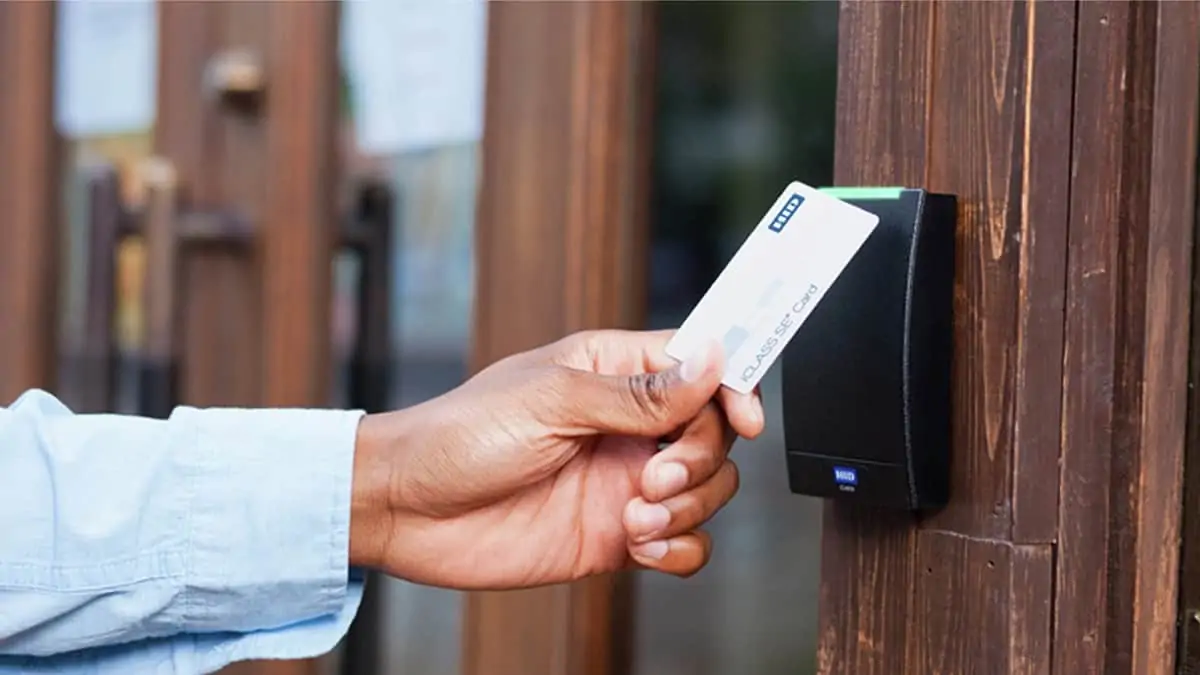
Types of Access Control Readers
When businesses think about securing their facilities, one of the first technologies that comes to mind is access control. From corporate offices and healthcare facilities to warehouses and multifamily buildings, modern security depends on who can enter, when they can enter, and how that access is verified. At the center of every professional access control setup is the reader, the device that confirms identity and tells the door whether to unlock or stay closed. Understanding the types of access control readers available today helps organizations design safer, more efficient and more scalable security systems.
This guide is written from the perspective of Nexlar, a security integrator that designs, installs, and supports enterprise grade door access systems. We will explore how access control readers work, what makes each technology different, and how to choose the right door access card reader system for your building.
Understanding how access control readers work
An access control reader is the device installed near a door that reads credentials and communicates with the access control system. When someone presents a card, fob, mobile phone, or fingerprint, the access control card reader checks the information against the database. If the user is authorized, the door unlocks. If not, the door remains locked and the system records the attempt.
This process is what people usually mean when they ask what does a card reader do. A security card reader does not just open doors. It enforces security rules, logs activity, and integrates with alarms, cameras, and building management platforms. Every access card reader is part of a larger door access card reader system that ensures compliance, safety, and accountability.
Why access control readers are critical for modern buildings
Traditional locks and keys offer no visibility and very limited control. If a key is lost, every lock must be changed. With access control readers, permissions can be granted or removed instantly. You can allow employees into specific doors during business hours and restrict access after hours. You can also monitor entry attempts in real time and respond quickly to suspicious activity.
This is why organizations are rapidly adopting different types of access control technologies. From card based systems to biometric readers access control solutions, the market has evolved to meet modern security demands.
Card based access control readers
One of the most widely used types of readers is the access control card reader. These systems rely on physical cards or fobs that users carry with them. The card contains encoded information that is read by the door card reader when it is presented.
A door access card reader system is popular because it is affordable, reliable, and easy to manage. Cards can be issued, replaced, and disabled without changing any hardware. Access control cards can also be branded and printed with employee details for visual identification.
In many commercial buildings, the access card reader is still the foundation of security because it scales well from a single door to hundreds of controlled entrances.
Proximity and RFID readers
Proximity readers are a common form of access control readers that use radio frequency identification. When a card or fob is brought close to the reader, it transmits a signal that is verified by the system. These are contactless and fast, making them ideal for high traffic areas.
RFID based types of access control readers are widely used in offices, schools, and medical facilities. They provide a balance of convenience and security while keeping costs reasonable. When people talk about types of readers in everyday commercial security, proximity readers are often what they are referring to.
Smart card readers
Smart cards are an advanced form of access control cards that contain microchips. Unlike basic proximity cards, smart cards can store more data and support encryption. This makes them much harder to clone or tamper with.
An access control card reader designed for smart cards provides a higher level of security for environments where sensitive data or high value assets are involved. Financial institutions, government buildings, and technology companies often rely on these types of access control to protect critical areas.
Mobile and virtual card readers
Modern door access card reader systems increasingly support mobile credentials. Instead of carrying a physical access control card, users can present their smartphone to the reader using Bluetooth or near field communication. This approach simplifies management and reduces the risk of lost or stolen cards.
From an operational standpoint, mobile access also allows administrators to issue and revoke credentials instantly without printing new access control cards. It is a natural evolution of access control readers in a mobile first world.
Keypad and PIN based readers
Some types of access control readers rely on codes rather than cards. A keypad reader allows a user to enter a PIN to gain access. These systems are simple to deploy and useful in areas where issuing cards is not practical.
However, keypads are often combined with other types of door access control systems for higher security. Using a PIN along with an access card reader creates a multi factor authentication model that reduces the risk of unauthorized entry.
Biometric access control readers
Biometric readers access control technology verifies identity using physical traits such as fingerprints, facial recognition, or iris scans. These are among the most secure types of readers because they are tied to the individual rather than something they carry.
Biometric access control readers are ideal for high security environments such as data centers, laboratories, and restricted government facilities. They eliminate the risk of stolen access control cards and provide a strong audit trail for compliance and investigations.
Multi technology and hybrid readers
Many modern access control readers support multiple credential types. A single reader may accept access control cards, mobile phones, and biometric input. This flexibility allows organizations to upgrade security without replacing all of their hardware.
These hybrid systems also support phased rollouts. A business can start with card based access control and later introduce biometric readers access control without disrupting operations.
Choosing the right type of access control reader
Selecting the right door card reader depends on your environment, risk level, and operational needs. High traffic office buildings may prefer fast and convenient access card reader solutions. Facilities with sensitive data may require biometric or smart card technologies. Warehouses and manufacturing plants often need rugged readers that can withstand harsh conditions.
Understanding the different types of access control and how they align with your security goals is critical. A professional assessment ensures that your access control readers work together as a complete, secure system.
Types of door access control systems in real world applications
There are many types of door access control systems in use today. Some rely primarily on access control cards while others use biometrics or mobile credentials. In practice, most modern installations use a combination of technologies to balance convenience and security.
A door access card reader system may be used for general entry while biometric readers access control protects restricted areas. This layered approach allows organizations to create zones of security without overcomplicating daily operations.
Why choose Nexlar for access control readers
Nexlar designs and installs enterprise grade access control readers that are tailored to each client’s facility and risk profile. We do not push one size fits all solutions. Instead, we evaluate your building layout, compliance requirements, and operational workflows to determine the most effective types of access control for your needs. Our systems integrate seamlessly with video surveillance, alarms, and monitoring platforms to provide a unified security environment that grows with your business.
Frequently asked questions about access control readers
Q. What does a card reader do in an access control system?
A security card reader verifies credentials such as access control cards or mobile tokens and tells the system whether to unlock the door based on user permissions.
Q. Are access control cards still secure?
Modern access control cards, especially smart cards, use encryption and secure authentication to prevent cloning and unauthorized use.
Q. What are the main types of readers used today?
The most common types of readers include proximity readers, smart card readers, mobile credential readers, keypad readers, and biometric access control readers.
Q. Can one door support multiple credential types?
Yes many access control readers are multi technology and can accept access control cards, mobile phones, and biometric input at the same time.
Q. Are biometric readers better than card readers?
Biometric readers access control provides higher security because credentials cannot be shared or lost, but card readers are often more convenient for large organizations.
Q. How do I choose the right access control reader?
The right access control card reader depends on your security level, traffic flow, compliance needs, and whether you want to support cards, mobile access, or biometrics.
Follow Us