

San Antonio’s retail market operates across a diverse range of formats, from the major anchor stores and national chains in the Rivercenter Mall, North Star Mall, and Ingram Park Mall to the neighborhood retail strip centers serving the city’s residential corridors and the growing lifestyle retail developments near the Pearl and Southtown districts.
The National Retail Federation’s 2024 security survey found that shrinkage cost U.S. retailers approximately 1.6 percent of total retail sales, with shoplifting representing the largest single component of that loss at approximately 36 to 38 percent. [1] For San Antonio retailers operating on industry-standard margins, a shrinkage rate approaching this national average represents a significant and directly addressable financial loss.
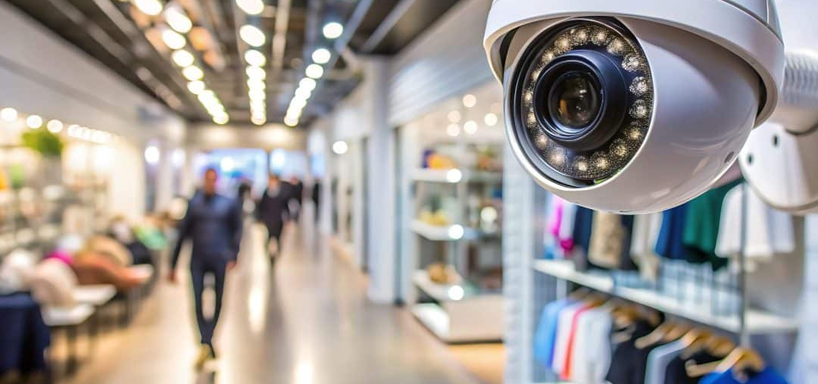
The camera system is the loss prevention tool that serves the most functions simultaneously in San Antonio retail operations. Visible cameras deter opportunistic shoplifting by increasing the perceived risk of identification. Properly positioned cameras document shoplifting events with the footage quality needed to support law enforcement action. POS-integrated cameras document employee transaction misconduct at the register. And after-hours cameras protect the back-of-house from the break-in and burglary events that follow the pattern of shopping center closures.
Getting the camera system design right for a San Antonio retail store means starting with a loss concentration analysis rather than a camera count per square foot formula.
Get a Free Retail Camera Assessment in San Antonio
Nexlar designs and installs retail CCTV systems for San Antonio stores, shopping centers, and multi-location retail groups. Contact Nexlar at nexlar.com/contact or call (281) 407-0768
Strategic Camera Planning: High-Theft Zones and Coverage Priorities
Retail shrinkage is not evenly distributed across the store floor. Specific categories and locations consistently account for a disproportionate share of shoplifting loss, and effective camera placement for San Antonio retail starts with identifying these high-concentration zones.
High-value merchandise areas. The merchandise categories with the highest theft frequency are those that combine high value with high portability: cosmetics, health products, electronics accessories, infant formula, and razor blades in a grocery or drug store context; jewelry and accessories in department retail; and spirits and premium beverages in licensed retailers. Camera coverage of these specific sections should provide identification-quality footage at the individual merchandise shelf level, not just wide-area overview footage that shows someone was in the aisle.
Fitting rooms and adjacent corridors. For San Antonio apparel retailers, fitting room corridors are high-frequency shoplifting locations where merchandise taken into the fitting room is not returned, concealed clothing is worn out of the store, or multiple items are switched for lower-value alternatives. Camera coverage of the fitting room entry corridor and the merchandise directly adjacent to the fitting room area provides documentation of who enters with what and what they emerge with.
High-traffic entry and exit points. The retail entry and exit is the point where shoplifting completes: the person who has concealed merchandise leaves the store at this point. Camera coverage that provides identification-quality footage of the entry and exit documents every person entering and leaving the store with sufficient detail for identification in an investigation or law enforcement report.
Visit Nexlar’s retail security and loss prevention for the full range of San Antonio retail security services including access control, alarm monitoring, and camera systems.
Back Doors, Loading Ramps, and Receiving Area Coverage
The back-of-house is consistently identified in loss prevention research as the highest-concentration zone for employee-involved theft in San Antonio retail operations. The receiving area is where product arrives without going through any customer-facing sales process, making inventory discrepancies during receiving a primary theft opportunity.
Loading ramp and receiving dock cameras should cover the full dock width during receiving operations, with identification-quality coverage of the dock door openings and the staging area where product is held after receiving and before being moved to the sales floor or storage.
Back door cameras, as discussed in previous guides on the Nexlar blog, should cover the full back entry lane area with both a camera at the door exterior (showing who approaches and what they carry) and a camera at the door interior (showing who exits and what they take). The back door is the primary exit path for merchandise diverted by employees, and camera coverage on both sides of the door is required to document the full theft scenario.
After-hours back-of-house coverage provides the recording that documents when unauthorized entry occurred during the overnight period and who was involved, supporting both law enforcement response and insurance documentation for break-in losses.
Panoramic and Multi-Directional Cameras to Minimize Aisle Blind Spots
Standard fixed dome cameras positioned at aisle ends or at the top of the aisle provide partial coverage of the aisle but leave significant blind spot areas, particularly in the middle sections of long aisles where a person can conceal merchandise without being clearly visible in any camera’s field of view.
Panoramic and multi-directional cameras address this by providing wide-angle or 360-degree coverage from a single ceiling position that reduces the number of aisle-end cameras needed while improving coverage continuity across the aisle interior. [2]
For San Antonio retail stores with standard 30 to 40-foot aisle lengths, a single 360-degree panoramic camera positioned at the midpoint of the aisle ceiling provides coverage of the full aisle from both directions simultaneously, capturing the middle aisle sections that end-cap cameras miss. The de-warped view from a ceiling-center panoramic camera provides useful identification coverage of the full aisle length from a single mounting point.
For San Antonio retail formats with shorter aisle lengths or gondola sections, wide-angle 180-degree cameras positioned at the aisle entry provide high-coverage views of the full aisle depth without requiring cameras at both the entry and far end of each aisle.
The commercial business security systems page at Nexlar covers how panoramic cameras integrate into the broader retail security camera system for San Antonio stores.
POS System Integration: Matching Receipt Text with Cashier Camera Logs
POS video overlay is the retail loss prevention technology that directly links the point-of-sale transaction record to the security camera footage at each checkout position, allowing San Antonio retail loss prevention managers to search for specific transaction events and immediately see the corresponding camera footage.
When a cashier processes a transaction, the POS system generates a data stream that the video overlay software captures and overlays as text on the checkout camera’s live feed. Every item scan, price change, void, discount application, and payment event appears as text on the camera footage at the exact moment it occurs in the POS transaction record.
When a loss prevention manager audits transaction records and identifies an anomalous event (a void after cash payment, an unauthorized discount, a price override without supervisor approval), they can search the POS-integrated camera system for that specific event type and immediately retrieve the camera footage showing what occurred at the checkout position at that moment.
For San Antonio retailers where cash handling at checkout is a primary internal theft concern, POS overlay cameras at every checkout position produce the continuous documentary record that traditional cash auditing methods cannot match. Nexlar’s security cameras systems for San Antonio retail include POS integration capability as an available enhancement for checkout camera positions.
Cost and Pricing for San Antonio Retail Store Camera Installations
| Installation Scope | Estimated Cost Range |
|---|---|
| Small Retail Store (8 to 15 cameras) | $5,000 to $15,000 |
| Mid-Size Store (15 to 35 cameras) | $12,000 to $35,000 |
| Large Format Retail (35 to 80 cameras) | $30,000 to $75,000 |
| Panoramic Camera (per unit, replacing 4 fixed cameras) | $800 to $2,500 |
| POS Video Overlay Integration (per checkout position) | $500 to $1,500 |
| Cloud Remote Access Setup | $1,000 to $3,000 |