

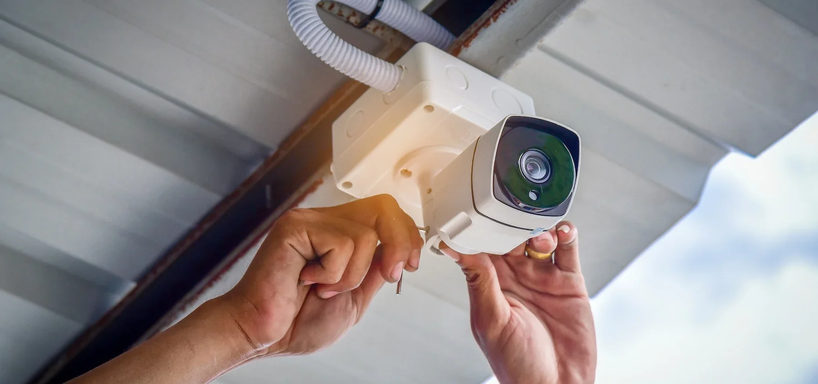
San Antonio’s commercial and logistics sector has expanded significantly over the past decade, with the I-35 corridor south and north of the city hosting a growing concentration of distribution centers, freight terminals, light manufacturing operations, and logistics warehousing. These facilities share a set of security camera requirements that differ fundamentally from the commercial office and retail camera projects that dominate the residential security market.
A commercial camera installation for a San Antonio warehouse or logistics terminal is not a scaled-up version of a business office camera system. It is an engineering project with specific requirements: layout planning that accounts for the geometry of cargo bays and facility fence lines, network infrastructure specifications that support reliable operation of 50 to 150 cameras across large physical footprints, and remote monitoring capability that lets operations managers in San Antonio or across Texas review live footage and event alerts without being on-site.
Choosing a commercial security camera installer in San Antonio requires evaluating whether the installer understands these specific requirements or is applying office building camera principles to an industrial application.
Get a Free Commercial Camera Assessment for Your San Antonio Facility
Nexlar designs and installs commercial camera systems for San Antonio warehouse, distribution, and logistics operations. Contact Nexlar at nexlar.com/contact or call (281) 407-0768
Essential Layout Design for Cargo Terminals and Loading Bays
The loading bay and cargo terminal area is where the most significant freight loss events occur in San Antonio logistics operations. Product moves from secured storage to outbound trucks at this interface point, and unauthorized access, load diversion, and documentation fraud are more concentrated here than anywhere else in the facility.
Camera layout for San Antonio cargo terminal coverage must serve two distinct requirements simultaneously. Area overview coverage provides operations managers with a view of the full cargo terminal showing multiple bays, vehicle movements, and general activity patterns from elevated wide-angle positions. Identification-quality coverage at individual bay positions provides the resolution needed to read vehicle plates, identify individuals, and read document and cargo labels at the specific bay level during loading and unloading operations.
Combining these two coverage levels requires at least two camera layers at the cargo terminal: panoramic or wide-angle overview cameras at elevated positions covering the terminal as a whole, and dedicated high-resolution cameras at each active bay position providing identification-quality coverage at the point of product transfer.
For San Antonio facilities receiving high volumes of temperature-sensitive cargo or regulated materials, additional camera coverage of the staging and holding areas between inbound receiving and internal storage documents the chain of custody through the facility.
Visit Nexlar’s warehouse security system for how layout planning for San Antonio logistics and warehouse facilities addresses the specific coverage requirements of each zone type.
Facility Fence Line Coverage for San Antonio Logistics Operations
Fence line perimeter coverage is the outer security layer that prevents unauthorized vehicle and pedestrian access to San Antonio logistics facilities during after-hours periods and during operational periods when the main gate is staffed but secondary perimeter access points are not monitored.
Camera coverage of the fence line must account for the typical geometry of San Antonio logistics facilities: long straight runs of fence with limited natural observation points, areas adjacent to unpopulated land where approach from outside the fence occurs without any neighboring surveillance, and fence line sections that are physically remote from the main building where wired camera infrastructure may not be practical.
For San Antonio facilities with extended fence lines requiring camera coverage at positions remote from the main building, wireless bridge connectivity or solar-powered cellular-connected cameras provide fence line coverage without requiring the conduit runs across open yard areas that wired installations require.
Camera height and angle at fence line positions determines the effective coverage distance along the fence run. For San Antonio logistics facilities on flat terrain, camera mounting at 15 to 20 feet provides coverage along the fence run of 80 to 120 feet per camera on each side of the mounting position, allowing the number of cameras needed to cover a specific fence length to be calculated during the layout assessment.
High-Density Network Infrastructure for Reliable Multi-Camera Systems
The network infrastructure that supports a 50 to 150 camera commercial camera system at a San Antonio logistics facility is a substantial engineering consideration that non-commercial installers frequently underspecify, resulting in camera systems that work in testing and fail under operational load.
The key network infrastructure parameters for San Antonio commercial camera systems are:
Switch capacity and PoE budget. IP cameras are powered and connected through Power over Ethernet (PoE) switches. The combined power draw of all cameras connected to a switch must not exceed the switch’s PoE budget. For a 24-port switch serving 24 cameras at an average draw of 15 watts per camera, the required PoE budget is 360 watts. Standard commercial PoE switches with budgets of 195 to 370 watts may be operating near or beyond their design capacity if fully populated with cameras without budget verification. [1]
Network bandwidth. The combined video stream upload bandwidth from all cameras must be accommodated by the network infrastructure between cameras and the NVR or cloud recording platform. For a 100-camera system recording at 4MP resolution with H.265 compression, the combined bandwidth requirement is approximately 400 to 800 Mbps, requiring the network infrastructure between the camera VLAN and the NVR to support this bandwidth without bottlenecks.
VLAN separation. Camera network traffic should be isolated on a dedicated VLAN separated from general operational network traffic, preventing camera video streams from competing with business applications for network bandwidth and providing a network security boundary between the camera system and the facility’s operational network.
Nexlar’s commercial business security systems for San Antonio facilities include complete network infrastructure planning as a standard component of every commercial camera project, not an afterthought that is addressed after camera installation begins.
Remote Administrative Monitoring via Mobile and Desktop Platforms
For San Antonio logistics operators managing facilities with multiple sites, or for operations managers who travel regularly and need security visibility while away from the facility, remote monitoring capability is a core operational requirement rather than an optional feature.
Modern enterprise Video Management Software (VMS) platforms including Milestone XProtect, Genetec Security Center, and Hanwha WiseNet WAVE provide both desktop and mobile client access to live camera feeds, recorded footage review, camera health monitoring, and event alert management from any internet-connected device.
For San Antonio logistics operators, the specific remote monitoring requirements most frequently include: live view access to gate camera feeds to verify that specific vehicle entries occurred, dock camera access to review loading activity during a reported incident, perimeter camera access when after-hours alerts are received, and event-based footage review when a security or operations manager needs to investigate a reported incident without traveling to the facility.
Mobile access through VMS mobile apps provides this capability from the operations manager’s smartphone, with the same camera access, footage review, and alert acknowledgment functions as the desktop client. For San Antonio facilities with remote monitoring services, the monitoring center accesses the same camera system through a dedicated monitoring center account with appropriate permissions.
Visit the San Antonio security systems for more on how Nexlar serves San Antonio’s commercial and logistics security market.
Camera Hardware Selection for San Antonio Warehouse and Industrial Environments
San Antonio’s climate and the specific environmental conditions of logistics and warehouse operations determine camera hardware specifications that are not interchangeable with standard commercial indoor cameras.
Outdoor and semi-outdoor cameras covering dock doors, yard areas, and fence lines require at minimum IP66 weather protection rating and operating temperature ratings above 60 degrees Celsius for the heat buildup that occurs in metal dock canopies and outdoor sun-exposed positions during San Antonio’s summer months.
High-bay warehouse cameras covering storage rack aisles require mounting capability for heights of 20 to 40 feet and sufficient focal length to provide identification-quality coverage at the aisle floor from the mounting height. Wide-angle dome cameras at standard commercial ceiling heights are inadequate for the high-bay racking geometry that San Antonio distribution centers commonly use.
License plate recognition cameras at gate entry and exit positions require the dedicated LPR hardware specifications covered separately, including focused IR illumination and fast shutter speeds for nighttime plate capture under headlight conditions.
Cost and Pricing for San Antonio Commercial Camera Installations
| Installation Scope | Estimated Cost Range |
|---|---|
| Small San Antonio Facility (15 to 30 cameras) | $12,000 to $35,000 |
| Mid-Size Logistics Facility (30 to 70 cameras) | $30,000 to $80,000 |
| Large Distribution Center (70 to 150 cameras) | $70,000 to $180,000 |
| Network Infrastructure (switches, cabling per project) | $5,000 to $25,000 |
| NVR and Storage System | $4,000 to $20,000 |
| Remote Monitoring Setup | $2,000 to $6,000 plus monthly service |