

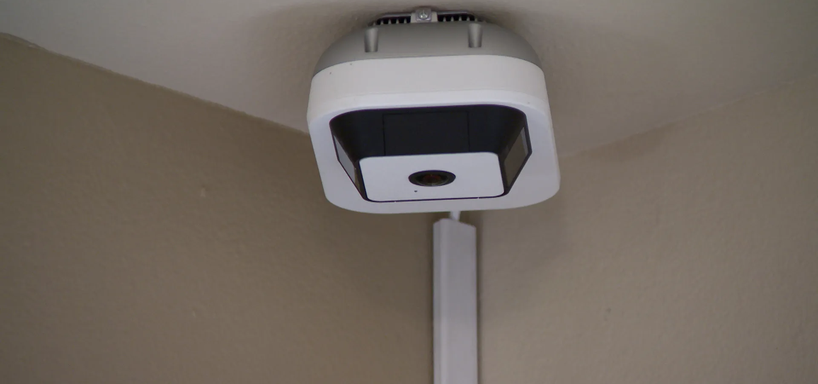
Falls are the leading cause of injury-related death among adults aged 65 and older in the United States. For Austin’s assisted living, memory care, and skilled nursing facilities, rapid fall response is among the most urgent patient safety priorities in the region.
The core problem is that most resident falls occur when no staff member is in the room. A resident who falls in their private room may remain on the floor for minutes to hours before discovery, depending on staffing ratios and rounding schedules. This delay directly affects clinical outcomes. Early intervention reduces injury severity, while prolonged floor time increases the risk of pressure injuries, hypothermia, dehydration, and psychological trauma.
Traditional approaches including bed exit alarms, call buttons, and motion sensors each carry significant limitations. Bed exit alarms produce high false-alert rates that create alarm fatigue. Call buttons require the resident to press them, which is impossible when the fall causes incapacitation. Motion sensors detect movement but cannot differentiate a fall from normal room activity.
AI fall detection camera systems change this entirely. They continuously monitor each resident’s position and generate an immediate alert when a fall pattern is detected, without requiring any action from the resident.
Get a Free Fall Detection Camera Assessment for Your Austin Facility
Nexlar designs and installs AI fall detection systems for Austin assisted living, memory care, and clinical facilities. Contact Nexlar at nexlar.com/contact or call (281) 407-0768
Privacy-Safe AI Optical Sensors for Resident Room Monitoring
The clinical privacy concern that has historically blocked camera-based monitoring in resident rooms is valid and must be addressed at the hardware level, not only through policy.
Privacy-safe AI optical sensors use depth-sensing technology to monitor the resident’s position and movement in the room without capturing photographic or video images. The sensor produces a real-time position model showing a silhouette or skeleton representation of the resident’s body position, not a recognizable image of the person. The AI system analyzes this position model for fall indicators and generates alerts based on position data only.
Residents in Austin assisted living facilities using these systems are continuously monitored for fall risk without any photographic record of their personal activities ever being created. This privacy protection is built into the sensor’s operating principle rather than depending on access controls or deletion policies.
For Austin facilities where residents or families raise privacy concerns, the depth-sensing sensor approach offers fall detection capability with an objective, technical privacy assurance that no video camera policy can match.
Nexlar’s healthcare security solutions for Austin clinical facilities treat fall detection as a component of a comprehensive safety and security program that covers physical access control, general camera coverage, and patient safety monitoring in an integrated design.
How Blurred-Mask AI Protects Patient Dignity While Detecting Falls
For Austin facilities using visible-light cameras in hallways or clinical areas alongside depth-sensing sensors, blurred-mask AI processing adds a privacy protection layer that allows camera footage to serve fall detection purposes without exposing identifiable patient images.
Blurred-mask AI applies a real-time visual mask to the camera stream that automatically detects and blurs faces and identifying body features within the field of view. The fall detection AI continues analyzing the full-resolution image for position and fall indicators, but the image stored in the archive and displayed to monitoring staff shows the blurred version only.
When a fall event is detected, the system can document the event using the blurred footage, protecting the resident’s visual identity while preserving the physical details of the fall for clinical review and, if necessary, legal documentation.
For Austin healthcare facilities balancing the clinical value of visual documentation with patient privacy obligations, blurred-mask AI provides a technically defensible solution that satisfies both the clinical team’s documentation needs and the facility’s HIPAA obligations.
Automated Nursing Staff Alerts and Emergency Response Timelines
The operational value of AI fall detection cameras is not the detection itself but the automated alert that reaches nursing staff within seconds of the event, before any person would otherwise discover the resident.
In facilities with 30-minute rounding intervals, a resident who falls immediately after a room check may wait nearly 30 minutes before discovery under the traditional staffing model. An AI fall detection camera generates an alert within seconds of the event. That alert simultaneously reaches nursing station displays, staff mobile devices, and the charge nurse workstation. The physical response begins within seconds rather than within the rounding interval.
Alert routing should target the wing nursing station and the staff assigned to that specific resident’s wing, not a central monitoring room requiring travel time across the facility. Secondary escalation ensures that if the primary alert is not acknowledged within 30 to 60 seconds, it automatically escalates to a supervisor or backup staff member.
This response time reduction has measurable impact on patient outcomes. Falls where clinical attention arrived within five minutes consistently produce better outcomes than those with discovery delays exceeding 30 minutes.
Clinical Hallway Camera Coverage for Austin Senior Care Facilities
While resident rooms benefit from depth-sensing sensor monitoring, clinical hallways require camera coverage that serves both fall detection and general security functions. Hallways are shared spaces where residents move independently, and falls in transition areas represent a significant proportion of total facility fall events.
For Austin assisted living facilities, hallway camera positioning should prioritize the highest-risk transition areas: elevator lobbies, bathroom entries where flooring surfaces change, activity room entries, and any hallway section with prior documented fall events.
Camera placement for hallway fall detection should provide clear full-length views of resident body positions from an angle that allows the AI to distinguish standing from fallen posture. End-of-corridor positions looking down the hallway length provide this most effectively and cover multiple transition zones from a single camera position.
These hallway cameras, connected through Nexlar’s security cameras systems, also serve general security monitoring functions including visitor access documentation and staff activity oversight.
Secure Video Streaming and Storage for Fall Event Documentation
Fall event footage has both clinical and legal significance. Clinically, it documents the fall mechanism, pre-fall position, and staff response timeline. Legally, it may be relevant to liability investigations or regulatory inquiries.
Austin facilities need a storage approach that maintains footage integrity, prevents unauthorized access, and retains critical event footage for the full applicable statute of limitations period under Texas law.
Encrypted local NVR storage with AES-256 encryption and role-based access controls is the primary storage layer. Off-site cloud backup with a HIPAA Business Associate Agreement (BAA)-compliant provider protects against local hardware failure or facility incidents. Automatic event clip archiving ensures fall event footage is preserved separately from the general recording archive with extended retention settings that prevent automatic overwriting during standard retention cycles.
Cost and Pricing for Austin Assisted Living Fall Detection Camera Installations
| Installation Scope | Estimated Cost Range |
|---|---|
| Depth-Sensing Room Sensor (per resident room, installed) | $800 to $2,500 |
| Clinical Hallway Camera with Fall Detection AI (per camera) | $1,000 to $3,000 |
| Small Facility (15 to 30 rooms with hallway coverage) | $20,000 to $55,000 |
| Mid-Size Facility (30 to 80 rooms, full coverage) | $45,000 to $120,000 |
| Alert System Integration (nursing station, mobile, pager) | $3,000 to $8,000 |
| HIPAA-Compliant Cloud BAA Storage Setup | $2,000 to $5,000 |