

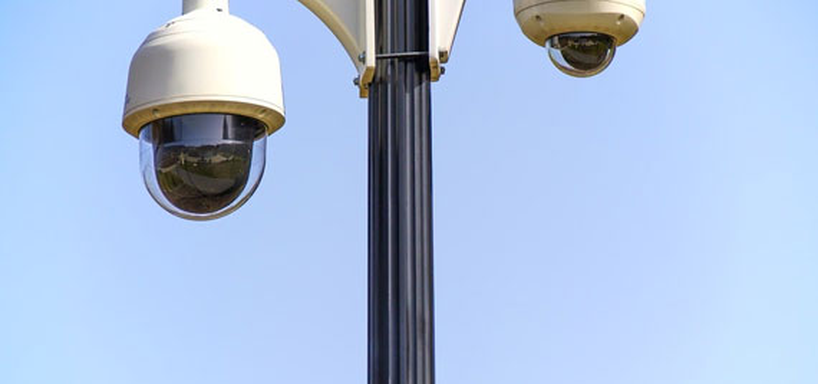
Security cameras in Austin apartment communities face physical threats that commercial building cameras rarely encounter: the cameras are accessible to residents and guests who are in the building legitimately, they are often in low-supervision areas like stairwells and parking garages, and in some properties they are targets of deliberate vandalism by individuals who want to eliminate surveillance coverage before committing other acts.
Camera damage in Austin apartments takes predictable forms. The dome cover is broken by direct impact with a fist, shoe, or hard object. The wiring is accessed at the camera body and the cable is cut. The camera mounting hardware is attacked to pull the camera loose from the wall or ceiling. The dome’s optical window is spray-painted or coated with a substance that eliminates the camera’s field of view.
Standard commercial dome cameras, even those marketed as “outdoor” or “vandal-resistant,” are frequently inadequate for these threats in the access conditions of a busy Austin apartment stairwell or parking garage. A camera rated IK08 (the standard commercial vandal-resistant rating) withstands a 5 joule impact, approximately equivalent to a moderate blow from a fist. An IK10 camera withstands an 20 joule impact, equivalent to a 5 kg weight dropped from 40 cm, or a strong blow from a deliberate tool or foot. [1]
This difference matters in the specific threat environment of an Austin apartment. An individual specifically targeting a camera for destruction will typically apply more force than a standard IK08 camera is rated to withstand. A properly specified IK10 camera in a hardened mounting configuration resists the same level of deliberate attack.
This guide covers the correct hardware specification, conduit design, and mounting approach for vandal-resistant camera installations in Austin apartment stairwells, parking garages, and common areas.
Get a Free Vandal-Proof Camera Assessment for Your Austin Apartment Property
Nexlar Security designs vandal-resistant camera systems for Austin apartment communities and multi-family properties. Contact Nexlar at nexlar.com/contact or call (281) 407-0768
IK10 Impact Ratings: What the Standard Actually Means
The IK rating system (defined in IEC 62262) classifies the mechanical impact resistance of enclosures using a standardized test methodology. Each IK rating level corresponds to a specific impact energy level applied to the enclosure using a standardized striker. [1]
IK08 (5 joules): The most common vandal-resistant rating in standard commercial dome cameras. Adequate for cameras in public commercial environments where accidental impact is the primary risk.
IK09 (10 joules): Stronger than IK08, used in cameras specified for higher-risk environments where deliberate low-effort attack is a possibility.
IK10 (20 joules): The maximum classification in the IK standard. This is the appropriate specification for Austin apartment stairwell and parking garage cameras where deliberate, tool-assisted attack is a realistic threat scenario.
The testing methodology for IK10 applies a 20 joule impact to the most vulnerable point of the enclosure, which for a dome camera is typically the dome window itself. A camera that passes IK10 testing at the dome window will withstand significant deliberate impacts without dome fracture or camera function loss.
Beyond the dome rating, the camera body mounting and the dome retention mechanism are equally important. A camera with an IK10-rated dome attached to the camera body with standard screws that can be removed with a common screwdriver is not meaningfully more vandal-resistant than a camera with a lower-rated dome, because the attack method shifts from breaking the dome to removing it.
Proper IK10 camera specification for Austin apartment installations includes the dome rating, tamper-proof Torx or security fasteners at the dome retention screws, and a mounting approach that anchors the camera body to a structural surface with fasteners concealed by the camera body itself.
Stairwell and Parking Garage Camera Applications for Austin Apartments
Stairwells and parking garages are the two highest-priority vandal-resistant camera applications in Austin apartment properties because they combine low natural supervision with frequent after-hours use and the physical access conditions that make camera attack both feasible and common.
Stairwell cameras. Austin apartment stairwells are enclosed spaces with high ceiling heights (which would normally protect cameras from ground-level access) but also with stair landings at multiple floor levels that provide elevated access to cameras mounted on stairwell walls. A camera mounted at 9 feet on a stairwell wall is accessible from a landing on the staircase above it.
Camera positioning in stairwells should account for the three-dimensional access geometry created by the stairs themselves. Camera mounting positions that appear inaccessible from the ground floor may be directly accessible from the adjacent landing at the next floor level. Mounting at the ceiling of the stairwell, in a corner position using a corner mount adapter, maximizes the physical distance from all floor levels and landing positions while providing the wide-angle downward view needed to cover the full stairwell.
Parking garage cameras. Austin apartment parking garages present the broadest physical attack surface for camera systems. Cameras on garage columns and walls are accessible to anyone with access to the garage, and the enclosed nature of the garage reduces the natural supervision that exterior parking lots have from passing traffic and neighboring properties.
For parking garage cameras, IK10 dome cameras in a housing with concealed mounting fasteners, mounted on recessed column positions rather than exposed projection mounts, and connected through rigid steel conduit rather than surface-routed flexible conduit, provide the most vandal-resistant configuration available.
Nexlar’s apartment security systems for Austin multi-family properties include stairwell and parking garage vandal-resistant camera design as a standard component of every apartment security project.
Hardened Conduit Design to Prevent Cable Snipping
The most common method of camera defeat that does not require physically breaking the camera itself is cable access. If a camera’s power and data cables are routed in a way that allows a vandal to access the cable and cut it, the camera is disabled without any damage to the camera hardware itself. For Austin apartment cameras that have been replaced after physical attack, camera defeat by cable snipping often replaces physical attack as the preferred method.
Hardened conduit design prevents this by routing camera cabling through metal conduit that provides the same physical protection to the cable as the camera housing provides to the camera electronics.
Rigid metal conduit (RMC) is the strongest conduit type available, providing physical protection against cutting tools and sufficient rigidity to prevent cable access through bending or breaking the conduit. For Austin apartment stairwell and parking garage camera installations where vandal attack is the threat scenario, RMC is the appropriate specification from the camera body to the first protected point in the building structure (a locked electrical room, a ceiling plenum above an access panel, or a conduit pathway behind the building’s finished wall surface).
Intermediate metal conduit (IMC) provides protection somewhat below RMC and is appropriate for less high-risk positions within the same overall hardened conduit design.
Surface-mounted conduit sealing. Where conduit runs are surface-mounted on a wall or ceiling (as opposed to running within the wall), the conduit must be secured with tamper-proof fasteners at every mounting point to prevent the conduit from being pulled away from the surface to expose the cabling inside.
The security cameras systems covers conduit specifications as a standard component of apartment and multi-family camera installation design for Austin properties.
Corner Mount Cameras for Austin Apartment Common Areas
Corner mount camera configurations provide a specific physical security advantage in Austin apartment stairwells, elevator lobbies, and parking garage interior corners: the camera is positioned where two walls meet, placing it furthest from any single wall surface and making direct physical access to the camera more difficult than a wall-mounted position.
A corner-mount dome camera using a corner adapter bracket that attaches at the two-wall intersection is positioned with its back to the corner itself, providing wide-angle coverage of the entire room or space while being physically set back from the approach direction of anyone in the room.
For Austin apartment stairwells, a corner-mount camera positioned at the ceiling of the stairwell corner covers both the upper stair landing and the lower landing simultaneously, with the camera itself positioned at the most physically remote point of the space from all floor levels.
For Austin apartment elevator lobbies and corridor intersections, corner mounts at ceiling level provide 180-degree wide-angle coverage of the approach corridor from both directions simultaneously, a coverage geometry that is difficult to achieve with standard wall-mounted cameras without requiring two separate camera positions.
Corner mount hardware must be specified for the same structural adequacy as the camera mounting itself. A corner mount bracket attached to drywall with standard drywall anchors is not a vandal-resistant mounting, regardless of the camera’s IK rating. Structural attachment to the wall stud or concrete/CMU substrate behind the finish surface is required for a mount that resists deliberate pull-force attacks.
Anti-Ligature Camera Structures for High-Risk Austin Properties
Anti-ligature design is a specific requirement that applies to Austin apartment communities serving populations at elevated risk of self-harm, including communities adjacent to mental health treatment facilities, properties with supportive housing components, and properties where the management company’s risk assessment identifies this as a relevant concern.
Anti-ligature camera housings eliminate the protrusions, gaps, and attachment points that standard camera housing designs create, which could be used as attachment points for ligature. These housings use smooth, radiused surfaces with no exposed edges, no visible fasteners, and no gaps between the camera housing and the mounting surface.
In Austin apartment applications where anti-ligature specification is required, the camera hardware, the mounting hardware, and the conduit design at the camera body must all be evaluated for anti-ligature compliance rather than only the camera housing itself.
Cost and Pricing for Austin Apartment Vandal-Proof Camera Installations
| Installation Scope | Estimated Cost Range |
|---|---|
| IK10 Stairwell Camera with Corner Mount (per camera, installed) | $500 to $1,500 |
| Parking Garage IK10 Camera with RMC Conduit (per camera) | $700 to $2,000 |
| Small Austin Apartment (15 to 25 cameras, RMC throughout) | $12,000 to $35,000 |
| Large Austin Community (25 to 60 cameras, full property) | $25,000 to $70,000 |
| Anti-Ligature Camera Housing Upgrade (per camera) | $200 to $600 additional |
| Hardened Conduit Upgrade (per linear foot, RMC over EMT) | $8 to $20 additional |