

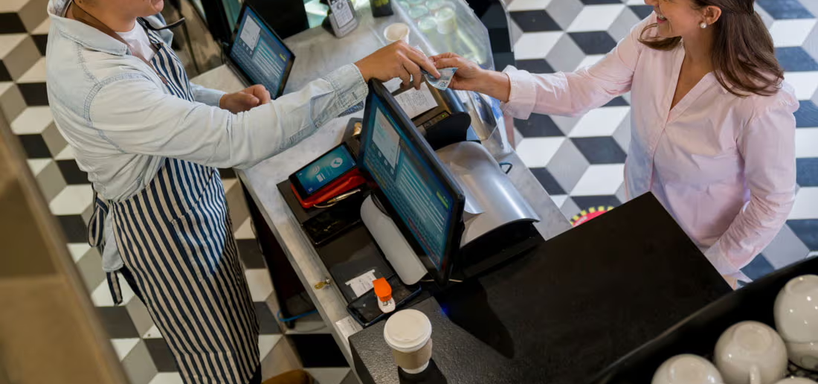
POS Video Overlay: Restaurant Cash Register Camera Setup in Austin
Austin's restaurant industry spans a spectrum from Sixth Street bars and South Congress food halls to Domain anchor restaurant groups and East Austin chef-driven concepts. Across this range, the cash register and POS terminal is the point where the restaurant's revenue collection either works correctly or doesn't.
The National Retail Federation estimates that employee theft represents approximately 28 to 35 percent of retail and food service shrinkage, and the register is the primary location where this theft occurs in restaurant operations. [1] The mechanisms are well-documented: transaction voids that convert a completed payment to an unreported sale, no-sale cash drawer openings to remove cash, under-ringing items for favored customers or in exchange for side payments, and comping items beyond authorized levels.
Without a camera system that captures both the register transaction and the visual context of that transaction simultaneously, investigating any of these mechanisms requires solely relying on POS transaction logs, which show the result of the manipulation but not the physical actions that produced it.
POS video overlay changes this by linking the transaction record to the camera footage. Every POS transaction event generates a text overlay on the camera feed showing the transaction data at the exact moment it occurs. A void transaction appears on the footage as "VOID: $47.50" at the moment the void key is pressed, overlaid on the image of the employee performing the action. A no-sale cash drawer opening appears as "NO SALE OPEN: 9:43 PM" on the footage of the employee at the register. [2]
This linked record eliminates the investigation gap between the transaction log anomaly and the visual evidence of how it was produced.
Get a Free Restaurant Security Camera Assessment for Your Austin Location
Nexlar Security designs and installs POS-integrated camera systems for Austin restaurants, bars, and food service operations. Contact Nexlar at nexlar.com/contact or call (281) 407-0768
How POS Video Overlay Works: Linking Transaction Data to Camera Footage
POS video overlay is the technology that connects a restaurant's point-of-sale system to its security camera system to display transaction text data directly on the camera video feed as it occurs.
The integration works through a middleware layer that reads the data output from the POS system (which most modern POS systems output through a serial port, network connection, or API) and formats the transaction data as a text string that is overlaid on the relevant camera feed in real time. [2]
When a cashier opens a transaction, the camera feed for that register position shows the transaction items appearing in a text overlay as they are entered. When the transaction completes (cash, card, or other payment), the transaction total and payment method appear on the overlay. When a void, refund, or no-sale event occurs, the specific event type and amount appear on the overlay at the exact moment the POS system records the event.
The overlaid footage is recorded and stored in the same NVR or cloud platform as the standard security camera footage, creating a searchable archive where Austin restaurant managers can search for specific POS events (all voids over $20, all no-sale cash drawer openings, all refunds on a specific employee's login) and immediately see the corresponding video footage with the transaction data overlaid.
The search capability is the key operational tool. Rather than manually reviewing hours of footage looking for suspicious register behavior, the manager queries the system for the specific POS event type (void, refund, no-sale) and a filtered result shows only the footage clips where those events occurred, each with the transaction data already displayed on the footage.
Verifying Employee Transaction Voids and Cash Drawer Openings
Transaction voids and no-sale cash drawer openings are the two most common register-based theft mechanisms in Austin restaurant operations, and they are the two events that POS video overlay is most specifically designed to surface and document.
A transaction void in a legitimate restaurant operation occurs when an item was entered incorrectly and needs to be removed, when a customer changes their order after initial entry, or when a transaction needs to be cancelled due to a customer leaving. In each legitimate case, there is a clear visual context: the customer is present, the cashier is interacting with them, and the void is the result of a visible exchange.
A fraudulent void occurs when a cashier completes a legitimate cash transaction, accepts payment, and then voids the transaction in the POS system after the customer leaves, pocketing the cash. The POS log shows a void, which appears in transaction data as a routine occurrence. Without video, the manager investigating the void cannot see that the customer had paid in cash and left before the void was entered.
With POS video overlay, the void event triggers a timestamped clip showing the cashier at the register at the moment the void was entered. If the visual context shows the customer already gone and the cash drawer being opened after the void, the footage is direct evidence of the fraudulent mechanism. If the customer is present and the void is clearly associated with a visible order change, the footage confirms the void's legitimacy.
The same logic applies to no-sale cash drawer openings, where the POS overlay shows the event on the footage of the employee at the register at the moment of opening, providing the visual context that confirms whether the opening was for a legitimate purpose such as making change or constituted unauthorized cash access.
Visit Nexlar's retail security and loss prevention page for how these POS camera approaches apply across Austin food service and retail operations.
Inventory Drop-Off Tracking and Employee Cash Handling Audits
Beyond void and no-sale monitoring, POS-integrated camera systems for Austin restaurants provide useful documentation for inventory management and cash handling compliance.
Inventory drop-offs occur when items that have been rung through the POS but not actually served to the customer are physically removed from the kitchen or prep area by employees. The POS record shows the item was sold; the physical inventory shows the item is missing. Camera coverage of the food preparation and service area, combined with POS overlay on the service camera, can identify when items appear to be diverted between the POS entry and the customer delivery.
Cash handling audits are simplified significantly when register camera footage with POS overlay is available. End-of-shift cash counts that show discrepancies can be investigated by reviewing the footage of the entire shift's register transactions, looking for no-sale openings, voids, and cash-handling moments that do not correspond to the POS transaction sequence. For Austin restaurant groups conducting internal compliance audits across multiple locations, the ability to review POS-overlaid footage remotely through a cloud platform eliminates the need to visit each location physically.
Nexlar's commercial security systems for Austin businesses integrate POS camera systems with the broader restaurant security infrastructure including back-of-house cameras, parking area coverage, and access control on cash handling areas.
Resolving Credit Card Disputes with 4K Transaction Evidence
Credit card chargebacks are a recurring cost for Austin restaurants, particularly for bars and service-oriented concepts where the customer's claim that they did not authorize a charge is the basis for a dispute that the restaurant must respond to with evidence.
The standard evidence package for a credit card dispute response from a restaurant includes the POS transaction record, the signed receipt (where applicable), and any additional documentation of the transaction. For disputes where the customer claims they were not present or that the transaction amount is incorrect, POS-overlaid camera footage of the transaction provides the most compelling additional evidence available: a 4K video showing the customer at the register, the transaction amount displayed on the POS overlay, and the payment completion event, all timestamped and contemporaneous with the disputed charge.
For Austin restaurants using 4K cameras at POS positions, the resolution provides clear visibility of the customer's presence, the POS screen contents, and the payment device interaction in the same frame. This level of visual detail is significantly more persuasive in a dispute response than a transaction log alone.
The security cameras systems page at Nexlar covers the 4K camera specifications used for Austin restaurant register positions and the broader range of restaurant security camera applications.
Camera Hardware for Austin Restaurant POS Positions
The camera position above or adjacent to a restaurant cash register has specific hardware requirements that differ from general area surveillance.
Resolution. A minimum of 4MP (2688 x 1520) and ideally 4K (8MP) resolution for the register camera provides the detail level needed to read POS screen contents, see the denomination of bills, and identify individual customers in the frame. Lower resolution cameras produce footage where the POS overlay text may be readable but the visual context for human identification is inadequate.
Fixed focus lens at the specific register distance. Register cameras are positioned at a known, fixed distance from the transaction point. A fixed lens calibrated to this distance provides sharper footage than a varifocal lens set at an approximate focal length.
Wide dynamic range processing. Restaurant lighting environments create high-contrast conditions at POS positions: overhead task lighting at the register against darker ambient restaurant lighting. WDR processing ensures that both the brightly lit register area and the darker customer-facing area are properly exposed in the same frame.
Compact dome housing. For Austin restaurant POS positions where the camera is visible to customers and its aesthetic presence affects the restaurant environment, a compact dome housing in a finish compatible with the restaurant's interior design provides the functionality without creating a visually intrusive security installation.
The integration with an Austin security system for the full restaurant, including dining room cameras, back-of-house coverage, and access control on cash handling areas, creates a complete loss prevention infrastructure.
Cost and Pricing for Austin Restaurant POS Camera Installations
| Installation Scope | Estimated Cost Range |
|---|---|
| Single POS Camera with Overlay Integration | $800 to $2,500 |
| Multi-Register Restaurant (3 to 6 POS cameras) | $3,500 to $10,000 |
| POS Integration Middleware Setup (per POS system type) | $500 to $2,000 |
| Full Restaurant Camera System (POS plus floor plus exterior) | $8,000 to $25,000 |
| Cloud Management and Remote Review Access | $100 to $300 per month |
Frequently Asked Questions
Q: What is POS video overlay and how does it help Austin restaurant operators?
POS video overlay is a technology that connects the restaurant’s point-of-sale system to the security camera system, displaying transaction data (items, amounts, payment type, event type) as a text overlay on the camera footage at the moment each POS event occurs. Austin restaurant operators use this system to investigate transaction voids, no-sale cash drawer openings, and refund events by searching for the specific POS event in the system and immediately viewing the corresponding footage with the transaction data already overlaid, rather than manually reviewing hours of footage to find suspicious register behavior.
Q: What POS systems are compatible with video overlay integration for Austin restaurants?
POS video overlay integration is available for most major restaurant and retail POS systems including Toast, Square, Aloha (NCR), Micros (Oracle), and Lightspeed. The integration method depends on the POS system’s data output capability, which may be a serial port, network connection, or API interface. Nexlar evaluates the specific POS system used at each Austin restaurant during the system design phase to confirm integration capability and configure the appropriate integration method.
Q: Can POS-overlaid camera footage be used as evidence in an employee theft investigation?
Yes. Timestamped video footage from a security camera system is generally admissible as evidence in employment investigations and legal proceedings, and POS-overlaid footage that shows the transaction event and the visual context simultaneously is among the most compelling forms of evidence available for register-based theft investigations. Austin restaurant operators should consult employment counsel regarding the proper investigative procedure for using camera evidence in employee discipline or termination actions to ensure the evidence is handled in a way that is defensible if the action is challenged.
Q: What camera resolution is needed for clear POS overlay footage at an Austin restaurant register?
A minimum of 4MP resolution provides clear footage for most Austin restaurant register applications, with POS overlay text readable and customer identification adequate. 4K (8MP) cameras provide additional detail for Austin restaurants where the dispute evidence value of clearly reading POS screen contents and bill denominations is a priority. Nexlar specifies the appropriate camera resolution for each register position based on the distance from the camera to the transaction point and the specific evidence quality required.
REQUEST A FREE CONSULTATIONDo You Have A Project
Free quote for your security system or low voltage installation project.
Click hereAbout Us
At Nexlar, security isn’t just a service—it’s our commitment to excellence. As an expert security system company, we are proud to offer a wide range of integrated security system solutions.
Click hereFollow Us
Facebook Twitter Youtube InstagramFollow Us