

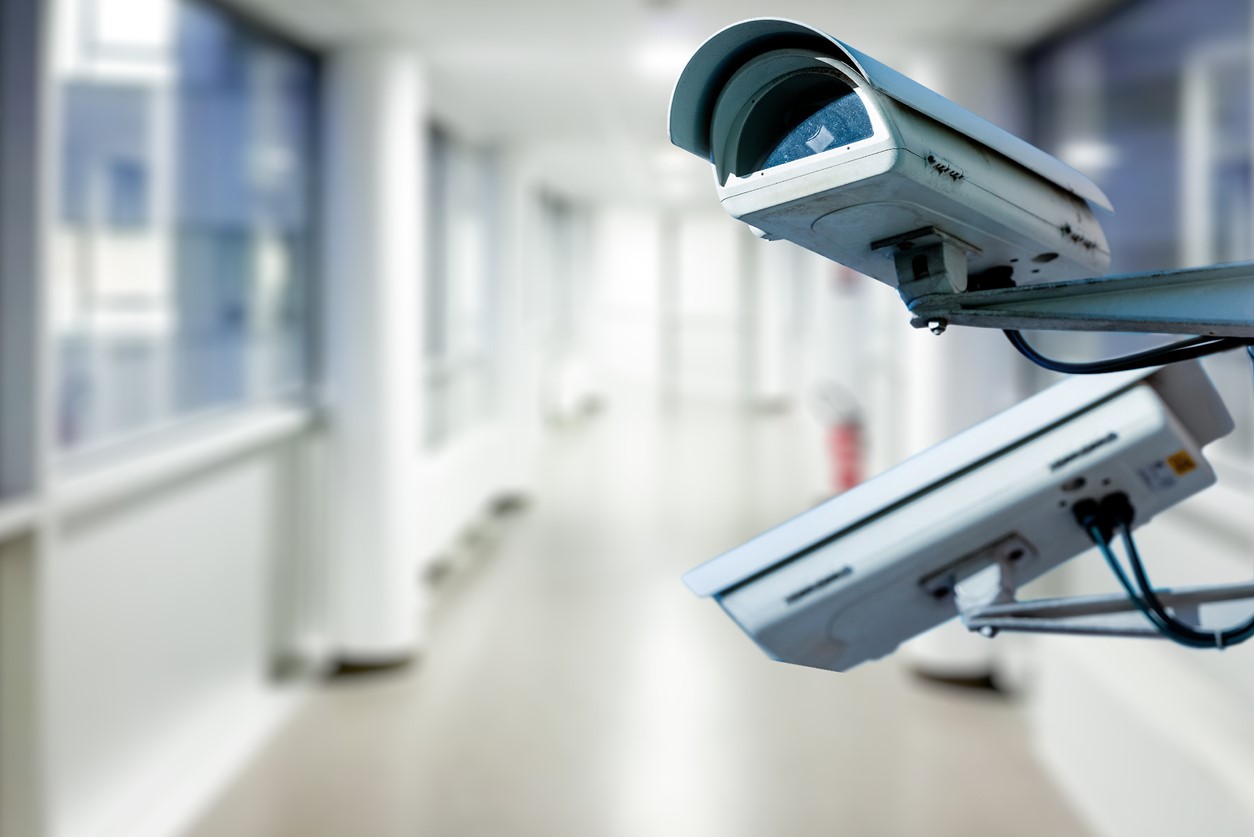
Video surveillance in a Houston medical office involves a legal complexity that standard commercial office camera design doesn’t encounter: HIPAA.
HIPAA’s Privacy Rule (45 CFR §164.512) governs the use and disclosure of protected health information, and video footage captured in a healthcare setting can constitute PHI when it depicts a patient in a way that identifies them or reveals health information. This means that camera placement decisions in a Houston medical office are not only a security design question — they are a compliance determination that should involve the practice’s HIPAA compliance officer, privacy policy, and in some cases, legal counsel. [1]
The consequence of getting this wrong is not just a poorly positioned camera — it is a potential HIPAA violation with OCR enforcement implications. Houston healthcare operators who install cameras without regard to the patient privacy framework in which they operate are creating documentation of patient interactions and identities that must be managed as PHI — with the accompanying security, access control, and breach notification obligations.
The compliant design approach starts with a clear determination of where video is forbidden, where it is permitted, and what controls govern the footage that is captured.
🔒 Free HIPAA-Aligned Camera Assessment for Your Houston Medical Office
Nexlar Security designs patient safety camera systems for Houston medical offices, clinics, and healthcare facilities — placement documentation, 4K medication area coverage, and encrypted storage. 👉 Book Your Free Medical Office Camera Assessment
Where Video Is Legally Forbidden in Houston Medical Environments
Certain locations within a Houston medical office are categorically prohibited from video surveillance — and this prohibition applies regardless of security justification, patient consent, or employer policy.
Exam rooms and treatment areas where patients undress or are examined: Video surveillance in rooms where patients receive physical examinations, where they are required to disrobe, or where medical procedures are performed is prohibited by patient privacy expectations that are both ethically and legally grounded. Texas Health and Safety Code and applicable professional licensing standards reinforce the prohibition on video surveillance of patients in clinical examination settings. [2]
Restrooms: No video surveillance, regardless of security justification. The expectation of privacy in restrooms is absolute in any commercial or healthcare setting.
Staff private areas: Changing rooms, locker areas, and employee restrooms designated for staff private use are similarly prohibited from video surveillance.
Areas where physician-patient communications occur (counseling, consultation): Where the specific conversation between a physician and patient is the primary activity — a counseling session, a psychiatric consultation, a serious diagnosis discussion — the privacy expectation is heightened beyond the general exam room prohibition. These areas should be explicit exclusion zones in a Houston medical practice camera design.
Every Houston medical office camera project Nexlar delivers includes a written exclusion zone documentation memo — mapping which specific rooms are excluded from camera coverage and the privacy rationale for each exclusion. This document is retained in the practice’s compliance files for HIPAA audit reference.
Where Video Surveillance Is Legally Permitted and Operationally Necessary
Within the HIPAA-compliant framework, there are several areas in a Houston medical office where video surveillance is both legally permissible and operationally important for patient safety and security:
Reception and waiting areas (with disclosure): Public-facing areas where patients are present in a waiting capacity — not actively receiving clinical care — are generally permissible for video surveillance when appropriate patient notice is provided (signage notifying patients of surveillance in common areas is the standard approach). Camera coverage in these areas documents access events and general security conditions without capturing clinical interaction.
Corridors and transition zones: Interior corridors and hallways through which staff, patients, and visitors move between areas do not typically constitute a clinical examination setting. Camera coverage of corridors documents movement patterns, incident events, and transition zone access without the privacy implications of capturing clinical interactions.
Medication storage, pharmacy areas, and supply rooms: The most operationally critical camera coverage in a Houston medical office for patient safety and drug security purposes. Medication carts, controlled substance storage, pharmacy supply lockers, and clean supply rooms are all appropriate and important camera coverage zones — both for deterring and documenting controlled substance diversion and for documenting access to patient-safety-sensitive storage areas. Camera placement in these areas should be positioned at the entry/access point and the storage area exterior rather than inside individual storage units.
Staff work areas and nursing stations (external to patient care): Nurse stations, medication preparation areas, and staff work areas where patient care decisions are made but patients are not present are permissible camera coverage zones — subject to appropriate employee disclosure in the practice’s privacy and HR policies.
Protecting Medication Carts and Pharmacy Supply Lockers with 4K Dome Cameras
Medication cart and pharmacy supply locker coverage is the highest-priority patient safety surveillance application in a Houston medical office — and the application that most directly connects camera coverage to clinical safety outcomes.
Controlled substance diversion — the unauthorized removal of controlled substances from the clinical setting by employees — is a documented public health problem in Houston’s healthcare sector. The Houston area has documented cases of nurse and clinical staff controlled substance diversion across multiple healthcare systems. Video coverage of the areas where controlled substances are stored, accessed, and administered creates a visual record that both deters diversion events and provides the footage needed for investigation when pharmacy reconciliation identifies discrepancies. [3]
Why 4K resolution specifically for medication cart coverage:
The specific operational requirement for medication cart and pharmacy locker camera coverage is the ability to identify individuals accessing the cart or locker from a close-range overhead camera position, in conditions that may include low ambient light in medication storage rooms and the depth-of-field challenges of close-range coverage of a physically small target area.
4K (ultra-HD) resolution — approximately 8 megapixels — provides several times the pixel density of standard 1080p HD cameras at the same field of view. At a medication cart coverage distance of 6 to 10 feet from a ceiling-mounted dome camera, 4K resolution enables recognition of the specific person accessing the cart at a level of detail that 1080p cameras cannot reliably achieve. [4]
This identification quality is specifically what pharmacy reconciliation investigations require — the ability to confirm that a specific named individual was the person who accessed the controlled substance at the time the record shows.
Specific dome camera placement for Houston medical office medication coverage:
Medication cart camera: Ceiling dome camera positioned directly above or at a 45-degree angle adjacent to the cart’s primary position — covering the full cart face and the immediate area where a person stands while accessing the cart. Field of view calibrated to maintain 4K identification quality at the cart-to-camera distance.
Pharmacy locker/cabinet camera: Overhead dome positioned to cover the cabinet door and the space immediately in front of the cabinet — capturing who opens each cabinet position and the contents visible during access without requiring close-up zooming of the cabinet interior.
For Houston healthcare facilities that also have Nexlar access control systems protecting medication storage areas, the camera events and the access control entry events for the same area are timestamped and correlated — providing both the credential record of who was authorized to access the medication area and the video record of what occurred during that access.
Encrypted Local Storage: HIPAA-Aligned Video Data Protection
Video footage from a Houston medical office camera system that captures patients in common areas, waiting rooms, or facility corridors may constitute PHI under HIPAA — and therefore requires the same data protection standards that apply to any electronic PHI under the HIPAA Security Rule.
The relevant HIPAA technical safeguard requirements (45 CFR §164.312) for video data include encryption of PHI in storage (the video footage, if it constitutes PHI, must be stored in an encrypted format), access controls for the stored data (access to footage is limited to authorized individuals based on role), and audit controls (a log of who accessed the footage and when is maintained). [1]
Local NVR encryption for Houston medical office video:
Enterprise-grade Video Management Systems (VMS) including Milestone XProtect, Genetec Security Center, and Hanwha WiseNet WAVE all support AES-256 or equivalent encryption for stored video footage. The NVR hardware must also be physically secured — in a locked server room or IT cabinet, not in an accessible utility space.
For Houston medical offices using Nexlar’s healthcare security solutions, the NVR hardware is specified as part of an integrated physical security design that includes the physical access controls for the server location alongside the digital encryption for the stored footage.
Encrypted storage media for Houston medical practice NVR:
NVR storage drives should be enterprise-grade, encrypted drives (self-encrypting drives, or drives with the VMS encryption layer applied) rather than standard consumer or prosumer hard drives. In the event of a physical breach involving the NVR hardware, encrypted storage ensures that footage on removed drives cannot be accessed without the encryption key — which remains under the practice’s control.
Secure Off-Site Archival: Cloud Storage with HIPAA Business Associate Agreement
For Houston medical offices that want long-term archival of video footage — particularly footage of pharmacy and medication access areas where a controlled substance diversion investigation may require access to footage from months ago — cloud-based video archival provides off-site storage redundancy.
However, cloud video storage for healthcare facilities raises an immediate HIPAA compliance requirement: the cloud storage provider must execute a HIPAA Business Associate Agreement (BAA) with the covered entity (the medical practice) before receiving any PHI. [1]
Cloud video storage providers that offer HIPAA BAA capability for Houston healthcare customers include:
Eagle Eye Networks (healthcare-oriented cloud video platform with HIPAA BAA available), Milestone XProtect’s cloud integration with HIPAA-compatible storage configurations, and Wasabi Cloud Storage or AWS (Amazon Web Services) when used with a VMS that manages the storage integration under a HIPAA BAA-covered architecture.
Cloud archival for Houston medical office video should be configured as a selective secondary archive — not a primary storage stream for all cameras. The primary storage remains on the local encrypted NVR; cloud archival covers the specific cameras and time periods of greatest long-term retention value (pharmacy and medication cart cameras, access-controlled area cameras) under a documented archival policy.
System Comparison Table
| Feature | Uncontrolled Camera System | Basic HIPAA-Aware Design | Full HIPAA Compliance Configuration |
|---|---|---|---|
| Exclusion Zone Documentation | No | Yes | Yes |
| Patient Privacy Signage | No | Yes | Yes |
| 4K Medication Area Coverage | No | Optional | Yes |
| NVR Encryption | No | Partial | AES-256 required |
| Role-Based Access to Footage | No | Basic | Full role configuration |
| Cloud BAA (if cloud used) | No | No | Required |
| VMS Audit Log (viewer tracking) | No | No | Yes |
| HIPAA Privacy Officer Review | No | Recommended | Required |
| OCR Audit Defensibility | Low | Medium | High |
Cost and Pricing for Houston Medical Office Camera Installations
| Installation Scope | Estimated Cost Range |
|---|---|
| Small Medical Office (8–15 cameras, HIPAA-aligned) | $6,000 – $18,000 |
| Mid-Size Clinic (15–30 cameras, 4K med cart coverage) | $15,000 – $40,000 |
| Multi-Location Houston Medical Group | $30,000 – $80,000+ |
| Encrypted NVR Setup (HIPAA-grade) | $3,000 – $8,000 |
| Cloud Archival Setup with BAA | $1,500 – $4,000 |
| HIPAA Camera Placement Documentation Package | $1,500 – $3,000 |
Nexlar provides itemized quotes for Houston medical office camera projects after a free on-site assessment including room-by-room exclusion zone determination and camera placement rationale documentation.
💡 HIPAA-Aligned Medical Office Cameras for Houston — 4K Pharmacy Coverage, Encrypted Storage, Placement Documentation
Nexlar designs and installs patient safety camera systems for Houston medical offices with HIPAA-compliant placement, 4K medication coverage, and encrypted local and cloud storage. 👉 Schedule Your Free Medical Office Camera Assessment