

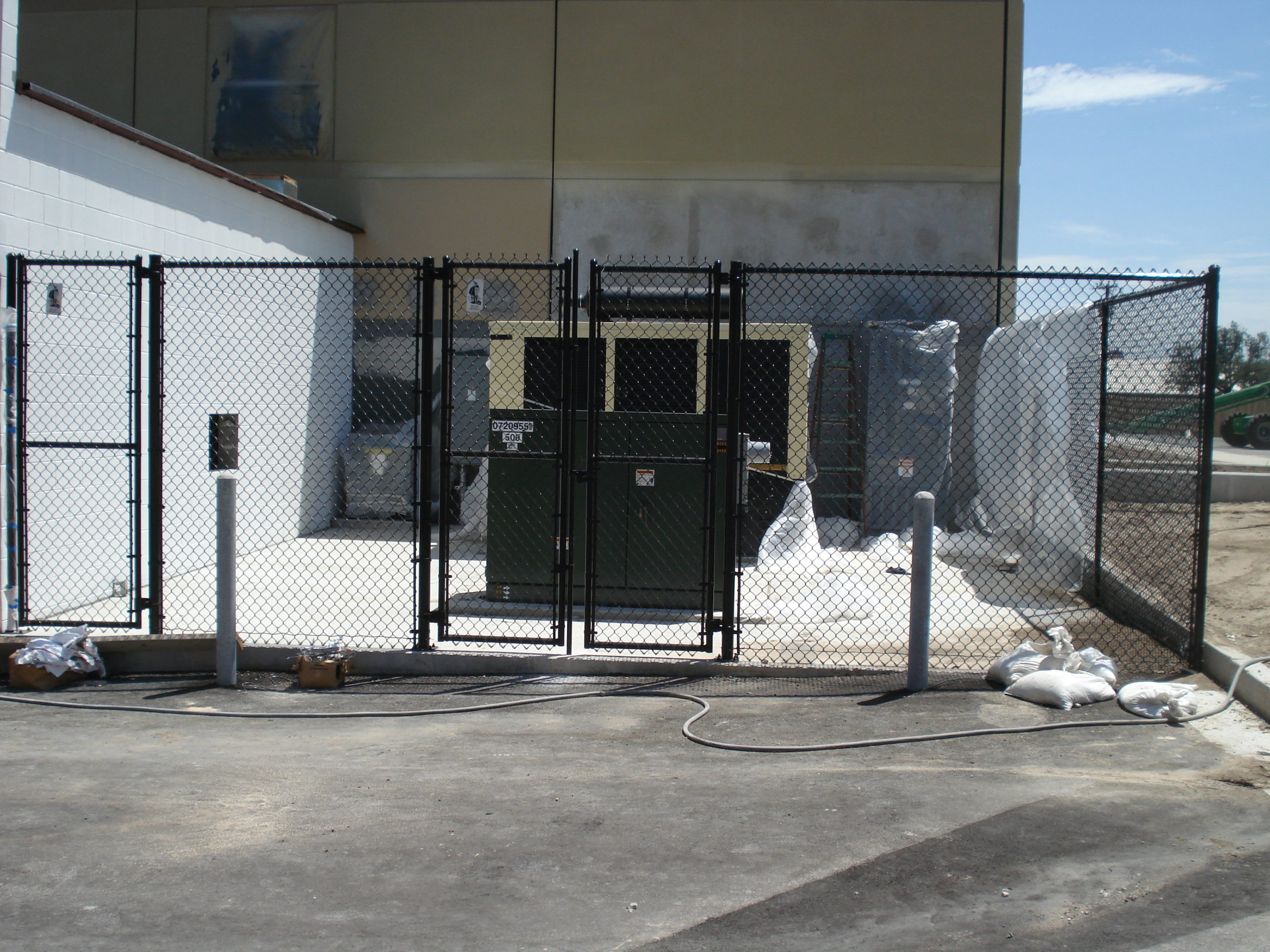
San Antonio’s retail market — spanning established malls like North Star, Ingram Park, and South Park, through the Forum at Olympia Parkway, and extending into the outdoor lifestyle centers and neighborhood strip centers that serve the city’s suburban growth corridors — faces the same consistent after-hours security challenge: the period between close and open is when most physical retail security incidents occur.
Smash-and-grab break-ins, after-hours storage theft, and unauthorized entry through service corridors are disproportionately after-hours events. The physical barrier between a secured storefront and an empty mall corridor at 2 AM is the last line of protection that a monitored alarm system responds to after — and an automated security gate is often the difference between an alarm event and a successfully interrupted intrusion versus a completed one. [1]
For San Antonio shopping center operators managing large tenant rosters — where individual tenants make their own security decisions but the common-area security infrastructure is the center’s responsibility — storefront security gate capability provides both a tenant amenity and a property liability management tool.
This guide covers automated roll-up gates, key-switch and keypad controls, loading corridor access, and the fire egress coordination that is both the most legally significant and most commonly mishandled aspect of retail security gate installation.
🔒 Free Shopping Center Security Gate Assessment for Your San Antonio Property
Nexlar Security designs and installs commercial security gates for San Antonio retail properties, shopping centers, and commercial loading corridors. Fully licensed. 👉 Book Your Free Retail Security Assessment
Automated Roll-Up Security Gates for Retail Storefronts
The standard security gate configuration for San Antonio retail storefronts — and the configuration most commonly specified by shopping center operators for inline tenant spaces — is a motorized roll-up steel security grille or curtain that closes across the storefront opening when the store is unoccupied.
Solid vs. Grille-Style Roll-Up Gates Solid steel rolling curtains provide the most physical barrier — a continuous sheet of interlocking steel slats that, when locked in the down position, presents a solid steel barrier to the storefront. Appropriate for high-theft-risk merchandise categories (jewelry, electronics, specialty goods) or for exterior-facing storefronts with limited natural surveillance.
Steel security grilles — open-pattern or perforated designs — maintain visual visibility into the store interior when closed. This serves two purposes: it allows visible interior surveillance camera coverage of the storefront from the mall common area, and it allows the store’s interior to remain visible to mall security or patrol without opening the gate. Grille-style gates are the most common specification for inland mall inline tenants where center management requires or prefers interior visibility after hours. [2]
Motorized vs. Manual Operation Motorized roll-up gates with operator units enable scheduled automated operation — the gate lowers at a defined closing time and raises at a defined opening time without requiring manual operation by staff. For shopping centers with defined common-area closing protocols, automated gate timing aligned with center closing procedures ensures consistent after-hours gate deployment without dependence on individual employee compliance. Manual override capability — allowing the gate to be operated during power outages or operator failure — is a code requirement and an operational necessity.
Key-Switch Controls: Managing After-Hours Storefront Access
Key-switch controls — a specific type of access control appropriate for high-volume, simple credential situations like individual retail storefront gates — use a physical key cylinder mounted at the gate to control the gate operator. Turning the key to the “open” position triggers the gate to rise; turning to the “close” position triggers the gate to lower and lock.
For retail tenants in San Antonio shopping centers, key-switch controls are appropriate when: the credentialed population for gate access is small (one to three key holders), the access schedule is simple (open/close at defined times with no complex permission management needed), and the primary security requirement is preventing unauthorized gate operation rather than comprehensive access logging.
Key-switch limitations for modern retail security: Key-switch controls provide no access log — there is no record of who opened the gate or when, only that the gate was opened. Physical keys can be duplicated and are not revocable without a cylinder change. For retail operations with employee turnover — common in San Antonio’s retail labor market — these limitations create the same key management problems that key-based building access creates.
For higher-security applications, or for shopping center operators who want individual staff credential accountability at storefront gates, a keypad access code or card reader replaces the key switch with a credential that can be individually assigned and remotely deactivated.
Keypad-Controlled Staff Entryways for Commercial Loading Corridors
Commercial loading corridors — the back-of-house service passages through which San Antonio shopping center tenants receive deliveries, take out trash, and access loading docks — represent a security perimeter that is at least as important as the retail storefront side, and frequently less well-controlled.
The staff entry doors and roll-up dock doors that access the loading corridor are, in many San Antonio shopping centers, controlled only by physical keys — creating the same limitations described above. For staff entryways in loading corridors where the security requirement extends beyond a simple open/close function, keypad-controlled access provides individual credential accountability and remote management capability. [3]
Keypad configuration for loading corridor staff entry: Each staff member authorized for loading corridor access is assigned a unique PIN code — not a shared code for the whole team. Individual PIN codes allow the center or tenant to identify who accessed the loading corridor at any given time, to deactivate a specific employee’s access immediately when their employment ends, and to configure time-based access windows (loading corridor staff codes work only during delivery hours, not at 10 PM).
For centers with high contractor and delivery personnel traffic — where a rotating population of service providers needs periodic corridor access — time-limited codes assigned specifically for the duration of a service engagement provide controlled access without permanent credential issuance.
Integration with security camera coverage: Loading corridor staff entryways should be covered by security cameras on both the interior and exterior sides — providing documentation of every person who enters and exits through these points. When a center’s security camera system and keypad access log are reviewed together, the combination provides complete documentation of corridor access activity. Nexlar’s commercial security systems for San Antonio shopping centers integrate keypad access and camera coverage for loading corridors as a standard security package.
Fire Egress Path Compliance with Security Gate Operations
This is the aspect of retail security gate installation that creates the most regulatory risk for San Antonio shopping center operators — and the aspect that is most frequently handled incorrectly.
The core conflict: A security gate’s purpose is to prevent entry and exit during after-hours. A fire egress code’s purpose is to ensure that occupants can always exit a building in an emergency. These purposes are in direct conflict when a security gate is positioned on or adjacent to a required egress path.
NFPA 101 (Life Safety Code) and the adopted International Building Code in Texas require that egress from occupied spaces be maintained at all times when the space is occupied — with specific provisions for how electrically controlled barriers (including security gates) may be deployed in egress paths without violating egress requirements. [4]
The specific requirements for security gates in retail egress paths:
Retail security gates on egress paths must fail in the open (raised) position on power failure — a gate that traps occupants inside during a power failure violates egress requirements.
Motorized security gates must release and open automatically upon activation of the building’s fire alarm system — the gate must be wired to the fire alarm panel so that a fire alarm event automatically raises the gate regardless of its scheduled state.
Gates on egress paths must not require a key, PIN, or any special knowledge to open from the interior egress side — a person trapped inside during an emergency must be able to open the gate without any credential.
In practice, this means that the security function of the gate (preventing unauthorized entry from the exterior) and the egress function (allowing unrestricted exit from the interior) must be engineered separately. The gate locks against exterior entry; the interior egress side always opens with a simple panic bar or release mechanism.
AHJ coordination for San Antonio retail gate installations: The specific requirements for security gate placement relative to egress paths vary by the occupancy classification of the space, the building’s overall egress design, and the interpretation of the applicable AHJ (the San Antonio Fire Prevention Bureau or the local authority for the specific center’s jurisdiction). Nexlar coordinates every retail security gate installation with the applicable AHJ requirements and ensures fire alarm interface is completed and tested before certificate of occupancy signoff.
Gate Hardware Selection for San Antonio’s Retail Environment
Commercial Coiling Security Grilles The standard specification for most San Antonio shopping center inline tenant applications. Commercial-duty motor operators with cycle ratings appropriate for the gate’s expected daily use — a grille that opens twice daily (opening and closing) requires a different cycle rating than one opening and closing multiple times per shift.
Solid Rolling Steel Curtains For higher-security applications — jewelry stores, electronics retailers, pharmacy dispensing areas — solid steel curtains provide the maximum physical barrier. Available in manual and motorized configurations.
Crystal (Clear Polycarbonate) Grilles Polycarbonate panel grilles that provide physical security with maximum interior visibility. Used in upscale retail environments where the security grille’s visual presence during closed hours is important for store display purposes and common-area aesthetics.
Key-Switch and Keypad Operator Controls Key-switch controls for simple credential management; keypad controls for individual credential accountability. Both are available from commercial gate operator manufacturers including Cookson, Wayne Dalton, and Cornell Cookson — the primary commercial security grille brands in the Texas retail market. [2]
System Comparison Table
| Feature | Manual Roll-Up | Motorized + Key-Switch | Motorized + Keypad + Access Log |
|---|---|---|---|
| After-Hours Automated Closure | No | Scheduled | Scheduled |
| Individual Credential Accountability | No | No (key only) | Yes (per-PIN logging) |
| Remote Access Management | No | No | Yes |
| Fire Alarm Interface | Required | Required | Required |
| Fail-Safe on Power Loss | Manual only | Required (motorized) | Required (motorized) |
| Key Duplication Risk | Yes | Yes | No |
| Best San Antonio Application | Low-volume back exits | Standard storefront | Loading corridor, high-security |
Cost and Pricing for San Antonio Shopping Center Installations
| Installation Scope | Estimated Cost Range |
|---|---|
| Steel Security Grille (per opening, installed) | $2,000 – $6,000 |
| Motorized Roll-Up Gate + Key-Switch Operator | $3,500 – $8,000 |
| Motorized Gate + Keypad + Fire Alarm Interface | $5,000 – $12,000 |
| Loading Corridor Keypad Entry System (per door) | $800 – $2,500 |
| Multi-Tenant Shopping Center (10+ grilles) | $30,000 – $80,000 |
Nexlar provides itemized quotes for San Antonio retail security gate projects after a free on-site assessment of each opening’s dimensions, occupancy classification, and egress path requirements.
💡 Commercial Security Gate Installation for San Antonio Retail — Fire-Code Compliant from Day One
Nexlar designs and installs automated roll-up security gates, keypad loading corridor access, and fire alarm integration for San Antonio shopping centers and retail properties. 👉 Schedule Your Free Retail Security Assessment