

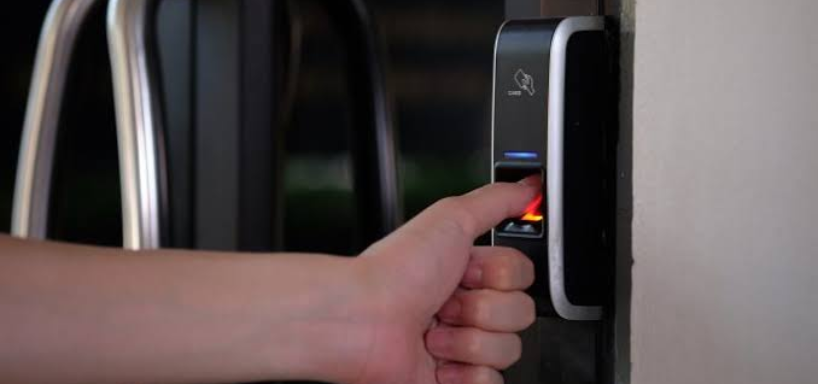
Houston’s life sciences and biotech sector has expanded significantly over the past decade, anchored by the Texas Medical Center’s research infrastructure and driven by the growth of pharmaceutical manufacturing, genomics research, and medical device development facilities across the greater Houston area. These facilities share a set of access control requirements that standard commercial systems are not designed to address: the need to restrict entry based on personnel qualifications, maintain sanitary standards at entry points that prohibit physical contact with shared surfaces, create auditable access logs that support federal biosafety and pharmaceutical compliance requirements, and implement multi-factor authentication for the highest-risk restricted areas.
Biometric access control — particularly contactless modalities including facial recognition and iris scanning — provides a technology answer to all of these requirements simultaneously. This guide covers what a properly designed biometric access control system looks like for Houston’s biotech labs and cleanroom environments, and what facility managers and compliance officers need to know before specifying one.
📞 Get a Free Lab Security Assessment for Your Houston Facility
Nexlar Security offers FREE on-site consultations for Houston biotech labs and research facilities. Our licensed team evaluates your access control requirements and compliance obligations. 👉 Book Your Free Lab Security Assessment Today
Why Cleanrooms and Biotech Labs Require Specialized Access Control
Standard commercial access control — badge readers, PIN pads, proximity cards — creates specific problems in cleanroom and controlled laboratory environments that specialized biometric solutions address:
Contact-Based Readers Contaminate Controlled Environments — Standard fingerprint readers, keypad PIN entry, and card-swipe readers all require physical contact with a shared surface — a contamination vector that is fundamentally incompatible with ISO-classified cleanrooms where particulate control is the primary operational requirement. Contactless biometric modalities (facial recognition, iris scanning) eliminate this problem entirely.
Shared Credentials Don’t Track Individual Researchers — In a laboratory environment with compliance and biosafety tracking requirements, knowing that “Badge 1047” opened the restricted reagent storage isn’t sufficient — the system must track which specific authorized individual opened that door. Biometric credentials are inherently individual — they cannot be shared, transferred, or used by anyone other than the enrolled person.
Qualification-Based Access Restrictions — Some laboratory restricted zones should only be accessible to personnel with specific documented training or certification — biosafety training, specific reagent handling certification, or GLP qualification. Biometric access control systems integrated with HR or training management platforms can enforce these qualification requirements at the door — the system will not grant access to an individual whose required training record isn’t current, regardless of their general employment status.
How Biometric Access Control Systems Work
Biometric access control systems work by capturing a measurable biological characteristic of an individual during enrollment and storing a mathematical template representation of that characteristic. When the individual later requests access, the system captures a fresh sample of the biometric — a photo of the face, an iris scan, a fingerprint scan — and mathematically compares it to the stored template. If the comparison result exceeds a defined confidence threshold, the identity is confirmed and access is granted (for one-factor biometric systems) or the credential is verified and a second factor is requested (for two-factor systems).
Critically, modern biometric systems do not store photographs or other raw biometric data — they store mathematical template representations that cannot be reverse-engineered to recreate the original biometric. This addresses many of the privacy concerns that have historically been associated with biometric data storage.
For cleanroom and lab environments, the enrollment process typically occurs in a standard administrative area rather than at the cleanroom entrance — capturing the biometric template without requiring the individual to enter the restricted environment. Once enrolled, the system recognizes the individual instantly at the entrance reader without any physical contact requirement.
Contactless Biometric Technologies for Cleanroom Use
Facial Recognition Facial recognition readers capture a 3D or high-resolution 2D image of the individual’s face and compare it against enrolled templates. Modern systems achieve recognition accuracy sufficient for security applications across a wide range of lighting conditions, with most systems capable of accurate recognition through the safety glasses, face shields, and other personal protective equipment commonly worn in laboratory environments.
For cleanroom entry, facial recognition can be performed from a reader mounted beside the airlock or gowning room entrance — without the individual touching any surface. Recognition and door release occurs in approximately two to three seconds from presentation.
Iris Recognition Iris recognition readers capture a high-resolution image of the iris — the distinctive pattern surrounding the pupil — and compare it against enrolled templates. Iris recognition is considered among the most accurate biometric modalities, with exceptionally low false acceptance rates. Iris scanning is contactless and can be performed through glasses and some goggles, though the reader must be positioned at an appropriate distance and lighting for reliable iris capture.
Contactless Fingerprint (Touchless Finger Vein or 3D Fingerprint) Some biometric systems capture fingerprint images or finger vein patterns without requiring physical contact with a platen — using cameras or infrared sensors that image the finger from a short distance. While not as completely contactless as facial or iris systems, these technologies eliminate the shared-surface contamination concern of traditional fingerprint readers while maintaining the individual accountability of fingerprint biometrics.
Dual-Authentication for Restricted Research Zones
For the highest-security restricted areas in a Houston laboratory environment — controlled substance storage, biosafety level 3 work areas, proprietary research areas with significant IP value — a single biometric authentication is often insufficient. Dual-authentication (two-factor authentication) requires a successful verification from two independent factors before access is granted.
Factor Combinations for Lab Environments A common dual-authentication configuration for restricted laboratory zones is a biometric factor (facial recognition or iris scan confirming the individual’s identity) combined with a PIN or knowledge factor (a code known only to the authorized individual) — the biometric confirms who they are; the PIN confirms that the biometric presentation is an authorized and intentional access request rather than an inadvertent presentation. This combination is resistant to both biometric spoofing attempts and credential sharing.
For very high-security zones, a three-factor combination — biometric identity confirmation plus PIN plus a time-synchronized software token — provides the highest available authentication assurance for laboratory access.
Maintaining Sanitary Standards with Touchless Entry
The cleanroom environment’s primary operational requirement is particulate control. Any surface that personnel contact during cleanroom entry or exit is a contamination and particulate transfer point — including door handles, push plates, and shared-surface readers.
Contactless biometric readers — positioned to allow hands-free authentication and integrated with automatic door openers or airlock systems that open without physical contact — allow cleanroom entry to proceed without any surface contact between the entering individual and the shared entry infrastructure. This eliminates the biometric reader as a contamination vector and supports the ISO-classification requirements of the controlled environment.
For pharmaceutical manufacturing cleanrooms subject to FDA Current Good Manufacturing Practice (cGMP) regulations, the sanitary design of the entry system — including the access control hardware — may be subject to validation requirements that should be factored into the system design and hardware selection process.
Audit Trail Reporting for Federal Bio-Safety Compliance
Houston biotech labs operating under federal biosafety, pharmaceutical, or research regulations have specific access control audit trail requirements:
Select Agent and Toxin Regulations (42 CFR Part 73) — Facilities registered to possess, use, or transfer select agents and toxins under CDC/USDA oversight must implement access controls that restrict select agent laboratory areas to approved individuals, maintain records of personnel access to select agent areas, and demonstrate compliance with USDA Animal and Plant Health Inspection Service (APHIS) and CDC security requirements.
FDA cGMP (21 CFR Parts 210/211) — Pharmaceutical manufacturing facilities subject to FDA cGMP regulations must control and document access to manufacturing areas and controlled substance storage, with access records available for FDA inspection.
NIH Biosafety Guidelines — Research facilities receiving NIH funding for recombinant DNA research or working with biological agents subject to NIH biosafety guidelines must implement institutional biosafety program requirements that typically include access controls for laboratory areas classified at BSL-2 or higher.
Biometric access control systems generate complete, tamper-evident access logs — recording each access event with the specific individual’s biometric credential, the specific door, and the exact timestamp — that can be exported for regulatory audit documentation and queried during inspections. Nexlar’s access control systems for Houston research and biotech facilities are designed with compliance documentation capability as a primary design requirement.
Key Benefits for Houston Life Sciences and Research Facilities
Elimination of Credential Sharing Risk — Biometric credentials are individual by definition — they cannot be shared, lent, or used by anyone other than the enrolled person. This provides a level of individual accountability that card, fob, and PIN systems cannot achieve.
Compliance Documentation — Automatically generated, timestamped access logs for every door event support regulatory audit documentation without manual record-keeping.
Sanitary Entry Without Surface Contact — Contactless biometric readers eliminate the shared surface contamination concern at cleanroom entry points — a direct operational requirement for ISO-classified environments.
Qualification-Based Access Enforcement — Integration with training or HR management systems allows the access control platform to enforce qualification requirements at the door — automatically restricting access when required training certifications expire.
Integration with Visitor and Contractor Management — Houston biotech facilities frequently receive visits from regulatory inspectors, collaborative researchers, equipment service technicians, and contractors. Biometric visitor management for temporary authorized access — with time-limited enrollment and automatic deactivation — provides the same individual accountability for visitors as for permanent staff.
Comparison Table: Biometric Access Technologies for Labs
| Feature | Facial Recognition | Iris Recognition | Touchless Fingerprint |
|---|---|---|---|
| Truly Contactless | Yes | Yes | Partial |
| Works with PPE | Yes (most) | Partial | Yes |
| False Acceptance Rate | Very Low | Extremely Low | Low |
| Recognition Speed | 1–3 seconds | 1–2 seconds | 1–3 seconds |
| Spoofing Resistance | High (3D systems) | Very High | High |
| Cost per Reader | Medium–High | High | Medium |
| Best For | Cleanroom entry, general lab | Maximum security zones | Standard lab doors |
Cost and Pricing for Houston Lab Installations
| Configuration | Estimated Cost Range |
|---|---|
| Single Contactless Reader (per door) | $1,500 – $5,000 |
| Dual-Authentication Setup (per door) | $3,000 – $8,000 |
| Small Lab (5–10 doors) | $12,000 – $35,000 |
| Mid-Size Research Facility (10–30 doors) | $30,000 – $80,000 |
| Compliance Reporting and Integration | $5,000 – $15,000 additional |