

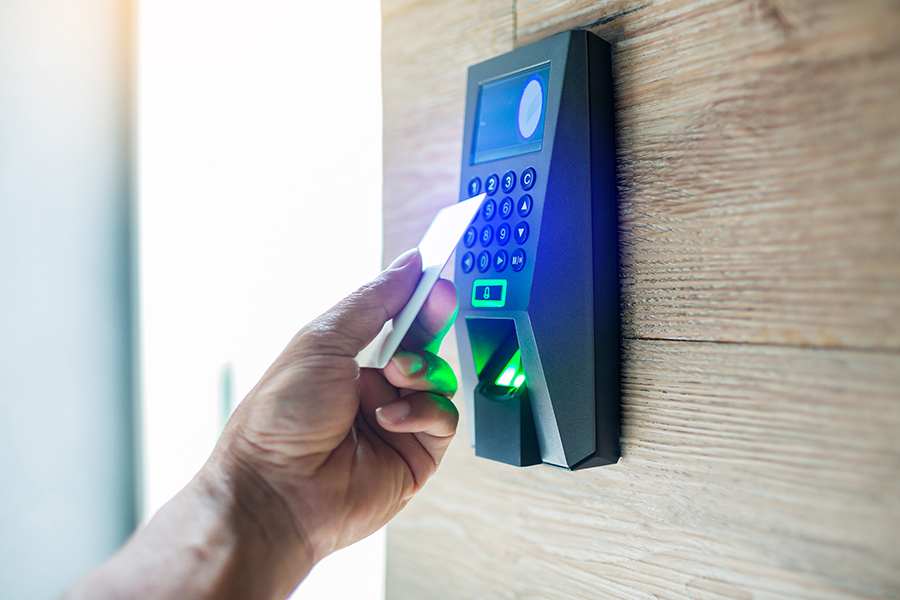
Every Houston hospital, clinic, and healthcare facility that handles Protected Health Information (PHI) operates under HIPAA’s Security Rule — which includes specific physical safeguard requirements governing who can access areas where PHI is stored, processed, or accessible. For most healthcare facilities, this translates directly into access control system obligations: electronic records rooms, pharmaceutical storage areas, patient care areas, and administrative offices where PHI is accessed all require controlled, documented access that a traditional key-and-lock system cannot provide.
Beyond HIPAA compliance, Houston’s major healthcare facilities — including those within the Texas Medical Center, the largest medical complex in the world — operate in a complex security environment involving thousands of daily staff, vendor, patient, and visitor interactions across large, multi-building campuses with numerous controlled access points.
This guide walks Houston hospital administrators, healthcare security managers, and compliance officers through what a HIPAA-aligned hospital access control system looks like, how role-based access control supports both security and compliance objectives, and what a professional installation involves.
📞 Get a Free Healthcare Access Control Assessment
Nexlar Security offers FREE on-site consultations for Houston hospitals and healthcare facilities. Our licensed team designs access control systems that address HIPAA physical safeguard requirements. 👉 Book Your Free Healthcare Security Assessment Today
Why Houston Hospitals Need Specialized Access Control
Healthcare access control is more complex than commercial or industrial access control for several reasons that are specific to the clinical environment.
HIPAA Physical Safeguards — HIPAA’s Security Rule requires covered entities to implement physical safeguards to protect electronic PHI. These include facility access controls — policies and procedures that limit access to electronic information systems and the facilities in which they are housed — with implementation specifications covering access authorization, access establishment and modification, and contingency operations access.
Mixed workforce with diverse access needs — A hospital workforce includes clinical staff (physicians, nurses, technicians), administrative staff, vendors and maintenance contractors, visiting medical personnel, patients, and the general public — each requiring carefully calibrated access levels that align with their role and the clinical areas they legitimately need to enter.
24/7 operations — Hospitals operate continuously. Access control systems must function reliably around the clock, with backup power provisions sufficient to maintain controlled access during power disruptions that might affect other building systems.
Lockdown protocols — Active threat scenarios, violent patient situations, and infant abduction protocols all require the ability to lock down specific areas or the entire facility rapidly — a capability that requires integration between the access control system and the facility’s security response infrastructure.
How Hospital Access Control Systems Work
Hospital access control systems use IP-based, networked credential readers at each controlled door, communicating with a central access control platform that manages user profiles, access levels, time schedules, and real-time monitoring.
Each staff member, vendor, and authorized visitor carries a credential — typically a smart card badge worn as a visible ID — that contains their access profile. When they present their badge at a controlled door, the reader validates their credential against their assigned access level and the current time schedule, and grants or denies entry. Every event is logged with the credential identifier, the specific door, and the timestamp.
The access control management platform allows the hospital’s security or HR team to provision new staff access immediately upon hire, modify access levels when roles change, and remove access instantly when a staff member departs — a critical capability in a healthcare environment where both over-provisioning and under-provisioning access creates operational and compliance problems.
For vendors and contractors, temporary access profiles with defined expiration dates ensure that access is limited to the duration of the authorized engagement — and expires automatically without requiring manual deactivation.
HIPAA Physical Safeguard Requirements Explained
HIPAA’s Security Rule (45 CFR §164.310) establishes four physical safeguard standards relevant to access control system design:
Facility Access Controls (§164.310(a)) — Policies and procedures to limit physical access to electronic information systems and the facilities in which they are housed, while ensuring that properly authorized access is allowed. This standard has four implementation specifications: contingency operations access, facility security plan, access control and validation procedures, and maintenance records.
Access Control and Validation Procedures (§164.310(a)(2)(iii)) — Procedures to control and validate a person’s access to facilities based on their role or function, including visitor control and control of access to software programs for testing and revision. This specification directly requires role-based access controls for facility areas where PHI is accessible.
Workstation Security (§164.310(c)) — Physical safeguards for all workstations that access electronic PHI to restrict access to authorized users. In practice, this includes controlled access to areas where workstations are located — not just password protection on the workstations themselves.
Device and Media Controls (§164.310(d)) — Policies governing the receipt and removal of hardware and electronic media containing PHI into and out of the facility. Controlled access to areas where PHI-containing media is stored or handled supports compliance with this standard.
Role-Based Access Control (RBAC) for Medical Environments
Role-Based Access Control is an access control architecture in which access permissions are assigned to roles (job functions) rather than to individual users directly. A user is assigned one or more roles, and their access reflects the permissions associated with those roles rather than individually configured permissions.
For Houston hospitals, RBAC significantly reduces the administrative complexity of managing access for a large, complex workforce:
Clinical Staff Roles — Physicians may have access to clinical floors, physician lounges, and dictation rooms. Nurses may have access to nursing stations, medication rooms, and specific patient care areas aligned with their assigned unit. Radiology technicians have access to imaging suites. Each role has a defined access profile that is maintained at the role level rather than the individual level.
Administrative Staff Roles — Billing staff may have access to administrative offices and records rooms but not to clinical areas. Executive staff may have broader building access. HR may have access to employee records areas.
Vendor and Contractor Roles — Vendors are assigned temporary roles with limited access — a medical equipment service technician may have access only to the equipment room and the specific clinical department where the equipment is located, during a specific time window.
When a staff member’s role changes, their access is updated by modifying their role assignment — automatically extending or restricting access across all associated doors without requiring door-by-door reconfiguration.
Pharmaceutical Cabinet and Patient Records Security
Two categories of clinical security deserve specific attention in any Houston hospital access control design:
Pharmaceutical Storage — Controlled substance storage areas — including pharmacy dispensing rooms, medication rooms on clinical floors, and controlled substance cabinets — require access control that limits entry to licensed pharmacists and authorized clinical staff, creates a complete access log for DEA audit compliance, and integrates with pharmacy dispensing systems where possible for reconciliation of cabinet access events against dispensing records.
Patient Records Areas — Server rooms, health information management (HIM) departments, and other areas where electronic health record systems or physical patient records are stored require controlled access with documented access logs. Access to these areas should be limited to staff with a legitimate operational need, with all access events logged for HIPAA audit trail purposes.
Lockdown Integration: Emergency Door Control Protocols
Hospital security protocols require the ability to rapidly lock down specific areas or entire facilities in response to security incidents — active threat situations, infant abduction (Code Pink) protocols, violent patient situations, or other emergency scenarios.
Modern hospital access control systems support lockdown integration through several mechanisms:
Global Lockdown Command — A single command from the security desk or authorized management station locks all controlled doors to credential-only access — or to no access — simultaneously, regardless of their individual normal-hours settings.
Zone-Specific Lockdown — Many hospital incidents require locking specific zones — a specific floor, a specific building entrance, or the perimeter entrances — while maintaining normal operations in unaffected areas. Zone lockdown capability allows security staff to contain an incident area without unnecessarily restricting movement throughout the facility.
Integration with Duress Buttons — When a staff member activates a duress button, the access control system can be programmed to automatically lock nearby doors or trigger a specific zone lockdown while simultaneously alerting the security dispatch center. Nexlar’s healthcare security solutions integrate access control with duress response and security camera systems for Houston medical facilities.
Key Benefits for Houston Healthcare Facilities
HIPAA Physical Safeguard Documentation — Access control event logs provide the audit trail that demonstrates HIPAA physical safeguard implementation — showing who accessed PHI-accessible areas and when, for compliance review and incident investigation.
Instant Access Revocation — When a staff member is terminated or a contractor’s engagement ends, their access is removed from the system immediately — eliminating the security gap that exists with key-based systems during the period between termination and key collection.
Vendor Access Management — Temporary role-based access for vendors with defined expiration dates ensures that service vendors, equipment representatives, and maintenance contractors have access only during their authorized engagement window.
Complete Incident Response Support — Access logs that can be queried by specific door, specific credential, or specific time window support rapid security investigation — determining who was in a specific clinical area during a time window of interest for an incident.
Common HIPAA Access Control Gaps in Houston Hospitals
Over-Provisioning of Access — Granting broader access than a role requires is one of the most common access control compliance gaps in healthcare. Regular access rights reviews — auditing whether each user’s actual access reflects their current role and operational need — are a HIPAA best practice that many Houston healthcare facilities don’t perform systematically.
Inadequate Vendor Access Management — Vendors with access that doesn’t expire, or access that was granted for a specific project and never removed, represent a compliance gap and a security risk. Systematic vendor access management with defined, automatically expiring credentials closes this gap.
Paper Log Fallback for Controlled Areas — Some Houston healthcare facilities use paper log sheets as backups for controlled substance areas when electronic access control systems are unavailable. These paper logs provide no real-time verification and are inconsistent audit documentation — electronic backup credential systems rather than paper sign-in are the appropriate standard.
No Periodic Access Rights Review — HIPAA’s Security Rule implementation specifications include a maintenance records requirement. Many Houston hospitals implement access control initially but don’t maintain systematic records of access rights reviews and modifications — creating a documentation gap that can arise in audit scenarios.
Cost and Pricing for Houston Healthcare Installations
| Facility Scope | Estimated Cost Range |
|---|---|
| Small Clinic (5–15 doors) | $8,000 – $25,000 |
| Mid-Size Hospital (15–50 doors) | $25,000 – $75,000 |
| Large Medical Campus (50+ doors, multi-building) | $60,000 – $200,000+ |
| Pharmaceutical Cabinet Integration | $3,000 – $10,000 per area |
| Lockdown Integration with Security Desk | $5,000 – $20,000 |