

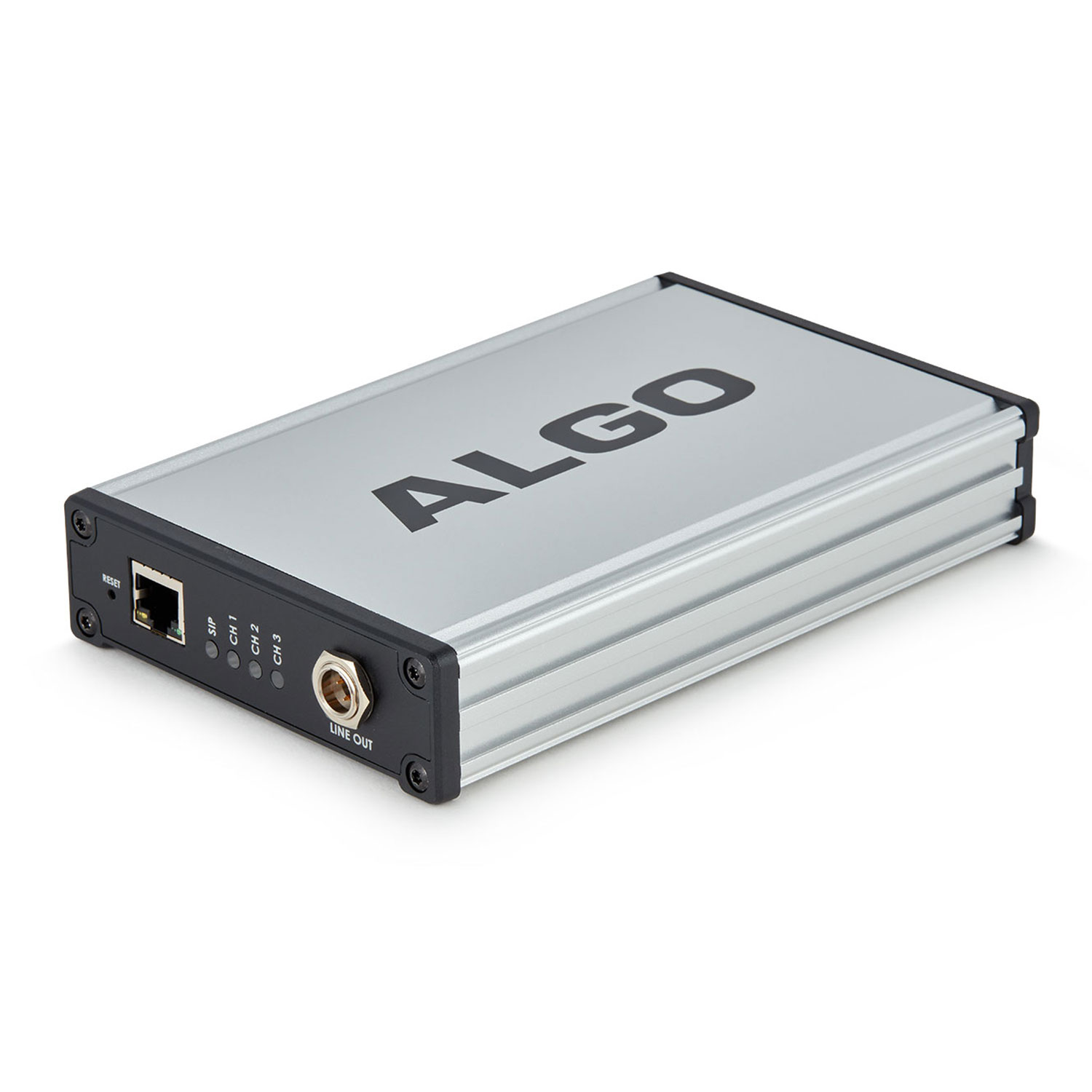
Algo IP Paging Speakers & Adapters Explained
Table of Contents
- Who Is Algo and What Do They Make?
- How Algo IP Paging Speakers and Adapters Work
- Algo Product Lines Overview
- Key Benefits of Algo Systems
- Drawbacks and Considerations
- Industries and Use Cases for Algo Systems
- How to Choose the Right Algo Configuration
- Algo Product Comparison Table
- Cost and Pricing Overview
- Frequently Asked Questions
- Conclusion
- References
Introduction
Among the brands that come up when Texas businesses research IP paging — especially for facilities that already run a VoIP phone system — Algo is one of the most frequently mentioned, particularly for two specific use cases: adding IP paging speakers to a SIP-based phone system, and bridging an existing analog paging amplifier into a VoIP environment without replacing the amplifier itself.
Algo, based in Burnaby, British Columbia, has been designing telecommunications endpoints since 1968 and has built a focused product line around PoE-powered, SIP-compliant devices — IP speakers, paging adapters, and emergency notification equipment — designed to integrate with virtually any major VoIP phone system rather than requiring a proprietary platform.
This guide from Nexlar Security explains what Algo actually makes, how their core products work together, and where Algo fits for Texas businesses evaluating paging options in 2026.
📞 See How Algo Fits Your VoIP and Paging Setup
Nexlar Security offers FREE on-site consultations for Texas businesses. Our licensed team evaluates your existing phone system and paging infrastructure and recommends the right Algo configuration — or an alternative if appropriate. 👉 Book Your Free Site Survey Today
Who Is Algo and What Do They Make?
Algo Communication Products is a manufacturer that has focused since 1968 on telecommunications endpoints, and in recent years has become particularly known for its line of PoE-powered, SIP-compliant IP paging and alerting devices. Rather than building a proprietary paging platform that requires its own controller, Algo's products are designed to work as standard SIP endpoints — meaning they integrate with VoIP phone systems and PBX platforms from a wide range of major vendors.
Algo's product range falls into a few core categories: IP speakers — including ceiling speakers, surface-mount speakers, and horn speakers for indoor and outdoor use — designed to receive SIP calls or multicast streams and play audio through built-in amplification; IP paging adapters, which connect a VoIP phone system to either Algo's own IP speakers, third-party IP speakers, or — importantly — existing legacy analog paging amplifiers; visual alerting devices, including strobes and alerters that combine audio and visual notification for safety and emergency applications; and SIP doorphones and intercoms for entry communication.
A defining characteristic of Algo's approach is that everything is 100% PoE-powered — meaning a single Cat5e/Cat6 cable provides both data connectivity and power to each device, simplifying installation considerably compared to systems requiring separate power runs.
How Algo IP Paging Speakers and Adapters Work
IP Speakers as SIP Endpoints
Algo's IP speakers — such as ceiling speakers and horn speakers — function as SIP endpoints on the network. When a paging extension is called, the speaker can be configured to auto-answer and play the incoming audio through its built-in amplifier. Multiple speakers can be grouped using multicast, allowing a single page to be broadcast simultaneously to many speakers without the network carrying a separate stream to each one individually.
Paging Adapters for Bridging to Analog Systems
Algo's paging adapters serve a specific and very common purpose: connecting a VoIP phone system to a facility's existing analog paging amplifier — without replacing that amplifier. The adapter registers with the VoIP phone system as a SIP extension. When that extension is called, the adapter outputs the audio to the analog amplifier's input, effectively turning a phone call into a page over the existing speaker system.
The 8301 IP Paging Adapter and Scheduler, for example, supports multiple SIP registrations for different functions — a paging extension that auto-answers for announcements, emergency alert extensions that play a pre-configured audio file when called, and ring extensions for notification tones. It provides balanced audio output compatible with consumer, commercial, and pro-audio amplifier input levels, and includes onboard memory for storing WAV files used for scheduled bells, tones, or emergency messages. Its multicast capability also allows it to work alongside Algo's IP speakers in a combined system — bridging both IP and analog infrastructure into one unified paging setup.
The 8373 IP Zone Paging Adapter addresses a different scenario: facilities with an existing zoned analog amplifier system where the original zone controller needs replacing, or facilities that want to add zone control to a previously single-zone analog system. The 8373 provides three configurable zone relays that can switch an amplifier's output to different speaker groups based on which SIP extension is called, which multicast address is received, or DTMF input from a phone keypad — and these three zones can be expanded further using multicast.
Visual and Emergency Alerting
Algo's alerting devices combine audio output with visual indicators — strobes or LED displays — and are designed to support both routine notifications (such as loud ringing for incoming calls in noisy environments) and emergency notification scenarios, often referencing OSHA-related visual alerting requirements for environments where audio alone may not be sufficient.
SIP Doorphones and Intercoms
Algo's doorphone and intercom products operate as SIP endpoints as well, allowing visitor calls at an entry point to ring directly to SIP desk phones, softphones, or paging groups — following the same general architecture as Algo's paging speakers, but oriented toward two-way entry communication rather than one-way broadcast.
Algo Product Lines Overview
IP Ceiling and Surface-Mount Speakers
Algo's IP ceiling speakers — such as the 8188 — and surface-mount speakers — such as the 8199 — are PoE-powered SIP endpoints designed for indoor paging applications including offices, schools, and similar environments, providing wideband audio for clear voice announcements.
IP Horn Speakers (Indoor/Outdoor)
Algo's horn speaker line — including models like the 8186 and 8196 — is designed for environments requiring higher output, such as warehouses, factories, and outdoor areas. These are PoE+ devices supporting SIP multicast paging and are commonly specified for high-ambient-noise environments where standard ceiling speakers would be insufficient.
Weather-Hardened Outdoor Speakers
For outdoor deployment, Algo offers weather-hardened horn speakers — such as the 8197 and the smaller satellite unit 1197 — designed to withstand exposure to the elements while maintaining SIP paging functionality, relevant for outdoor areas, parking lots, and loading docks in the Texas climate.
IP Paging Adapters
The 8301 IP Paging Adapter and Scheduler bridges a VoIP phone system to an existing analog paging amplifier, while also functioning as a scheduler for bells, tones, and pre-recorded announcements. The 8373 IP Zone Paging Adapter adds or replaces zone control for analog amplifier systems, providing up to three zone relays expandable via multicast. There is also a version of the 8305 paging adapter with InformaCast compatibility (8305-IC) for facilities using Singlewire's InformaCast emergency notification platform.
IP Controllers and Relay Devices
The 8300 IP Controller and the 8063 SIP Interface Module / IP Relay Controller extend Algo's ecosystem into general-purpose IP-to-relay control — useful for triggering external devices (door releases, signage, other equipment) from SIP calls or network events, which can be relevant in combined paging and access control scenarios.
Visual Alerters and Strobes
Algo's IP Audio Alerter — such as the 8180 — combines a SIP speaker with loud ringing and visual alerting capability, designed for offices, schools, and warehouses that need both audible and visual notification for incoming calls, paging, or emergency alerts.
SIP Doorphones
Algo's SIP doorphone/intercom units — such as the 8201 and 8028 — are PoE, outdoor-rated devices providing wideband HD voice for entry communication, registering as SIP endpoints similar to Algo's paging speakers.
Education Bundles
Algo offers pre-configured education bundles combining several of its products — such as paging adapters, ceiling speakers, and IP controllers — into packages designed for typical school paging and bell scheduling deployments.
Key Benefits of Algo Systems
Works with Virtually Any VoIP Phone System Because Algo devices are native SIP endpoints, they're designed for compatibility with major VoIP and UC platforms — meaning a facility doesn't need to adopt a new proprietary paging controller if it already has a VoIP phone system in place. This is one of Algo's most consistently cited advantages.
Bridges Legacy Analog Amplifiers Without Replacement For facilities with an existing analog paging amplifier and speaker network that still functions well, Algo's paging adapters — particularly the 8301 and 8373 — provide a path to IP/VoIP paging integration without the cost and disruption of replacing the analog amplifier and speakers. This is frequently the most cost-effective upgrade path for facilities with functional legacy infrastructure.
100% PoE Power Simplifies Installation Because Algo's IP speakers and adapters are PoE-powered, installation requires only a single Cat5e/Cat6 run to each device — no separate electrical power runs — which can meaningfully reduce installation labor and complexity compared to devices requiring separate power.
Multicast Support for Scalable Paging Algo's multicast capabilities — supporting standards like RTP, as well as compatibility with platforms like Polycom Group Page and Singlewire InformaCast — allow a single page to reach many speakers and adapters simultaneously without proportionally increasing network load, supporting scalable zoned or facility-wide paging.
Built-In Scheduling and Emergency Alert Functions Devices like the 8301 include onboard memory for storing audio files used in scheduled announcements, bell tones, or emergency notifications — providing scheduling and alerting functionality without requiring a separate dedicated scheduling server for smaller deployments.
Visual Alerting for Noisy or Hearing-Impaired-Accessible Environments Algo's combination of audio alerters with visual strobes addresses environments where audio-only notification may not be sufficient — relevant to OSHA-related considerations in high-noise industrial settings and to accessibility considerations more broadly.
Drawbacks and Considerations
Requires a SIP-Capable Phone System for Full Functionality While Algo devices can in some configurations operate in simpler standalone modes, their core value proposition — paging extensions, emergency alert extensions, multicast group paging — depends on integration with a SIP-based VoIP phone system. Facilities without VoIP infrastructure will need that addressed first, or should consider whether a different paging architecture is more appropriate.
Choosing the Right Adapter for the Scenario The difference between the 8301 and 8373 — and when to use one, the other, or both together — depends on the specific legacy amplifier setup and zoning requirements. Selecting the wrong adapter type for the existing analog system can result in a configuration that doesn't deliver the intended zone control. This is an area where working with an installer experienced in Algo's product line specifically matters.
Network Configuration for Multicast Getting the full benefit of Algo's multicast paging capabilities requires proper network configuration — including multicast routing support (IGMP) on network switches — similar to the requirements for any SIP-based multicast paging system. Networks not configured for multicast may default to less efficient unicast operation for large speaker groups.
Component-Based Approach Requires System Design Because Algo's product line is largely composed of individual components — speakers, adapters, controllers — rather than an all-in-one packaged system, proper paging system design (zone planning, adapter selection, speaker placement and output requirements) is essential to assembling these components into a system that actually meets the facility's needs.
Industries and Use Cases for Algo Systems
Offices and Commercial Buildings with VoIP Phone Systems The most common Algo use case: a business with an existing VoIP phone system wants to add overhead paging. Algo IP ceiling speakers register as SIP paging extensions, allowing any desk phone to initiate a page by dialing the paging extension.
Facilities with Existing Analog Paging Wanting VoIP Integration A business with a functional analog PA system and amplifier wants staff to be able to page from their VoIP desk phones without replacing the existing amplifier and speakers. The 8301 (and 8373 for zone control) bridges the VoIP system to the existing analog amplifier.
Warehouses and Manufacturing Facilities Algo's horn speaker line — designed for higher output and PoE+ power — is relevant for warehouses and manufacturing environments needing paging that cuts through ambient industrial noise, an application area Nexlar addresses in its warehouse security systems work.
Schools Algo's education bundles, combining paging adapters, ceiling speakers, and controllers, are designed for typical school paging and bell scheduling needs — relevant to Nexlar's educational security systems projects where IP paging integration with VoIP is part of the design.
Outdoor Areas and Parking Facilities Algo's weather-hardened horn speakers extend SIP-based paging to outdoor areas — parking lots, loading docks — relevant to facilities that want consistent paging coverage indoors and outdoors managed through the same SIP infrastructure.
Facilities Using Singlewire InformaCast The 8305-IC adapter's compatibility with InformaCast makes Algo relevant for facilities that have standardized on InformaCast for emergency mass notification and want IP paging endpoints that integrate with that platform.
How to Choose the Right Algo Configuration
Start with Your Phone System Confirm your VoIP phone system or PBX platform and its SIP compatibility — this determines how Algo devices will register and how paging extensions will be configured.
Determine: New Speakers, Bridge to Existing Amplifier, or Both If you're starting fresh or expanding into new areas, Algo IP speakers (ceiling, surface-mount, or horn depending on environment) are the direct option. If you have a functional existing analog amplifier and speaker network, an 8301 (and 8373 if zone control is needed) bridges that system into your VoIP environment — often the more cost-effective path.
Match Speaker Type to Environment Indoor offices and classrooms generally suit ceiling or surface-mount speakers. Warehouses, factories, and outdoor areas require horn speakers — and outdoor locations specifically benefit from weather-hardened models.
Plan Multicast and Zone Architecture Define your paging zones and confirm network multicast support before finalizing the configuration — this affects whether you need the 8373 for zone relay control and how speaker groups are organized.
Consider Emergency Notification Integration If your facility uses or plans to use a platform like InformaCast for emergency mass notification, confirm adapter compatibility (such as the 8305-IC) as part of your planning.
Compare Against Other Brands Algo is particularly strong for VoIP-integrated paging and for bridging legacy analog systems — but Aiphone, 2N, and Bogen each have their own strengths depending on the facility. Nexlar evaluates Algo alongside these alternatives during the free on-site consultation.
Algo Product Comparison Table
| Product Category | Example Models | Primary Function | Best For |
|---|---|---|---|
| IP Ceiling/Surface Speakers | 8188, 8199 | SIP paging endpoint, indoor audio | Offices, schools, indoor zones |
| IP Horn Speakers | 8186, 8196 | High-output SIP paging | Warehouses, factories |
| Weather-Hardened Speakers | 8197, 1197 | Outdoor SIP paging | Parking lots, outdoor areas |
| IP Paging Adapter & Scheduler | 8301 | Bridge VoIP to analog amplifier + scheduling | Existing analog systems wanting VoIP paging |
| IP Zone Paging Adapter | 8373 | Zone relay control for analog amplifiers | Adding/replacing zone control on analog systems |
| IP Audio Alerter | 8180 | SIP speaker + visual alert | Noisy environments, accessibility |
| SIP Doorphones | 8201, 8028 | Two-way entry communication | Building/gate entry points |
| IP Controllers/Relays | 8300, 8063 | General IP-to-relay control | Combined paging/access scenarios |
Cost and Pricing Overview
| Configuration | Estimated Cost Range (Equipment + Install) |
|---|---|
| Single IP Ceiling Speaker Zone (per speaker) | $600 – $1,200 |
| IP Horn Speaker (per unit, warehouse/outdoor) | $900 – $1,800 |
| 8301 Paging Adapter (bridge to existing analog amp) | $700 – $1,500 |
| 8301 + 8373 (adapter + zone control for analog system) | $1,500 – $3,000 |
| SIP Doorphone Entry Point | $1,000 – $2,500 |
| Education Bundle Deployment (multiple zones) | $4,000 – $15,000+ |
| Full Facility Multi-Zone Algo IP Speaker Deployment | $8,000 – $40,000+ |
These estimates reflect equipment and installation for Texas commercial projects and depend on the number of speakers/adapters, zone configuration, network readiness for multicast, and whether existing analog infrastructure is being bridged or replaced. Nexlar provides itemized quotes after every free on-site assessment, comparing Algo against other suitable brands for your specific project.
💡 Have an Existing Analog System? Algo Might Save You a Full Replacement
Nexlar evaluates whether your existing analog paging amplifier can be bridged into a VoIP environment using Algo paging adapters — often a more cost-effective path than full replacement. 👉 Schedule Your Free On-Site Consultation Today
Frequently Asked Questions
Q: What is Algo known for in IP paging?
A: Algo is a manufacturer, based in Burnaby, British Columbia, focused on PoE-powered, SIP-compliant IP paging and alerting devices — including IP ceiling, surface-mount, and horn speakers, IP paging adapters that bridge VoIP phone systems to existing analog amplifiers, visual alerters and strobes, and SIP doorphones. Algo devices are designed for native compatibility with a wide range of VoIP and unified communications platforms.
Q: What does an Algo IP paging adapter like the 8301 actually do?
A: The Algo 8301 IP Paging Adapter and Scheduler registers as a SIP endpoint on a VoIP phone system and connects to a facility's existing analog paging amplifier. When a paging extension is called, the 8301 outputs the audio to the amplifier, allowing staff to initiate a page from any VoIP desk phone over the facility's existing speaker network. It also functions as a scheduler, storing audio files for automated bells, tones, and announcements, and includes emergency alert extensions that play pre-configured messages when called.
Q: What is the difference between the Algo 8301 and 8373 adapters?
A: The 8301 is primarily a paging adapter and scheduler that bridges a VoIP phone system to an analog amplifier's audio input. The 8373 is an IP Zone Paging Adapter that provides zone relay control — using three configurable relays to switch an amplifier's output between different speaker groups based on the SIP extension called, multicast address, or DTMF input. The 8373 is used when zone control needs to be added to or replaced on an existing analog amplifier system, and the two can be used together in systems that need both VoIP bridging and zone control.
Q: Do Algo IP speakers require separate power, or do they use PoE?
A: Algo's IP speakers and adapters are 100% PoE-powered, meaning a single Cat5e/Cat6 Ethernet cable provides both network connectivity and power to the device. This eliminates the need for separate electrical power runs to each speaker or adapter, which can simplify and reduce the cost of installation compared to devices requiring dedicated power wiring.
Q: Can Algo paging work with my existing analog speakers, or do I need new speakers?
A: You can keep your existing analog speakers. Algo's paging adapters, such as the 8301 and 8373, connect to your existing analog amplifier rather than to the speakers directly — meaning the amplifier continues driving your existing analog speaker network, while the adapter provides the bridge to your VoIP phone system for initiating pages. This is often a more cost-effective option than replacing the entire speaker network with new IP speakers.
Q: What is multicast paging and does Algo support it?
A: Multicast paging allows a single audio stream to be received simultaneously by many devices on the network, rather than the network carrying a separate stream to each device individually — which is more efficient for large paging deployments. Algo's IP speakers and adapters support multicast streaming, including compatibility with standards like RTP and platforms such as Polycom Group Page and Singlewire InformaCast (via the 8305-IC adapter), enabling scalable paging across many zones or speakers.
Q: Is Algo a good fit for a school or warehouse paging project?
A: Algo offers products relevant to both. For schools, Algo provides pre-configured education bundles combining paging adapters, ceiling speakers, and controllers for typical bell scheduling and paging needs. For warehouses, Algo's horn speaker line is designed for higher-output paging in high-ambient-noise environments and is PoE+ powered for additional power requirements. In both cases, the right configuration depends on the facility's existing infrastructure and zone requirements, which Nexlar assesses during the free on-site consultation.
Conclusion: A Focused, VoIP-Native Approach to IP Paging
Algo's product line addresses two specific and very common scenarios for Texas businesses: adding genuinely SIP-native IP speakers to a VoIP-based paging deployment, and — perhaps even more valuably for many existing facilities — bridging a functional legacy analog paging amplifier into a modern VoIP environment without the cost of full replacement.
Whether Algo is the right fit depends on your existing phone system, your current paging infrastructure (if any), your zone requirements, and your environment — indoor office, industrial warehouse, or outdoor area. As with any brand, the right answer comes from assessing the facility first.
Nexlar Security evaluates Algo and other leading IP paging brands as part of every free on-site consultation for Texas businesses across Houston, Dallas, San Antonio, Austin, Fort Worth, and San Marcos. Our licensed team (License# B14634) designs and installs the system — Algo or otherwise — that genuinely fits your facility and your existing infrastructure.
Book your FREE on-site consultation today and let Nexlar help you determine the right IP paging path for your business.
References
- Algo Communication Products Ltd. — Product and Company Information: algosolutions.com
- Texas Department of Licensing and Regulation (TDLR) — Low Voltage Contractor Licensing
- RFC 3261 — SIP: Session Initiation Protocol (IETF Standard)
- RFC 3550 — RTP: Real-Time Transport Protocol
- IEEE 802.3af/at — Power over Ethernet Standards
- OSHA 1910.165 — Employee Alarm Systems Standard
- Nexlar Security — Warehouse and Industrial Security: nexlar.com/warehouse-security-system
- Nexlar Security — Educational Security Systems: nexlar.com/education-security
Follow Us