

Overhead Paging Systems: When & Where to Use Them
Table of Contents
- What Is an Overhead Paging System?
- How Does an Overhead Paging System Work?
- Types of Overhead Paging Systems
- Key Benefits of Overhead Paging Systems
- Drawbacks and Limitations
- When Should You Use an Overhead Paging System?
- Where Are Overhead Paging Systems Commonly Installed?
- How to Choose the Right Overhead Paging System
- Overhead Paging System Cost Comparison
- Frequently Asked Questions
- Conclusion
- References
Introduction
Walk into a supermarket, a hospital, a warehouse, or a school — and chances are there's an overhead paging system quietly installed in the ceiling above you. It's one of the most familiar communication technologies in commercial life, and yet most business owners don't think about it until they realize they need one.
Overhead paging systems have been the backbone of commercial facility communication for decades. They're reliable, straightforward, and cost-effective in the right environment. But they're not the right solution for every situation — and choosing one without understanding its limitations can lead to coverage gaps, scalability problems, and unexpected costs down the road.
This guide from Nexlar Security gives Texas businesses a clear, practical breakdown of overhead paging systems — what they are, how they work, when they make sense, and exactly where they perform best.
📞 Find Out If an Overhead Paging System Is Right for You
Nexlar Security offers FREE on-site consultations for Texas businesses. Our licensed team evaluates your facility and recommends the right paging solution for your specific needs and budget. 👉 Book Your Free Site Survey Today
What Is an Overhead Paging System?
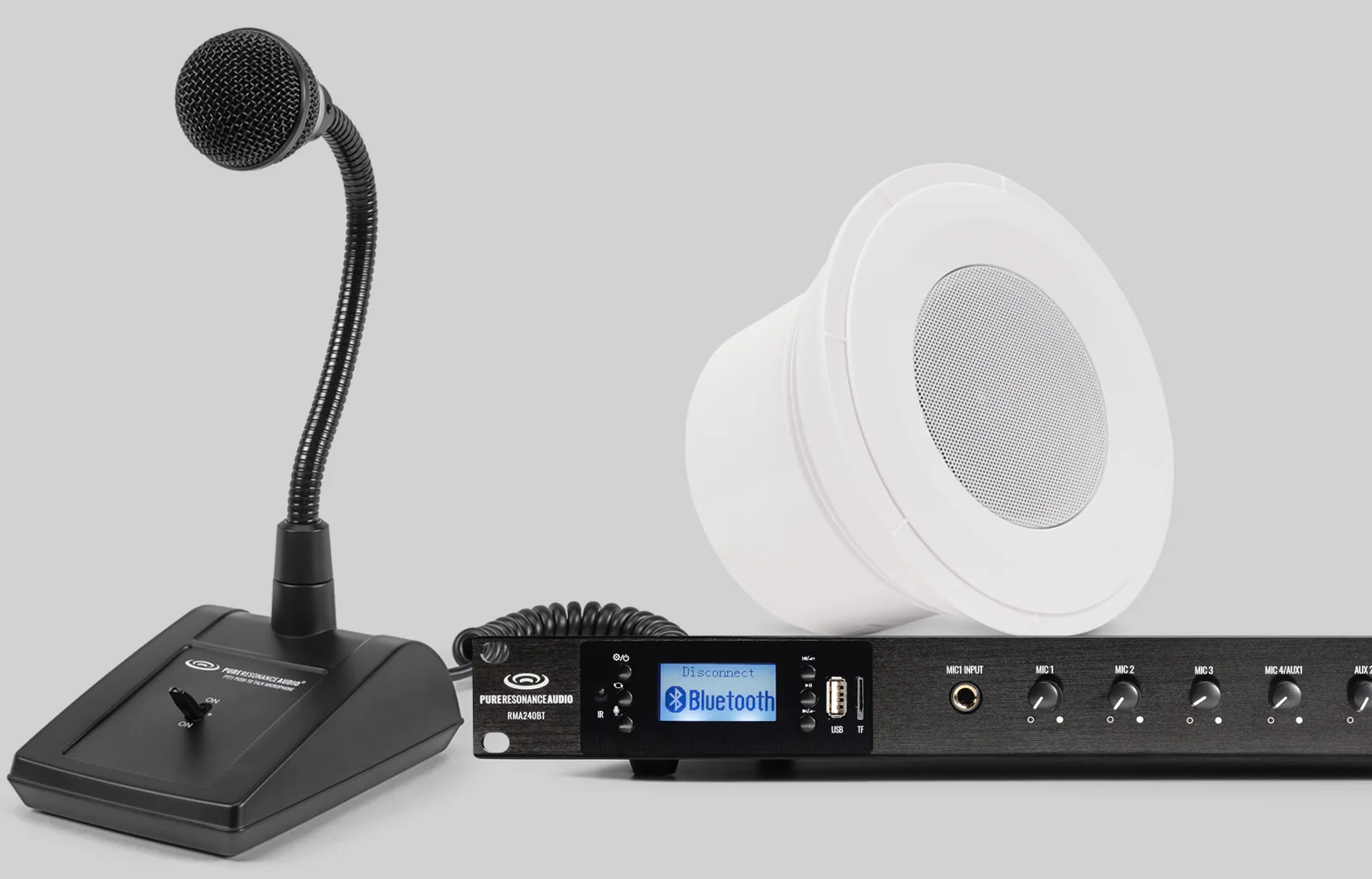
An overhead paging system — also commonly referred to as a PA system (Public Address system) — is a commercial audio communication platform that broadcasts voice messages through speakers mounted overhead throughout a facility. A central amplifier or controller receives an audio input and distributes the signal to all connected speakers simultaneously, or to specific zones if the system is configured for zone control.
The term "overhead" refers to the physical placement of the speakers — typically flush-mounted in ceiling tiles, surface-mounted on ceiling structures, or suspended on ceiling brackets — rather than a specific technology type. Overhead paging systems can be either analog (using traditional wired speaker cabling) or IP-based (using network infrastructure), but the defining characteristic is the ceiling-level speaker placement that ensures audio reaches everyone in the space below.
Overhead paging systems are designed for one-to-many broadcasting: one operator communicates to many listeners across the facility or within a targeted zone. They are not designed for two-way interactive conversation, which is the role of an intercom system.
How Does an Overhead Paging System Work?
The signal flow in an overhead paging system is straightforward and well-established:
An operator speaks into a microphone or activates a page through a software interface, phone extension, or automated trigger. The audio signal is sent to a central amplifier (for analog systems) or an IP audio controller (for IP-based systems). The controller processes the signal and routes it to the appropriate zone or to all speakers simultaneously.
The audio signal travels through the speaker cable network (analog) or over the IP network (IP-based) to ceiling-mounted speakers installed throughout the facility. Each speaker's built-in driver converts the electrical signal into acoustic energy, projecting clear, audible sound into the space below.
In analog systems, the amplifier and speakers are directly connected by dedicated copper speaker wire. The system is self-contained and operates independently of any network infrastructure. In IP-based overhead systems, the ceiling speakers are IP audio endpoints — connected to the network via Cat5e or Cat6 cabling, powered by PoE switches, and managed through a web interface or software platform.
Modern IP overhead paging systems support automated scheduling, event-triggered broadcasts, remote management, and integration with access control systems, security cameras, and fire alarms. Analog systems provide none of these capabilities.
Types of Overhead Paging Systems
Analog Overhead Paging Systems
Traditional analog systems use a central amplifier hardwired to ceiling-mounted speakers via dedicated speaker cable. They're reliable, simple to operate, and cost-effective for small to medium-sized facilities with basic communication needs. Analog systems have been in commercial use for decades and remain a practical choice for facilities with limited budgets and straightforward requirements.
IP-Based Overhead Paging Systems
IP overhead systems use the same ceiling-mounted speaker form factor as analog, but the speakers are IP audio endpoints connected to the network. They deliver superior audio quality, support advanced zone control, can be remotely managed, and integrate with security and building management platforms. For most businesses looking to install a new overhead paging system in 2026, IP-based is the recommended starting point.
Hybrid Overhead Paging Systems
Hybrid systems bridge existing analog ceiling speakers with an IP controller — allowing businesses with functional analog speaker infrastructure to gain modern IP management capabilities without replacing their existing speaker hardware. This is a cost-effective migration path for businesses transitioning from legacy to modern paging.
Zoned Overhead Paging Systems
Zone-capable overhead systems — available in both analog and IP configurations — divide the facility into independent audio zones. Each zone can be addressed individually, in groups, or all together. Zoned systems are essential for large facilities where different departments or areas need different messages simultaneously, or where broadcasting to the entire building would be unnecessarily disruptive.
Ceiling Speaker Systems for High-Ambient-Noise Environments
In warehouses, manufacturing plants, and other high-ambient-noise facilities, standard ceiling speakers do not provide sufficient output to be intelligible above background noise. These environments require high-output ceiling speakers or industrial horn units with higher wattage ratings and sound pressure levels. Proper acoustic engineering is required to achieve adequate coverage in these conditions.
Key Benefits of Overhead Paging Systems
Proven, Reliable Technology Overhead paging using ceiling-mounted speakers is one of the most time-tested commercial communication technologies available. The core principles are well understood, the installation methods are established, and the technology performs predictably in a wide range of environments.
Covers Large Areas Effectively Ceiling-mounted speakers are positioned to distribute audio evenly across the floor space below — providing consistent coverage across open floor plans, retail sales floors, office areas, and similar environments.
No Special Equipment Needed by Recipients Unlike mass notification systems that require employees to have registered phones or devices, an overhead paging system communicates directly to everyone in the space — no phones, no apps, no action required from the recipient.
Suitable for Both Operations and Emergencies Overhead paging handles both daily operational announcements — staff calls, shift changes, product requests — and critical emergency alerts within the same system. This dual-purpose value makes overhead paging one of the most versatile communication investments a business can make.
IP Systems Scale Without Rewiring IP-based overhead systems can add new ceiling speakers to existing zones or create new zones entirely without running new dedicated speaker cable — simply connect new IP speakers to the nearest network port and configure them in software.
Integrates with Your Security Ecosystem IP overhead paging systems integrate with Nexlar's business security systems, fire alarms, and access control platforms — enabling automated emergency broadcasts, coordinated response protocols, and unified facility management.
Drawbacks and Limitations
Analog Systems Cannot Scale Easily Adding new speakers or zones to an analog overhead system requires running new dedicated speaker cable — a labor-intensive and disruptive process. Businesses that plan to grow or reconfigure their facilities will find analog systems increasingly costly to maintain and expand.
Standard Ceiling Speakers Struggle in Noisy Environments In loud industrial environments — warehouses, manufacturing floors, loading docks — standard ceiling speakers may not produce sufficient volume to be heard clearly above background noise. High-output speakers or horn units are required in these settings, at higher cost.
Limited to Physical Facility Coverage Overhead paging reaches only the people within earshot of the installed speakers. It cannot notify off-site staff, remote employees, or people outside the facility.
Ceiling Access Required for Installation and Maintenance Installing and servicing ceiling-mounted speakers requires access to ceiling spaces. In buildings with limited above-ceiling access, low clearances, or structural constraints, installation can be significantly more complex and expensive.
No Message Acknowledgment Overhead paging systems broadcast one-way. There is no mechanism to confirm whether the message was heard or acted upon — a limitation in complex emergency response scenarios where accountability is important.
When Should You Use an Overhead Paging System?
An overhead paging system is the right choice when your primary need is to broadcast audio messages reliably to people inside a physical facility. Specifically, overhead paging is well-suited when:
Your facility is a permanent, fixed location where wired speaker installation is practical. Your communication needs are primarily one-way broadcasting — staff coordination, public announcements, or emergency alerts. Your audience is consistently present in the physical space — not a remote or distributed workforce. You need a communication system that works without recipient devices or action.
Overhead paging becomes less suitable when you need to reach people outside your facility, require two-way conversation capability at entry points, need to send multi-channel digital notifications, or are operating in a temporary or frequently reconfigured environment.
Where Are Overhead Paging Systems Commonly Installed?
Retail Stores Overhead paging is the standard communication tool in retail environments. Product calls, staff coordination, customer service announcements, and store opening and closing messages are all managed through ceiling-mounted speakers across the sales floor and back-of-house areas.
Warehouses and Distribution Centers Overhead paging coordinates shift changes, safety announcements, and operational communication across large open floor areas. High-ambient-noise environments require industrial-rated speakers. Nexlar serves distribution centers and warehouses across Texas.
Healthcare Facilities Hospitals and clinics use overhead paging for code alerts, staff calls, and patient communication. Ceiling speakers in clinical areas, corridors, and waiting rooms ensure critical messages reach the right staff instantly. Nexlar's healthcare security solutions integrate overhead paging with broader security platforms.
Schools and Universities Overhead paging is the backbone of school communication systems — used for bell schedules, daily announcements, emergency lockdowns, and administrative calls. Nexlar's educational security systems commonly include overhead paging integrated with emergency protocols.
Office Buildings Overhead paging supports building-wide communication in corporate environments — visitor announcements, fire drill coordination, and operational messages across multiple floors.
Government Facilities Government buildings use overhead paging for staff communication, public address, and emergency protocols. Licensed installation and compliance documentation are requirements in most government projects.
Hospitality and Hotels Hotel lobbies, conference areas, and public spaces use overhead paging for guest announcements, staff coordination, and emergency communication.
HOA Communities and Apartment Complexes Overhead paging in common areas supports building-wide communication for apartment complexes and HOA communities managed by Nexlar across Texas.
How to Choose the Right Overhead Paging System
Analog or IP? For new installations in 2026, IP-based overhead paging is the recommended choice for most businesses. The scalability, remote management, and integration capabilities of IP systems deliver significantly better long-term value. Analog is a practical choice only for very small facilities with minimal budgets and no plans for expansion or integration.
How Many Zones? Map your facility and identify which areas always share the same message (same zone) and which areas sometimes need different messages (separate zones). Start with the minimum number of zones you need and choose a system that can expand as your needs evolve.
Speaker Type for Your Environment Standard ceiling speakers work well in office environments, retail stores, and similar settings. High-ambient-noise environments — warehouses, manufacturing plants, kitchens, loading docks — require higher-output speakers or horn units rated for those conditions.
Indoor or Outdoor Coverage Needed? If outdoor coverage is required, outdoor-rated speakers with appropriate IP weather ratings must be used. Texas heat and humidity make proper equipment selection especially important for outdoor installations.
Integration Requirements If you need your overhead paging system to work with access control, security cameras, or fire alarms, choose an IP-based system designed for security platform integration from the start.
Overhead Paging System Cost Comparison
| System Type | Estimated Installed Cost |
|---|---|
| Basic Analog (single zone, small facility) | $1,500 – $5,000 |
| Multi-Zone Analog (medium facility) | $5,000 – $15,000 |
| Entry IP Overhead System (2–4 zones) | $4,000 – $10,000 |
| Mid-Size IP Overhead System (5–15 zones) | $10,000 – $30,000 |
| Enterprise IP Overhead (15+ zones) | $25,000 – $75,000+ |
These are general estimates for Texas commercial installations. Actual costs depend on facility size, ceiling type and access, speaker count and type, and integration requirements. Nexlar provides accurate, itemized quotes after every free on-site survey.
💡 Get an Honest Quote for Your Overhead Paging Project
Every Nexlar project starts with a FREE on-site assessment. Our licensed team evaluates your facility, recommends the right system, and gives you a clear, itemized quote — no surprises. 👉 Schedule Your Free On-Site Survey Today
Frequently Asked Questions
Q: What is an overhead paging system?
A: An overhead paging system is a commercial audio communication platform that broadcasts voice messages through speakers mounted on or in the ceiling throughout a facility. A central amplifier or IP controller sends audio to ceiling speakers, which project the message to everyone in the space below. It is used for operational announcements, staff coordination, emergency alerts, and public address in businesses, schools, hospitals, warehouses, and retail stores.
Q: What is the difference between an overhead paging system and a PA system?
A: The terms are used interchangeably in most commercial contexts. PA stands for Public Address, which describes the same function as an overhead paging system — broadcasting audio through ceiling-mounted speakers to a group of people in a facility. Modern overhead paging systems are an evolution of the original PA system concept, with IP-based versions adding remote management, zone control, and security integration capabilities.
Q: When should a business use an overhead paging system?
A: An overhead paging system is the right choice when a business needs to broadcast audio messages to people inside a permanent facility — for operational announcements, staff calls, emergency alerts, or scheduled communications. It is best suited for facilities where the audience is consistently physically present, where ceiling-mounted speaker installation is practical, and where one-way mass broadcasting is the primary communication need.
Q: How many speakers does an overhead paging system need?
A: The number of speakers depends on the facility's square footage, ceiling height, floor plan layout, and the acoustic characteristics of the space. As a general guideline, a standard 8-inch ceiling speaker covers approximately 100 to 200 square feet in a typical open office environment. Taller ceilings, noisy industrial environments, or acoustically challenging spaces require more speakers or higher-output units for adequate coverage. A licensed installer determines the correct speaker count through an acoustic site survey.
Q: Can an overhead paging system be used for emergency alerts?
A: Yes. Overhead paging systems are widely used for emergency communication — including fire evacuation announcements, security lockdown alerts, weather emergency notifications, and medical code alerts. IP-based overhead paging systems can be configured to trigger automatically when connected to fire alarm systems or access control platforms, ensuring emergency messages are broadcast immediately without manual operator intervention.
Q: How long does overhead paging system installation take?
A: Installation time depends on the facility size, ceiling access, system type, and number of zones. A basic single-zone analog system in a small retail space can typically be installed in one day. A multi-zone IP system in a mid-size facility generally takes three to five days. Large enterprise installations covering multiple zones or buildings can take one to two weeks. Nexlar provides a detailed project timeline during the free consultation.
Q: Should I choose analog or IP for my overhead paging system?
A: For most new installations in 2026, IP-based overhead paging is the recommended choice. IP systems run over your existing network, support unlimited zone expansion without new cable runs, can be managed remotely, and integrate with access control and security systems. Analog systems are a practical, lower-cost option only for very small facilities with basic needs and no plans for future expansion or security integration.
Conclusion: Overhead Paging Remains a Foundation of Commercial Communication
The overhead paging system is one of the most enduring and universally applicable communication technologies in commercial facilities. From small retail stores to hospital campuses, it remains the most direct, reliable way to reach everyone in a physical space simultaneously — without requiring any action from the recipient.
In 2026, the core concept is the same as it has always been. What has changed is the technology behind it. IP-based overhead systems bring the scalability, remote management, and security integration capabilities that modern Texas businesses need — combined with the simplicity and directness that makes overhead paging effective in the first place.
Nexlar Security designs and installs overhead paging systems for businesses of every size across Houston, Dallas, San Antonio, Austin, Fort Worth, and San Marcos. Our licensed team (License# B14634) handles everything from acoustic planning and speaker selection to full installation, integration, and long-term support.
Book your FREE on-site consultation today and get a clear recommendation for the right overhead paging system for your Texas facility.
References
- Texas Department of Licensing and Regulation (TDLR) – Low Voltage Contractor Licensing
- BICSI – Telecommunications Distribution Methods Manual (TDMM)
- NFPA 72 – National Fire Alarm and Signaling Code (2022 Edition)
- OSHA 1910.165 – Employee Alarm Systems Standard
- Nexlar Security – Commercial Security Systems: www.nexlar.com
- Nexlar Security – Educational Security Systems: nexlar.com/education-security
- Nexlar Security – Healthcare Security Solutions: nexlar.com/healthcare-security-solution
Follow Us