

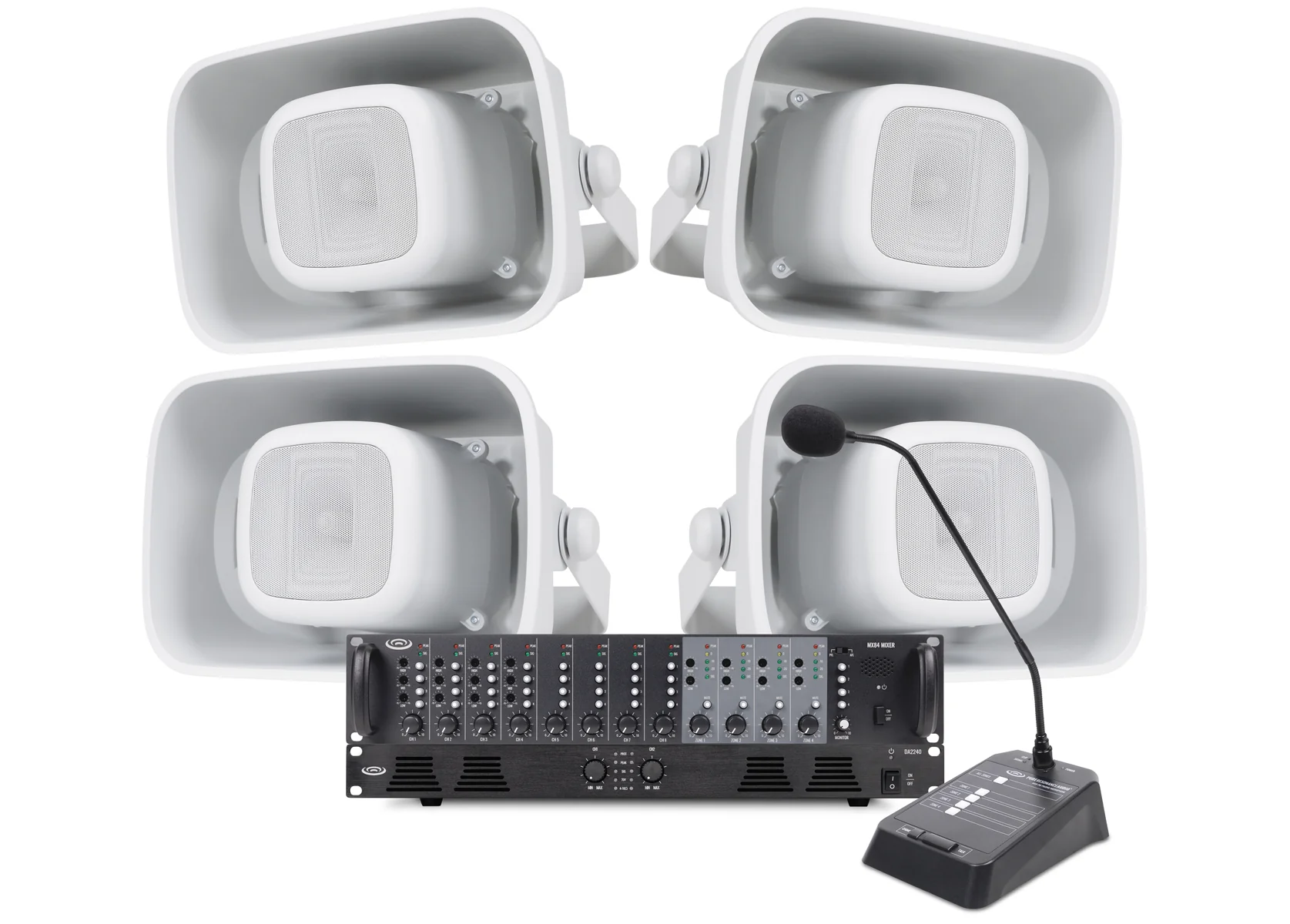
How to Choose the Right Commercial Paging System (Buyer's Guide)
Table of Contents
- What Makes a Commercial Paging System the Right One?
- How the Selection Process Works
- Types of Commercial Paging Systems to Consider
- Key Benefits of Choosing the Right System
- Common Mistakes Buyers Make and How to Avoid Them
- Industries and Their Specific Requirements
- The Complete Buyer's Checklist: Factors to Consider
- Side-by-Side Comparison of Your Top Options
- Budgeting for the Right System
- Frequently Asked Questions
- Conclusion
- References
Introduction
There are dozens of commercial paging systems on the market in 2026. And if you've started researching, you already know how quickly the options and the terminology can become overwhelming. IP or analog? One-way or two-way? Cloud-managed or on-premise? How many zones? Which brand?
The problem isn't a lack of options. The problem is knowing which questions to ask and which factors actually matter for your specific business.
This buyer's guide from Nexlar Security cuts through the complexity. We've helped over 1,000 Texas businesses choose and install the right paging systems, and we've built this guide around the real-world framework our consultants use every day — so you can approach this decision with confidence rather than confusion.
📞 Skip the Guesswork — Talk to a Licensed Expert
Nexlar Security offers FREE on-site consultations for Texas businesses. Our team evaluates your facility and gives you a clear, objective recommendation — no sales pressure, no generic answers. 👉 Book Your Free Site Survey Today
What Makes a Commercial Paging System the Right One?
The "right" paging system is not the most expensive one on the market. It's not the one with the most features. And it's definitely not the one a vendor is most eager to sell you.
The right commercial paging system is the one that accurately matches your facility's size and layout, delivers the communication capability your operations actually need, integrates with your existing or planned security infrastructure, fits your budget today without limiting your growth tomorrow, and is supported by a licensed installer who stands behind the work long after installation day.
Those five criteria are the backbone of this guide. Every factor we cover, every question we recommend you ask, and every comparison table we provide traces back to those fundamentals.
How the Selection Process Works
Choosing the right commercial paging system is a structured process, not a spontaneous purchase. Here's how Nexlar approaches it — and how you should too:
Phase 1: Facility Assessment — Before any system is selected, your facility needs to be evaluated. Square footage, floor plan complexity, ceiling height, ambient noise levels, existing infrastructure, and outdoor areas all influence which system will perform best.
Phase 2: Communication Requirements Definition — Define exactly what you need the system to do. How many zones? One-way announcements only, or two-way interaction at entry points too? Do you need automated scheduling? Emergency integration? The clearer your requirements, the better your system selection.
Phase 3: Infrastructure Review — What does your current network look like? What cabling is already in place? What security systems are already installed? The answers shape which technology path delivers the best value without unnecessary duplication.
Phase 4: System Design and Options Review — A qualified installer presents system options that match your requirements — not a catalog of everything available. Options are compared by capability, cost, and long-term value.
Phase 5: Vendor and Installer Evaluation — The system you choose is only as good as the team that installs and supports it. Verify licensing, experience, references, and post-installation support before making any commitment.
Types of Commercial Paging Systems to Consider
Understanding your options is essential before making a selection. Here are the main system types and the scenarios they're best suited for:
Analog Overhead Systems
Best for small facilities with simple, single-zone broadcast needs and limited budgets. They're reliable, cost-effective, and straightforward to operate. Not suitable for growing businesses or facilities that need integration with modern security platforms.
IP Paging Systems
The right choice for most mid-to-large Texas businesses in 2026. They run over your existing network, support unlimited zones, enable remote management, and integrate deeply with access control systems, security cameras, and fire alarms. Higher upfront cost, but significantly better long-term ROI.
Wireless Paging Systems
Ideal for outdoor environments, facilities where cable installation is impractical, or temporary deployments. A strong choice for construction sites, parking lots, and events venues.
Two-Way Paging and Intercom Combinations
For businesses that need interactive communication at entry points, gates, or reception desks — not just one-way broadcasting — a two-way capable system paired with Nexlar's commercial intercom systems and automatic gate systems is the right direction.
Hybrid Analog/IP Systems
The smart transition path for facilities with existing analog speaker infrastructure. Protect your hardware investment while gaining IP management capabilities as you migrate toward a fully modern platform.
Enterprise Multi-Zone Systems
For hospitals, campuses, multi-building complexes, and multi-site Texas businesses, enterprise-grade IP paging with centralized cloud management is the only practical choice. These systems are designed for complexity, reliability, and scale.
Key Benefits of Choosing the Right System
You Don't Overpay for Features You'll Never Use — The right system matches your actual needs. Buying an enterprise platform for a 3,000 sq. ft. office wastes money. Buying an analog system for a 50-location enterprise wastes years.
Your System Grows With Your Business — The right choice in 2026 shouldn't become a problem in 2028. A properly selected system anticipates your growth trajectory and is designed to accommodate it without a complete replacement.
Integration Works Seamlessly — When your paging system is chosen with your existing security system in mind, integration is clean, reliable, and genuinely useful — not a workaround bolted onto incompatible platforms.
Lower Total Cost of Ownership — Making the right selection upfront avoids the costly cycles of replacing undersized systems, rewiring facilities that grew beyond analog capacity, or paying to add features that a better-chosen system would have included from the start.
Staff Actually Uses It — A system that matches your team's skill level and operational workflow gets used consistently. A system that's overcomplicated for your environment gets underused — and underperforms as a result.
Common Mistakes Buyers Make and How to Avoid Them
Choosing Based on Price Alone — The cheapest system is rarely the most cost-effective over time. An analog system that needs complete replacement in three years because the business outgrew it costs far more than a scalable IP platform purchased from the start.
Not Accounting for Future Growth — Many buyers select a system that meets their needs today without asking whether it can meet their needs in two or three years. Always ask: what does expansion look like for this system, and what will it cost?
Ignoring Integration Requirements — A paging system chosen in isolation from your existing security infrastructure creates integration headaches later. Select your paging system with your full security ecosystem in mind — or work with a single integrator like Nexlar who manages both.
Choosing a Vendor Without Verifying Licensing — In Texas, commercial paging system installation requires a licensed low-voltage contractor. Always verify the installer's license number before signing any agreement. Nexlar Security holds License# B14634.
Underestimating Acoustic Requirements — Noise levels, ceiling heights, and building materials significantly affect audio coverage. Skipping an acoustic assessment leads to coverage gaps and poor intelligibility that are expensive to fix after installation.
Skipping the On-Site Survey — No legitimate installer should quote a commercial paging system without visiting your facility. A quote built on square footage alone misses too many facility-specific variables to be accurate or trustworthy.
Industries and Their Specific Requirements
Warehouses and Distribution Centers — Need high-output speakers that cut through ambient industrial noise, zone control across large floor spaces, and integration with safety systems. IP paging with industrial-rated speakers is the standard recommendation. Nexlar supports warehouse security systems across Texas.
Healthcare Facilities — Require automated code alert protocols, integration with nurse call and fire alarm systems, zone-specific staff communication, and extremely high reliability. IP-based systems are non-negotiable. Nexlar's healthcare security solutions address all these requirements.
Schools and Universities — Need bell schedule automation, emergency lockdown capability, and multi-building zone management. IP systems with access control integration are the modern standard. Nexlar's educational security systems cover all of these needs.
Retail — Typically need simple one-way broadcasting for customer service calls, price checks, and store announcements. Basic IP or analog overhead systems serve most retail environments cost-effectively.
Government Buildings — Must meet strict compliance requirements, include audit logging, and support reliable emergency communication protocols. IP systems with on-premise management are typically preferred. Nexlar's government security division specializes in these installations.
HOAs and Apartment Complexes — May need a combination of one-way broadcasting for building-wide announcements and two-way communication at entry points. Nexlar serves apartment complexes and HOA communities across Texas.
The Complete Buyer's Checklist: Factors to Consider
Use this checklist to structure your evaluation:
Facility Factors
- Total square footage and number of floors
- Number of buildings on the property
- Presence of outdoor areas requiring coverage
- Ceiling height and construction materials
- Ambient noise levels in different areas
Communication Requirements
- Number of independent zones needed
- One-way broadcasting only, or two-way interaction required?
- Need for automated scheduling or recurring announcements?
- Emergency alert automation required?
- Integration with fire alarms, access control, or security cameras?
Infrastructure Factors
- Existing network cabling category and condition
- Current PoE switch capacity
- Presence of existing speaker infrastructure
- Availability of dedicated equipment room or rack space
Budget Factors
- Total capital budget for equipment and installation
- Tolerance for ongoing software licensing costs
- Maintenance budget allocation
- Expected timeline for facility expansion
Vendor Factors
- Texas Low Voltage Contractor License verification
- Experience with your specific industry
- References from comparable installations
- Post-installation support and maintenance plans offered
- Warranty terms on equipment and labor
Side-by-Side Comparison of Your Top Options
| Factor | Analog System | IP Paging System | Wireless System | Hybrid System |
|---|---|---|---|---|
| Best Facility Size | Small | Medium – Large | Any | Medium |
| Scalability | Low | High | Medium | Medium – High |
| Installation Complexity | Low | Medium | Low | Medium |
| Remote Management | No | Yes | Yes | Yes |
| Security Integration | No | Yes | Partial | Yes |
| Emergency Automation | Basic | Advanced | Moderate | Advanced |
| Audio Quality | Good | Excellent | Good | Excellent |
| Upfront Cost | Low | Medium – High | Medium | Medium |
| Long-Term ROI | Moderate | High | Moderate | High |
| Network Required | No | Yes | Partial | Yes |
| Best for Growth | No | Yes | No | Yes |
Budgeting for the Right System
Here's a general investment guide for Texas businesses:
| Facility Type | Recommended System | Estimated Budget |
|---|---|---|
| Small Retail / Office (under 5,000 sq. ft.) | Analog or Entry IP | $2,000 – $6,000 |
| Mid-Size Facility (5,000 – 25,000 sq. ft.) | Mid-Range IP | $8,000 – $20,000 |
| Large Facility (25,000 – 100,000 sq. ft.) | Enterprise IP | $20,000 – $50,000 |
| Multi-Building Campus | Multi-Zone Enterprise IP | $35,000 – $100,000+ |
| Multi-Site Texas Business | Cloud-Managed IP | $40,000 – $100,000+ |
These are general estimates. Nexlar provides accurate, facility-specific pricing after every free on-site survey.
💡 Get a Recommendation Built for Your Business
Nexlar's licensed consultants don't sell systems — they solve communication problems. Tell us what your facility needs, and we'll design the right solution for your budget and goals. 👉 Schedule Your Free On-Site Consultation Today
Frequently Asked Questions
How do I choose a commercial paging system for my business?
Start with a professional assessment of your facility, define your communication requirements, review your existing infrastructure, and evaluate your budget. The key factors are facility size, number of zones, integration needs, growth plans, and whether you need one-way or two-way communication. Working with a licensed consultant like Nexlar ensures you get an objective recommendation based on your specific situation.
What is the best commercial paging system for a warehouse?
For most warehouses, a multi-zone IP paging system with high-output ceiling speakers or industrial horns is the best choice. IP systems offer the scalability and safety integration that large warehouse operations require. The specific configuration — number of zones, speaker type, integration requirements — should be determined by a licensed installer after an on-site assessment.
Should I choose an analog or IP paging system?
If your facility is small with simple broadcast needs and a limited budget, analog may be sufficient. For most growing Texas businesses — particularly those with multiple zones, security integration requirements, or multi-site operations — IP paging delivers significantly better long-term value. Nexlar can provide a direct comparison quote for both options after visiting your facility.
What questions should I ask a paging system installer?
Ask about their Texas Low Voltage Contractor License number, experience with your specific industry, what their site survey process looks like, whether their quote covers both equipment and installation, what post-installation support is available, and for references from comparable commercial installations.
How many zones do I need in my paging system?
The number of zones depends on your facility layout and how you communicate. Areas that always need to hear the same messages can share a zone. Departments, floors, or areas that sometimes need different messages should have their own zones. Nexlar's site survey maps your facility and recommends the right zone architecture.
Can I choose a paging system that works with my existing security cameras and access control?
Yes. IP paging systems can integrate with security cameras, access control platforms, and fire alarms — creating a unified communication and security ecosystem. Nexlar specializes in integrated commercial security and communication solutions and can design a system that connects all your platforms seamlessly.
What should I look for in a paging system vendor?
Look for a Texas Low Voltage Contractor License, proven experience in your industry, a structured site survey process, transparent and itemized pricing, post-installation support plans, and verifiable references from commercial installations similar to yours.
Conclusion: The Right System Starts with the Right Process
Choosing a commercial paging system is not about picking the most expensive option or the one with the longest feature list. It's about making a deliberate, well-informed decision based on your facility's actual needs, your business's growth trajectory, and the total value the system will deliver over its lifetime.
The businesses that make the best paging system decisions are the ones that start with a professional assessment, define their requirements clearly, evaluate options honestly, and work with a licensed installer who designs for their specific situation — not a generic template.
That's exactly what Nexlar Security delivers. Our licensed team has guided over 1,000 Texas businesses through this exact process — from the first conversation to the final commissioning — across Houston, Dallas, San Antonio, Austin, Fort Worth, and San Marcos.
Book your FREE on-site consultation today and let Nexlar help you make the right choice for your business — confidently, clearly, and without regret.
References
- Texas Department of Licensing and Regulation (TDLR) – Commercial Low Voltage Licensing
- BICSI – Information Technology Systems Installation Methods Manual
- NFPA 72 – National Fire Alarm and Signaling Code (2022 Edition)
- OSHA 1910.165 – Employee Alarm Systems Requirements
- Nexlar Security – Commercial Security Systems: www.nexlar.com
- Nexlar Security – Integrated Security Solutions: nexlar.com/integrated-security
- Nexlar Security – Access Control Systems: nexlar.com/access-control-systems
Follow Us