

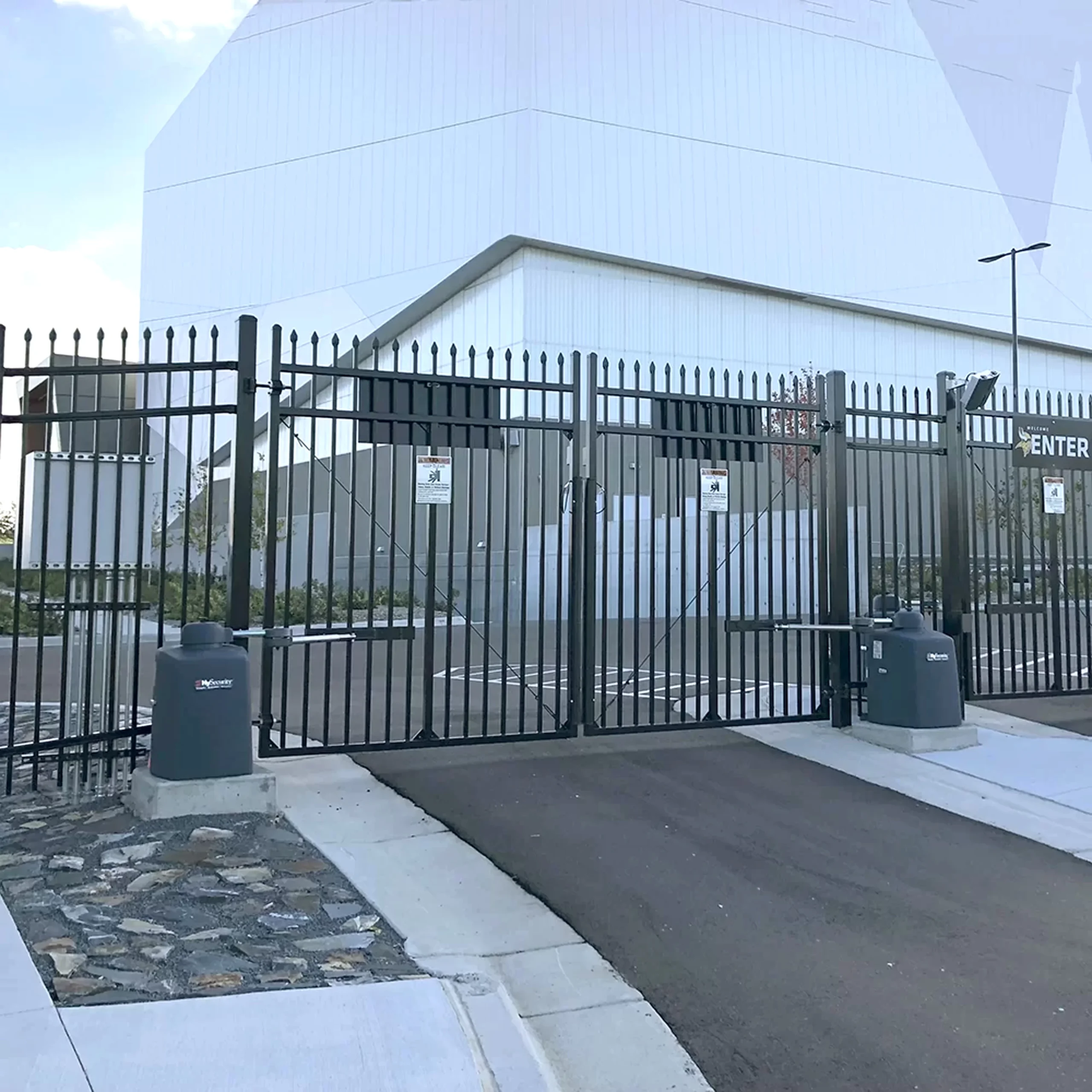
UL 325 Safety Standards: Is Your Gate Legal in 2026?
If you own or manage a property with an automated gate, one question deserves your attention right now: does your gate actually meet the UL 325 safety standards in 2026? Most property owners assume their gate is compliant because it was installed by a contractor. But compliance is not a one-time checkbox. It is an ongoing obligation, and the consequences of falling short can range from failed inspections to costly liability claims.
At Nexlar, we work with commercial and residential property owners across Texas to evaluate, upgrade, and install gate systems that fully meet the ul 325 gate safety standards 2026 requires. Whether you manage a gated community, an industrial yard, or a commercial facility, this guide will walk you through what UL 325 demands, what has changed, and whether your current setup holds up.
What Is UL 325 and Why Does It Matter
UL 325 is the nationally recognized safety standard published by Underwriters Laboratories that governs the design, manufacture, and installation of door, drapery, gate, louver, and window operators and systems rated at 600 volts or less. For most property owners, the relevant portion covers automated vehicular gate systems, including sliding gates, swing gates, vertical pivot gates, and vertical lift gates.
The ul 325 standard exists because automated gate systems are powerful machinery. Without properly designed entrapment protection, a moving gate system can cause serious injury or death when a person or object is caught in the gate's path. The standard establishes minimum requirements for safety devices, force limits, sensor placement, speed restrictions, and gate construction criteria to reduce these risks across all auto gate systems in residential, commercial, and industrial settings.
The ul325 code is referenced directly in the International Building Code, the International Fire Code, and the International Residential Code. This means local building and fire inspectors actively check for compliance during installation and inspections. Non-compliant systems can be shut down, flagged for repair, or result in denied insurance claims if an incident occurs.
2026 Code Updates
The current governing edition is the 7th Edition of UL 325, which took effect on August 1, 2018. All gate operators manufactured on or after that date must meet or exceed these standards. As of 2026, this edition remains the active standard, and every gate operating system sold and installed in the United States must carry a valid UL 325 listing from a Nationally Recognized Testing Laboratory accredited by OSHA.
The 7th Edition brought several important changes that continue to affect compliance in 2026. One of the most significant was the formal classification of gate operators into four distinct usage classes. Class I covers residential vehicular gate operators for one to four single-family homes. Class II applies to commercial locations such as multi-family housing with five or more units, hotels, retail stores, and public-access buildings. Class III is designated for industrial or limited-access locations. Class IV covers restricted-access facilities such as airports, prisons, and high-security government properties.
Each class carries its own requirements for the type and minimum number of entrapment protection devices. Understanding which class applies to your property is the first step toward making sure your standard gates are properly equipped. Misclassifying a gate as Class I when it operates in a Class II or III environment is a common compliance gap that Nexlar technicians frequently identify during site assessments.
Photo Eye Requirements
Photo eyes, also called photoelectric sensors, are non-contact entrapment protection devices that project an invisible beam across the path of the gate. When an object or person breaks the beam while the gate is in motion, the system must stop and reverse immediately. Under UL 325, these devices are mandatory components of most gate operating system configurations.
The ul 325 standard requires at least two independent entrapment protection devices for each potential entrapment zone in each direction of travel. For many gate configurations, one of those devices will be a photo eye and the other will be a contact-based edge sensor. Photo eyes must be properly aligned so the beam is active during the entire travel path of the gate. Misalignment is a common installation defect that causes intermittent failures and results in a non-compliant system even if the device is physically present.
The 7th Edition also introduced sensor monitoring requirements. Gate operators manufactured after January 11, 2016 must continuously monitor connected entrapment protection sensors and must not cycle the gate unless all required sensors are confirmed operational. This means that a disconnected or failed photo eye will prevent the gate from operating, which is intentional. It removes the risk of property owners unknowingly bypassing safety systems. If your gate continues to operate with a sensor alarm present, that is a compliance failure and a liability risk that Nexlar can address during a service visit.
Edge Sensor Placement
Edge sensors, also called contact sensors or safety edges, are physical devices installed along the leading and trailing edges of a gate. When the gate makes contact with a person, vehicle, or object, the sensor triggers a stop-and-reverse response. They serve as a secondary layer of protection alongside photo eyes, fulfilling the requirement for two independent devices per entrapment zone.
Proper placement is critical and highly site-specific. The ul 325 standard states that one or more contact sensors must be located wherever a risk of entrapment or obstruction exists. For horizontal slide gates, this typically means sensors on the leading edge in both the opening and closing directions. For swing gates, sensors must address the leading edge as well as any area where the gate could pinch a person against a fixed structure. The installer bears responsibility for identifying all entrapment zones through a proper site survey before installation begins.
UL 325 also addresses construction requirements that affect sensor effectiveness. Horizontal slide gates must have all openings guarded or screened from the bottom of the gate up to a minimum of six feet to prevent a person from reaching through and contacting the drive mechanism. These construction specifications align with ASTM F2200, which governs the physical construction of the gate itself. Nexlar evaluates both the operator and the gate structure during compliance assessments because a properly certified operator paired with a non-compliant gate structure does not result in a compliant system overall.
Operator Classifications and Commercial Door Requirements
For those managing ul 325 commercial doors and gate systems on commercial properties, the compliance picture is more detailed than it is for residential owners. Class II and Class III operators serve higher-traffic environments where the frequency of gate cycles is greater and the risk of pedestrian contact is higher. These environments require more robust entrapment protection and more rigorous maintenance schedules to keep systems performing within specification.
Moving gate systems in commercial settings must also address shared traffic areas, meaning any location where pedestrians and vehicles use the same entry point. UL 325 specifically calls out that if pedestrian traffic is present in the area of a vehicular gate, dedicated pedestrian access points must be provided. Relying on a vehicular gate to serve both vehicle and foot traffic simultaneously is a common setup that violates both the spirit and the letter of the standard.
Speed is another compliance factor that is frequently overlooked. Class I and Class II horizontal slide gates cannot travel faster than one foot per second. Operators must specify the maximum gate weight and speed during installation, and that specification must be matched to the actual gate in the field. An operator paired with a gate that exceeds its rated weight or runs at an improper speed is out of compliance regardless of the sensor configuration.
Why Nexlar Is the Right Partner for Gate Safety Compliance
At Nexlar, we do not treat UL 325 compliance as a paperwork exercise. Our licensed technicians conduct thorough on-site assessments to evaluate every aspect of your gate operating system, from operator classification and sensor configuration to gate construction and wiring integrity. We work with leading manufacturers of UL-listed gate operators and have experience across all four usage classes, including high-security Class IV environments for government and critical infrastructure clients. With over 1,000 commercial installations completed across Houston, Dallas, San Antonio, Austin, Fort Worth, and San Marcos, we bring a depth of real-world experience that generic contractors simply cannot match. Our A+ BBB rating and 5-star monitoring services reflect a commitment to doing the job correctly the first time. When you bring Nexlar onto a gate compliance project, you get a team that understands both the technical requirements of the ul 325 safety standards and the practical realities of operating a business that depends on reliable, safe access control.
How to Know If Your Gate Is Currently Compliant
If your gate was installed before August 2018, there is a meaningful chance it does not meet the current ul 325 gate safety standards 2026 enforces. Pre-2018 installations may lack the sensor monitoring functionality required by the 7th Edition, may use sensors that are no longer listed, or may have been configured to a usage class that no longer reflects how the property is actually being used.
Even gates installed after August 2018 can fall out of compliance over time. Sensors shift out of alignment, wiring degrades, and operators develop faults that disable safety monitoring without obvious visible signs. Regular annual inspections by a qualified technician are the only reliable way to confirm that a gate system remains compliant. During those inspections, photo eyes should be tested by breaking the beam during gate travel, edge sensors should be activated under light pressure, and emergency stop functions should be verified across all access points.
Documentation matters as well. Property owners should retain the manufacturer's installation manual, the installer's compliance certification, and records of all subsequent inspections. These documents are your first line of defense if a compliance dispute or insurance claim arises.
Frequently Asked Questions About UL 325 Gate Safety Standards
Q. What is UL 325 and does it apply to my gate?
UL 325 is the standard published by Underwriters Laboratories that sets safety requirements for automated door, drapery, gate, and window operator systems. It applies to virtually every automated vehicular gate in the United States, whether residential, commercial, or industrial. If your gate has an electric operator that opens and closes automatically, UL 325 applies to it.
Q. Do I need to upgrade my existing gate to meet the 2026 standards?
You are not legally required to retrofit an existing operator to the 7th Edition standard simply because it was installed before August 2018. However, if you replace the operator, add new components, or significantly modify the gate system, the updated standard applies. Additionally, older systems that lack required safety sensors create genuine liability exposure, and proactive upgrades are strongly recommended.
Q. What happens if my auto gate system fails a compliance inspection?
A non-compliant system can result in a failed building inspection, an order to cease operation of the gate until repairs are made, denial of insurance coverage for incidents involving the gate, and potential civil liability if someone is injured. Local building and fire inspectors actively reference UL 325 during inspections, so non-compliance is not a minor administrative issue.
Q. How many entrapment protection devices does my gate need?
UL 325 requires a minimum of two independent entrapment protection devices for each entrapment zone in each direction of travel. For most standard gates, this means at least one non-contact device such as a photo eye and one contact device such as an edge sensor, placed wherever an entrapment risk exists. The exact number and placement depend on the gate type, usage class, and site-specific conditions.
Q. Can I install a UL 325 compliant gate system myself?
While the standard itself does not prohibit self-installation, meeting all of its requirements demands a detailed understanding of entrapment zone identification, sensor monitoring systems, operator specifications, gate construction criteria, and local code requirements. Most jurisdictions require that gate systems be installed by licensed contractors and pass inspection. Professional installation by a qualified company like Nexlar ensures compliance and protects you from liability.
Q. What is the difference between UL 325 and ASTM F2200?
UL 325 governs the gate operator, the safety devices, and the electrical and mechanical performance of the gate operating system. ASTM F2200 governs the physical construction of the gate structure itself, including requirements for openings, guarding, and structural integrity. A fully compliant installation must address both standards. Having a UL 325 listed operator paired with a non-compliant gate structure does not result in an overall compliant system.
Contact Nexlar Today
If you are unsure whether your gate meets the current ul 325 gate safety standards 2026 requires, reach out to the Nexlar team at (281) 407-0768 or visit nexlar.com to schedule your free on-site consultation and let our licensed technicians give you a clear, honest compliance assessment.
Follow Us