

Hydraulic vs. Electric Wedge Barriers: Maintenance Costs
When a facility manager sits down to evaluate perimeter security, the conversation around wedge barriers almost always circles back to one central question: which system is going to cost less to keep running over time? The upfront purchase price matters, but it rarely tells the full story. The real financial picture emerges over months and years of operation, service calls, fluid changes, part replacements, and energy bills. At Nexlar, we have helped businesses across Houston, Dallas, San Antonio, Austin, and Fort Worth navigate exactly this decision — and we want to give you an honest, detailed breakdown so you can make the choice that truly fits your facility's needs and budget.
Hydraulic vs. Electric Wedge Barriers is not a question with a single universal answer. The right system depends on your site conditions, your cycle frequency, your climate, and your long-term financial priorities. What we can do is lay out exactly what each technology demands from an operational and maintenance standpoint, so you walk away with clarity rather than confusion.
What Makes Wedge Barriers Different from Other Vehicle Barriers
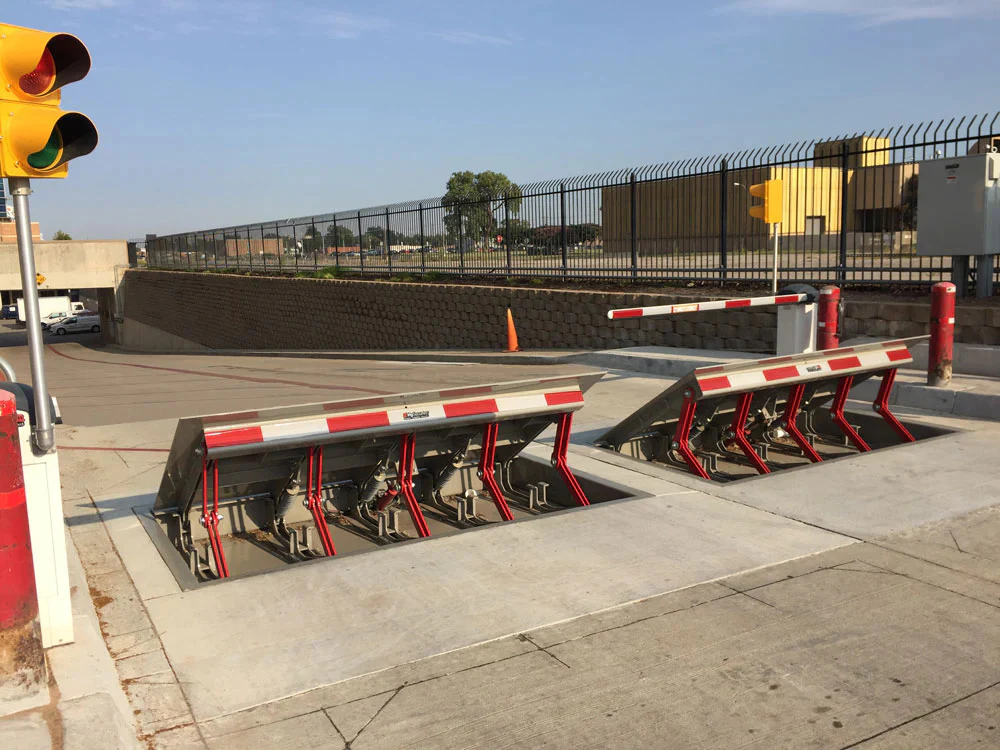
Before diving into costs, it helps to understand why wedge barriers carry unique maintenance considerations compared to simpler barrier types. A wedge barrier is an active vehicle barrier that rises from a flush position in the pavement to form an angled steel plate that can stop a 15,000-pound vehicle traveling at 50 miles per hour. That level of stopping power requires significant mechanical force — and generating that force reliably, cycle after cycle, is where hydraulic and electric systems take very different approaches.
Hydraulic Wedge Barriers use pressurized fluid routed through underground hoses and a pump unit to drive the barrier plate upward. Electric Wedge Barriers use electric servo motors and actuators to accomplish the same lift. Both can achieve K12 and ASTM M50 crash ratings. Both can deploy in under 1.5 seconds in emergency fast operation mode. The difference lies in how they get there — and what that means for your maintenance budget every single year.
Hydraulic Maintenance Issues
Hydraulic systems have been the backbone of the wedge barrier industry for decades, and that track record carries genuine weight. A well-designed hydraulic wedge barrier can operate reliably for many years when properly maintained. The challenge is that "properly maintained" for a hydraulic system involves a consistent and often expensive schedule of upkeep.
The hydraulic fluid itself is one of the most discussed ongoing costs. Fluid must be checked regularly for contamination, moisture intrusion, and viscosity changes, and it needs to be replaced on a set schedule. In cold weather environments, this becomes particularly complicated. When temperatures drop, hydraulic oil thickens, which slows response times and puts additional strain on the pump and motor. Many hydraulic installations in colder climates require the addition of oil reservoir heaters to maintain viscosity, which adds both installation cost and ongoing energy consumption.
Hose integrity is another recurring concern. The hydraulic lines that carry pressurized fluid to the barrier mechanism run underground, and while that protects them from surface interference, it also makes leaks harder to detect until real damage has been done. A failed hose or valve in a hydraulic system can cause the barrier to move unexpectedly — either rising or falling without a command from the operator. In a security environment, that kind of unpredictable behavior is not just inconvenient; it can be genuinely dangerous.
The financial reality of hydraulic maintenance has been documented in real-world government installations. One documented case involved a government facility that was spending $60,000 annually to maintain its hydraulic wedge system. After switching to an all-electric system, their annual maintenance budget dropped to $8,000 — a reduction of 87 percent. That is not a marginal improvement. That is a fundamentally different cost structure, and it reflects what facility managers experience when they add up fluid changes, seal replacements, hose inspections, heat unit servicing, and emergency repair calls over the course of a year.
Beyond direct maintenance costs, hydraulic systems carry an environmental liability that electric barriers do not. A fluid leak, even a slow one, can contaminate surrounding soil and require remediation depending on local environmental regulations. Facilities near water sources or with strict environmental compliance requirements should factor this potential liability into their total cost analysis.
Electric Actuator Benefits
Electric Wedge Barriers represent a newer generation of barrier technology, and the maintenance advantages they bring are substantial. The core principle is simplicity: fewer moving parts, no hydraulic fluid, no underground hose runs prone to leaking, and no heating systems required to manage fluid viscosity.
The electric actuator at the heart of these systems is designed to be virtually maintenance free under normal operating conditions. There is no fluid to change, no seals to replace on pressurized lines, and no pump to service. The motor and drive components are engineered for high duty cycles, meaning facilities that operate their barriers dozens of times per day can do so without the wear accumulation that plagues hydraulic systems under similar demand.
Electric barriers also offer more precise control over barrier speed and movement. Velocity profiling — a capability inherent to servo-driven electric systems — allows the actuator to manage acceleration and deceleration throughout the lift and lower cycle. This prevents the barrier from slamming into its end stops at full speed, which significantly reduces stress on structural components and extends the lifespan of the barrier itself. In hydraulic systems, repeated impact against end stops is a major driver of premature component failure.
From an integration standpoint, electric barriers are also far easier to connect with broader access control and perimeter security infrastructure. Because they operate through electronic controls rather than fluid pressure, they communicate naturally with card readers, RFID systems, intercoms, vehicle detection loops, and PLC-based management platforms. This seamless integration reduces the complexity of your overall security system, which in turn reduces the number of potential failure points that require service.
Weather performance is another area where electric barriers have quietly closed the gap with hydraulic systems. Modern electric wedge barriers are designed with submersible components and galvanized construction that allows them to function reliably in rain, flooding, extreme heat, and freezing temperatures without requiring the supplemental heating equipment that hydraulic systems often need in cold climates.
Total Cost of Ownership
When evaluating Hydraulic vs. Electric Wedge Barriers from a purely financial perspective, the total cost of ownership calculation tells a more complete story than the purchase price alone.
Hydraulic Wedge Barriers tend to have a lower initial equipment cost. The hardware itself has been manufactured at scale for decades, and competitive pricing reflects that maturity. However, the installation cost is typically higher because hydraulic systems require more complex underground infrastructure — fluid lines, pump chambers, and often heating systems — that require skilled labor and careful engineering to execute correctly.
Electric Wedge Barriers generally carry a higher upfront equipment cost, but the installation is simpler. There are fewer underground components, no fluid infrastructure, and less specialized labor required to complete the installation. This gap in installation complexity helps offset some of the higher equipment cost from the start.
Where the financial picture shifts decisively toward electric barriers is in the years following installation. The absence of hydraulic fluid maintenance alone represents a meaningful annual saving. Add in the elimination of hose inspection and replacement cycles, the removal of heating system costs, and the reduced frequency of emergency service calls due to simpler overall mechanics, and electric barriers begin to demonstrate a substantially lower annual operating cost.
Energy consumption also factors into the long-term comparison. Electric barrier systems tend to consume less power, particularly during standby periods when the barrier is at rest. Hydraulic systems maintain pressure in the fluid lines continuously or through frequent pump cycling, which generates energy consumption even when the barrier is not actively moving. Electric actuators draw significant power only when the barrier is in motion, which means facilities with lower cycle frequencies can see meaningful energy savings over time.
For high-cycle facilities — those operating barriers dozens or hundreds of times per day — the electric system's lower wear profile translates directly into fewer service intervals and a longer operational life before major component replacement becomes necessary. For lower-cycle installations, hydraulic systems may be adequately maintained within a reasonable budget, though the potential for unexpected failure costs remains.
Climate and Site Conditions That Influence Your Choice
The comparison between hydraulic vs electric is not purely about maintenance philosophy — site conditions play a real role in determining which system performs best in practice.
In regions with extreme cold, hydraulic systems require additional investment in fluid heating infrastructure to maintain reliable operation. Without it, thickened oil slows response times and can prevent the barrier from deploying quickly enough in an emergency. Electric barriers, by contrast, are not affected by temperature changes in the same way. Their servo motors and actuators operate across a wide temperature range without supplemental heating, which simplifies operation in climates with harsh winters.
In locations where underground utilities are dense, electric barriers have a practical installation advantage. Hydraulic systems require running fluid lines underground, which can be challenging or cost-prohibitive when existing utilities occupy the space. Electric barriers require only electrical conduit, which is easier to route around existing infrastructure.
Drainage is another site factor that favors electric systems in certain environments. Hydraulic installations require careful drainage planning to prevent fluid contamination in flood-prone areas. Electric barriers with submersible-rated components handle water intrusion with less risk of environmental or operational damage.
When Hydraulic Systems Still Make Sense
Fairness demands acknowledging that hydraulic barriers are not obsolete, and there are legitimate scenarios where they remain the right choice.
Applications requiring extreme force generation — such as very deep foundation installations for maximum crash resistance — may still favor hydraulic systems because the pressure they generate is exceptionally high and well-proven in the most demanding scenarios. Facilities in moderate climates without significant cold weather concerns reduce one of hydraulic systems' biggest ongoing cost drivers. Budgets constrained on the equipment purchase side but more flexible on annual maintenance may find hydraulic systems workable, particularly when supported by a strong preventive maintenance contract.
The key is being honest about the full cost picture from the start rather than allowing the lower equipment price to obscure the higher long-term operating cost.
Compliance and Certification Considerations
Both hydraulic and electric wedge barriers can achieve the same crash ratings — including DOS K12 and ASTM M50 certifications — so compliance with Department of Defense, Department of Homeland Security, and Department of State standards is achievable with either technology. What differs is the operational certification burden.
Hydraulic systems require regular fluid testing and documentation to demonstrate that the system is being maintained to manufacturer specifications. Electric systems typically have simpler maintenance documentation requirements, which reduces the administrative burden on facility security teams. For government and military installations with strict compliance reporting, this simplicity can be a meaningful operational advantage.
Why Choose Nexlar for Your Wedge Barrier Installation and Maintenance
At Nexlar, we do not approach wedge barrier selection as a product sale — we approach it as a security engineering consultation. Our team evaluates your site conditions, your security requirements, your cycle frequency, your climate, and your budget before recommending a system. We have worked with government agencies, Fortune 500 companies, data centers, stadiums, and commercial campuses across Texas, and that depth of experience means we have seen what works and what creates problems over time.
We handle the full project lifecycle — from threat assessment and system design to installation, integration with your existing access control infrastructure, and ongoing maintenance. Our technicians are certified and background-checked, and our maintenance programs are designed to keep your barriers performing at rated specifications year after year. Whether you are choosing between hydraulic and electric systems for the first time or evaluating a transition from one technology to the other, Nexlar has the expertise to help you make the right call and execute it correctly. We carry an A+ BBB rating because we stand behind our work — not just at installation, but through the entire life of your system.
Frequently Asked Questions
Q. What is the main difference between hydraulic vs electric wedge barriers?
Hydraulic Wedge Barriers use pressurized fluid to raise and lower the barrier plate, while Electric Wedge Barriers use servo motors and electric actuators. Both achieve the same crash ratings and deployment speeds, but they differ significantly in maintenance complexity, ongoing costs, and environmental impact.
Q. Are electric barriers more expensive to purchase than hydraulic barriers?
Generally, yes. Electric Wedge Barriers tend to have a higher initial equipment cost. However, their simpler installation, lower annual maintenance costs, and reduced energy consumption typically result in a lower total cost of ownership over the life of the system.
Q. How much can I save by choosing electric over hydraulic wedge barriers on maintenance?
Real-world data from government installations has shown annual maintenance cost reductions of up to 87 percent when transitioning from hydraulic to electric systems. One documented case saw annual costs drop from $60,000 to $8,000.
Q. Do electric barriers work in cold weather?
Yes. Modern Electric Wedge Barriers are engineered to operate across a wide temperature range without supplemental heating. Hydraulic barriers in cold climates often require oil reservoir heaters to maintain fluid viscosity, which adds both cost and complexity.
Q. Can hydraulic wedge barriers and electric wedge barriers achieve the same crash ratings?
Yes. Both hydraulic and electric systems are available with DOS K12 and ASTM M50 crash ratings, which represent the highest levels of vehicle barrier certification used by the Department of Defense.
Q. What maintenance does a hydraulic wedge barrier require?
Hydraulic systems require regular fluid checks and changes, hose and seal inspections, pump maintenance, and in cold climates, heating system servicing. These tasks accumulate into significant annual maintenance costs compared to electric systems.
Q. Is it possible to integrate wedge barriers with access control systems?
Yes. Both types of barriers support integration with access control systems, but Electric Wedge Barriers typically integrate more naturally with electronic systems including card readers, RFID readers, intercoms, and PLC-based security management platforms.
Q. Which type of wedge barrier is better for high-cycle facilities?
Electric Wedge Barriers are generally better suited for high-cycle applications. Their velocity profiling reduces wear from repeated operation, and the absence of hydraulic fluid degradation under high use makes them more durable in demanding duty cycle environments.
Q. How long do wedge barriers last?
With proper maintenance, both hydraulic and electric wedge barriers can operate for many years. Electric systems may achieve longer operational lifespans between major service intervals due to fewer wear-prone components and the protective benefit of velocity-controlled deployment.
Q. Does Nexlar install and maintain both types of wedge barriers?
Yes. Nexlar installs, integrates, and maintains both Hydraulic Wedge Barriers and Electric Wedge Barriers across Texas. We help clients select the system that best fits their specific site conditions, security requirements, and budget.
Follow Us